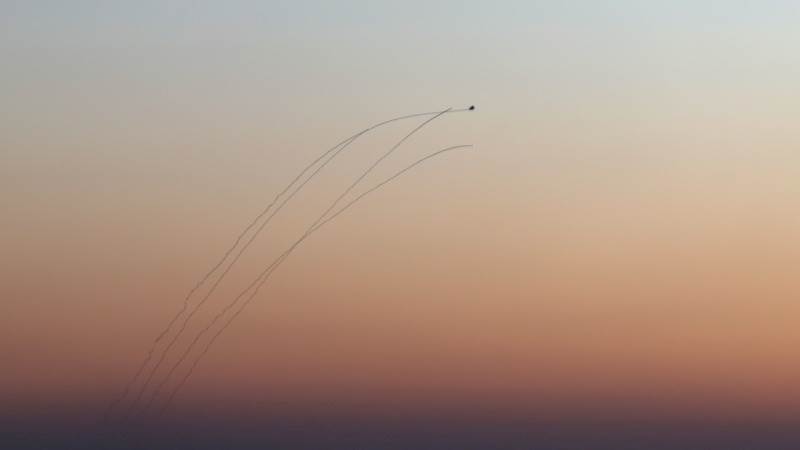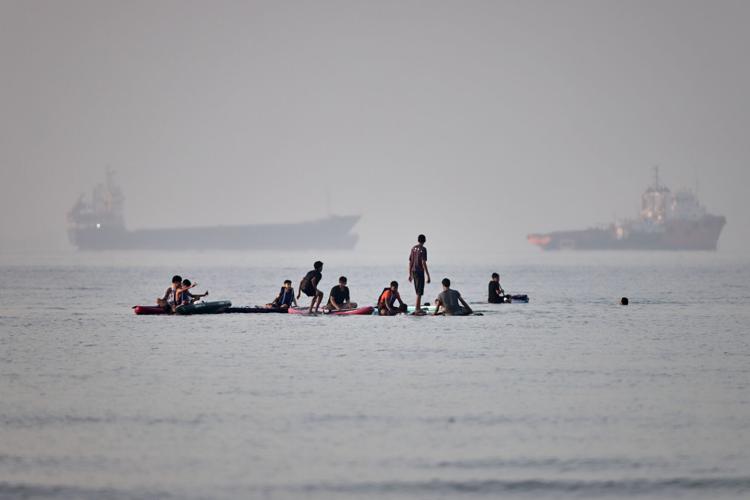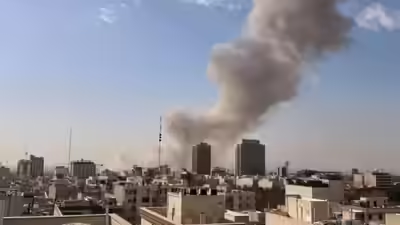
Iran launched ballistic missiles and drones toward Kuwait and Bahrain on Saturday, hours after the U.S. Military reported intercepting similar projectiles aimed at the Strait of Hormuz and Gulf allies. The attacks came hours after the U.S. Military said it had intercepted Iranian missiles and drones launched toward the Strait of Hormuz and Gulf allies, indicating a pattern of escalating activity. According to U.S. Central Command (CENTCOM), Iran fired seven ballistic missiles at Kuwait and Bahrain on Friday. U.S. Forces intercepted six of these missiles, while the seventh failed to reach its intended target, crashing harmlessly. Kuwait’s military confirmed its forces were actively intercepting missiles and drones that were attacking the country, showing the direct threat posed to its airspace and territory. CENTCOM stated that the attack drones "posed an immediate threat to regional maritime traffic," noting the broader implications for international commerce and security in the vital waterways of the Arabian Gulf.
The missile launches on Saturday followed an earlier U.S. Operation in which four Iranian drones headed toward the Strait of Hormuz were shot down. This prior interception signaled a heightened state of alert and ongoing aerial activity in the region, preceding the more direct attacks on Kuwait and Bahrain. The U.S. Military's proactive measures in intercepting these drones point to an active defense posture against potential threats emanating from Iran. The successive incidents, starting with the drone interceptions near the Strait of Hormuz and culminating in the ballistic missile and drone attacks on Gulf nations, illustrate a rapidly evolving security landscape in the Middle East.
Regional Response and Accusations
Bahrain called on Tehran to immediately halt attacks against its Gulf neighbors following the recent missile and drone launches. Bahrain's foreign ministry condemned the attacks, stating they violated the sovereignty of both Gulf nations. The ministry issued a statement saying, "The ministry of foreign affairs strongly condemns the renewed attacks by the Islamic Republic of Iran against the Kingdom of Bahrain and the sisterly State of Kuwait." This condemnation showed the perceived breach of international norms by Iran's actions and signaled a unified stance among Gulf Cooperation Council members against what they described as Iranian aggression. Bahrain's government specifically reported that Iranian missiles and drones targeting Bahrain and Kuwait were successfully intercepted, providing a measure of reassurance regarding the effectiveness of defensive systems.
During the incidents, Bahrain activated air raid sirens and instructed residents to move to the nearest safe location. This public safety measure reflected the immediate and serious nature of the threat, prompting civilian alerts and emergency protocols across the Kingdom. The activation of air raid sirens indicated a direct and imminent danger, requiring citizens to seek shelter as a precautionary measure against incoming projectiles. Such an event is a rare occurrence, emphasizing the gravity of the situation and the perceived direct threat to Bahraini territory and its population.
Kuwait's foreign ministry described the attacks as a "serious escalation" and a "flagrant violation of its sovereignty." The ministry emphasized the gravity of the situation, noting the direct impact on Kuwaiti territory and the potential for wider destabilization in the region. Kuwait's foreign ministry further stated that it reserves the right to defend the country, asserting its sovereign right to protect its borders and national interests against external aggression. This assertion noted Kuwait's resolve to protect its national security interests in the face of what it characterized as unprovoked aggression. The statements from both Bahrain and Kuwait collectively pointed to a regional perception of heightened threat originating from Iran, demanding an immediate cessation of hostile activities. The coordinated condemnation from these Gulf states showed the severity with which they viewed Iran's actions, interpreting them as a direct challenge to regional stability and international law.
US Actions and Broader Tensions
The United States responded to the missile and drone launches by striking Iranian coastal radar sites, a direct military action intended to degrade Iran's capabilities and deter further attacks. This retaliatory strike by the U.S. Demonstrated a firm commitment to protecting its assets and allies in the region. Iran's Revolutionary Guard, for its part, asserted that its forces had specifically targeted Kuwait's Ali Al Salem Air Base and the headquarters of the US Navy's Fifth Fleet in Bahrain. These claims, if true, would indicate a deliberate attempt to strike at key U.S. Military installations, potentially escalating the conflict. Despite these alleged targets, there were no reports of injuries among U.S. Personnel following the incidents, indicating either a failure of the Iranian projectiles to hit their intended marks or the effectiveness of defensive measures.
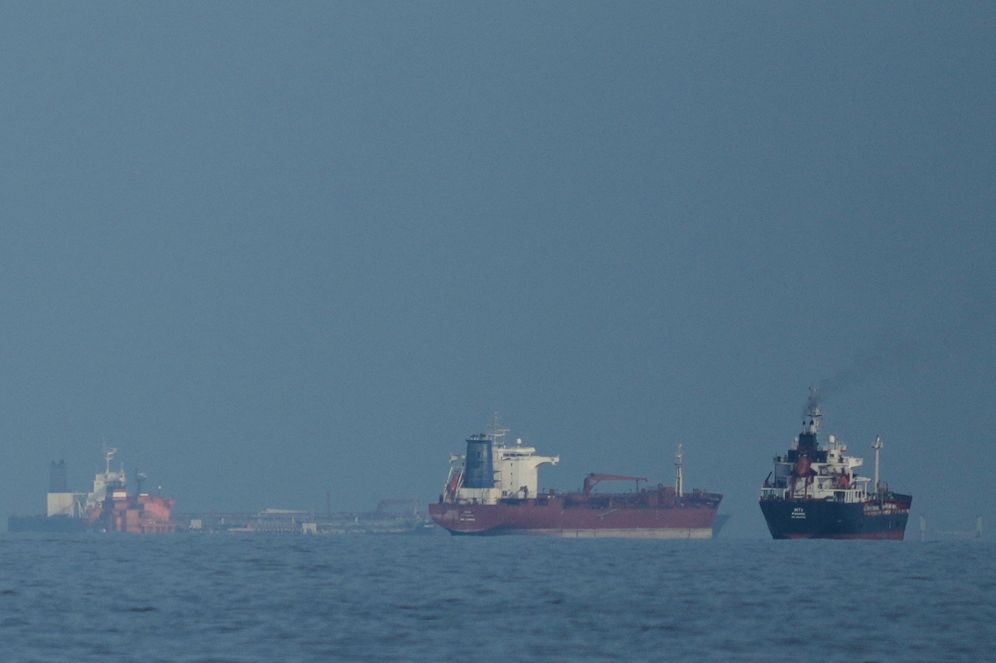
U.S. Central Command confirmed the immediate danger posed by the drone attacks, stating, "The attack drones posed an immediate threat to regional maritime traffic." This statement from CENTCOM reiterated the significant risk these aerial threats posed not only to military installations but also to the safety of commercial shipping lanes, which are key for global trade. In a broader effort to exert pressure on Tehran, the United States has also expanded its sanctions regime, targeting Iran's energy sector with new measures. These economic sanctions are designed to curtail Iran's ability to fund its military and regional proxy activities, adding a significant non-military dimension to the U.S. Response. Further demonstrating this increased pressure, the U.S. Military intercepted a sanctioned oil tanker linked to Iran in the Indian Ocean. This interception served as a tangible enforcement of the sanctions, disrupting Iran's illicit oil trade and signaling a strong U.S. Commitment to its economic pressure campaign. These varied responses, encompassing military interception, retaliatory strikes, economic sanctions, and maritime interdictions, illustrate a full U.S. Strategy to counter Iranian aggression and protect its interests and those of its allies in the Middle East. The U.S. Actions are part of a sustained effort to de-escalate tensions while simultaneously deterring further hostile acts from Iran.
Context of Escalation
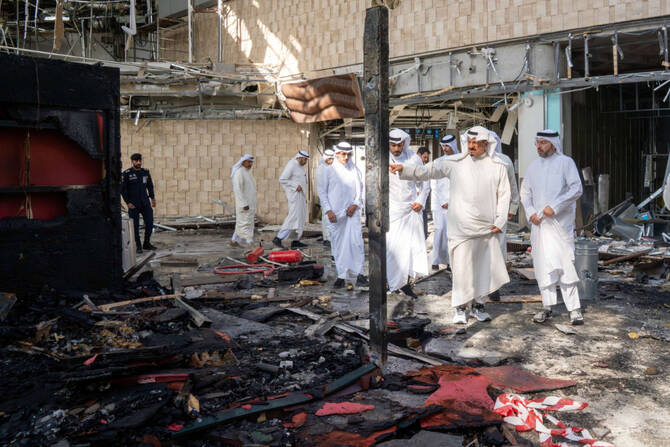
The recent events unfolded amidst a backdrop of ongoing regional instability and renewed hostilities. Israeli forces carried out fresh strikes in southern Lebanon on Friday, killing nine people, according to reports. This incident notes the complex and interconnected nature of conflicts in the Middle East, where multiple actors are engaged in various forms of confrontation. Earlier this week, Iranian drones heavily damaged a passenger terminal at Kuwait’s main airport, resulting in one fatality and dozens wounded. This prior attack on civilian infrastructure in Kuwait had already set a tense precedent, demonstrating Iran's willingness to target non-military sites and cause civilian casualties. Prior to these events, U.S. And Iranian negotiators had reached a tentative agreement a week ago to extend a ceasefire by 60 days. This agreement, aimed at de-escalating tensions, now appears to be in jeopardy following the recent wave of attacks, raising questions about the future of diplomatic efforts.
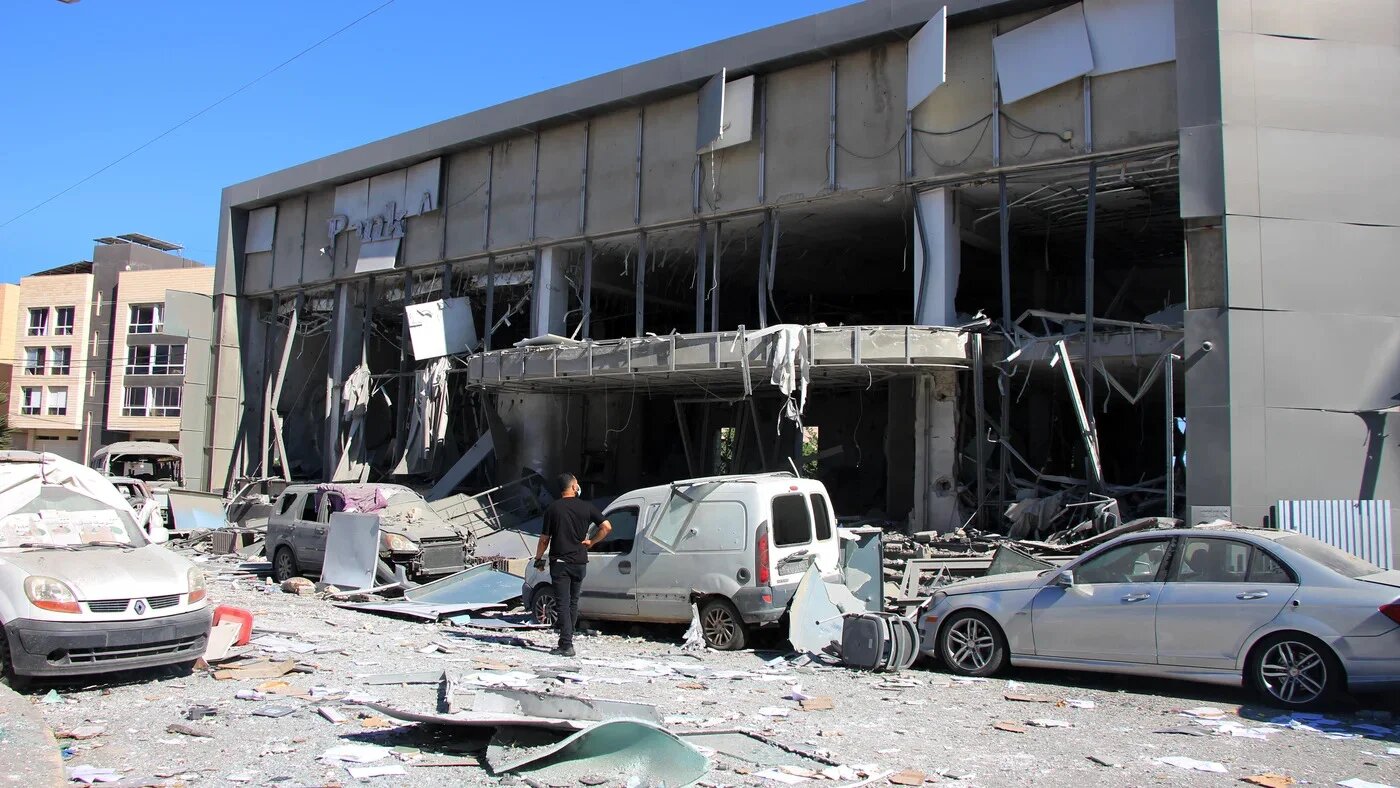
On Saturday, Israeli airstrikes on southern Lebanon killed nine people, including three members of the Lebanese military, reports indicated. These strikes show the volatile situation on Israel's northern border, where clashes with various militant groups are frequent. The Israeli military had struck multiple parts of southern Lebanon on Friday and issued evacuation warnings for nine villages in the area, signaling an anticipation of further conflict and a desire to minimize civilian casualties on the Lebanese side. In an encounter with militants in southern Lebanon on Friday, two Israeli soldiers were wounded, with one sustaining severe injuries, the Israeli military reported. This incident further illustrates the active combat environment in the region, adding another layer of complexity to the already strained geopolitical landscape. The confluence of these events—Iranian attacks on Gulf nations, U.S. Responses, and Israeli military actions in Lebanon—paints a picture of a region teetering on the brink of wider conflict, with various parties engaging in direct and indirect confrontations. The fragile ceasefire agreement between the U.S. And Iran appears to be under significant strain, as the recent escalations threaten to unravel any progress made toward a more stable regional environment. The international community watches closely as these interconnected conflicts continue to unfold, with calls for restraint and de-escalation becoming increasingly urgent.