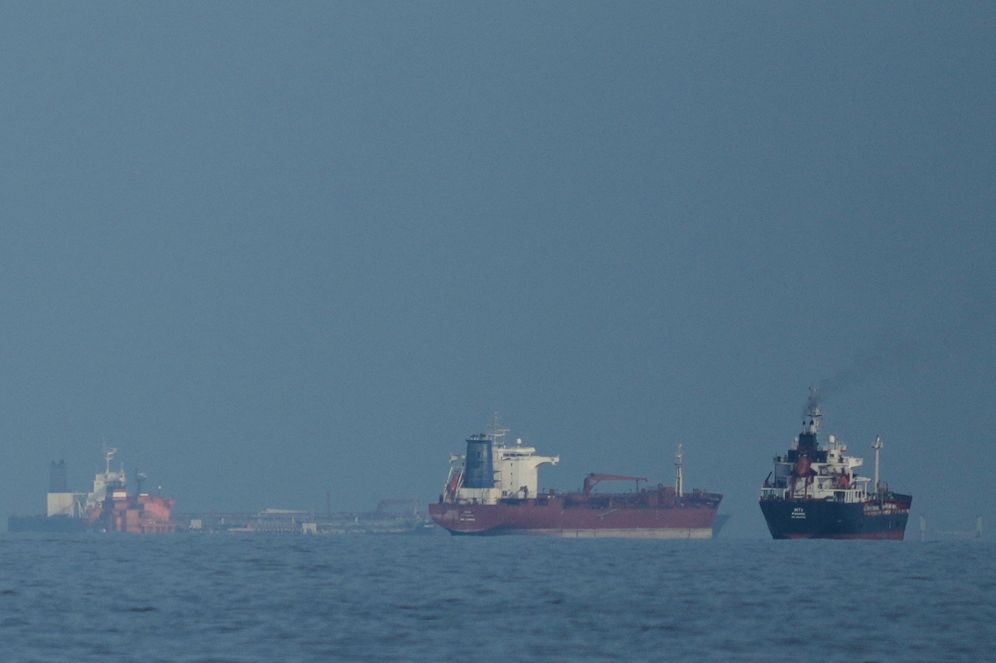
US Central Command reported that American forces downed multiple Iranian missiles and drones launched toward the Strait of Hormuz and the Gulf states on Tuesday. The command specified that U.S. And Bahraini forces also intercepted missiles aimed at Bahrain, with the command stating the Iranian projectiles posed an immediate threat to maritime traffic. These actions by Iranian forces were described by U.S. Central Command as posing an immediate threat to maritime traffic in the critical waterways. Hours later, Iran claimed it had targeted U.S. Bases in the region, prompting air raid alerts in Kuwait and Bahrain, signaling a rapid escalation of tensions. A U.S. Official, speaking anonymously, indicated the U.S. Response, stating: "We've been hitting them pretty hard. I'd say in that part of the world."
Kuwait Airport Hit
Kuwait's Defense Ministry announced it had destroyed more than a dozen missiles and a similar number of drones launched from Iran. The ministry reported that the attack heavily damaged Kuwait International Airport's passenger terminal, a significant blow to civilian infrastructure. One person, identified as an Indian national, was killed and 63 others were wounded in the incident at the airport, noting the human cost of the conflict. U.S. Central Command rejected Iran's assertion that the terminal damage resulted from a U.S.-made interceptor. Instead, U.S. Central Command described the actions of Iranian drones as a "deliberate, calculated and unjustified attack" on the airport, firmly attributing responsibility to Iran. A U.S. Official, speaking anonymously, commented on the broader situation, stating: "We've been hitting them pretty hard. I'd say in that part of the world."
US Retaliation and Claims
The U.S. Military stated it subsequently struck Iranian coastal surveillance radar sites, indicating the action was taken to prevent further attacks and neutralize threats. According to reports, the U.S. Military also launched strikes on an Iranian military ground control station located on Qeshm Island. Iran's Foreign Ministry, however, identified the targeted facility on Qeshm Island as a telecommunications tower, offering a different perspective on its purpose. An anonymous U.S. Official commented on the broader response, stating, "We've been hitting them pretty hard. I'd say in that part of the world." The exchange of strikes marked another setback for efforts to extend the existing truce, which reports indicated was already under strain due to repeated attacks occurring around the key energy corridor. This ongoing tension threatens stability in a region vital for global energy supplies.
Broader Context and History
The current escalation began on February 28 with combined U.S. And Israeli strikes against targets in Iran, setting the stage for the recent hostilities. Simultaneously, fighting has been ongoing in Lebanon between Israeli forces and Hezbollah militants, adding to regional instability and creating a complex web of interconnected conflicts. In response to recent events, Kuwait expelled two Iranian diplomats, further straining diplomatic relations and indicating a hardening stance from regional players. The article detailing these developments was first published on June 06, 2026, at 05:14 AM, and underwent its latest revision on the same date at 05:27 AM, reflecting the dynamic nature of the unfolding situation. A U.S. Official, speaking anonymously, stated regarding the broader situation, "We've been hitting them pretty hard. I'd say in that part of the world."