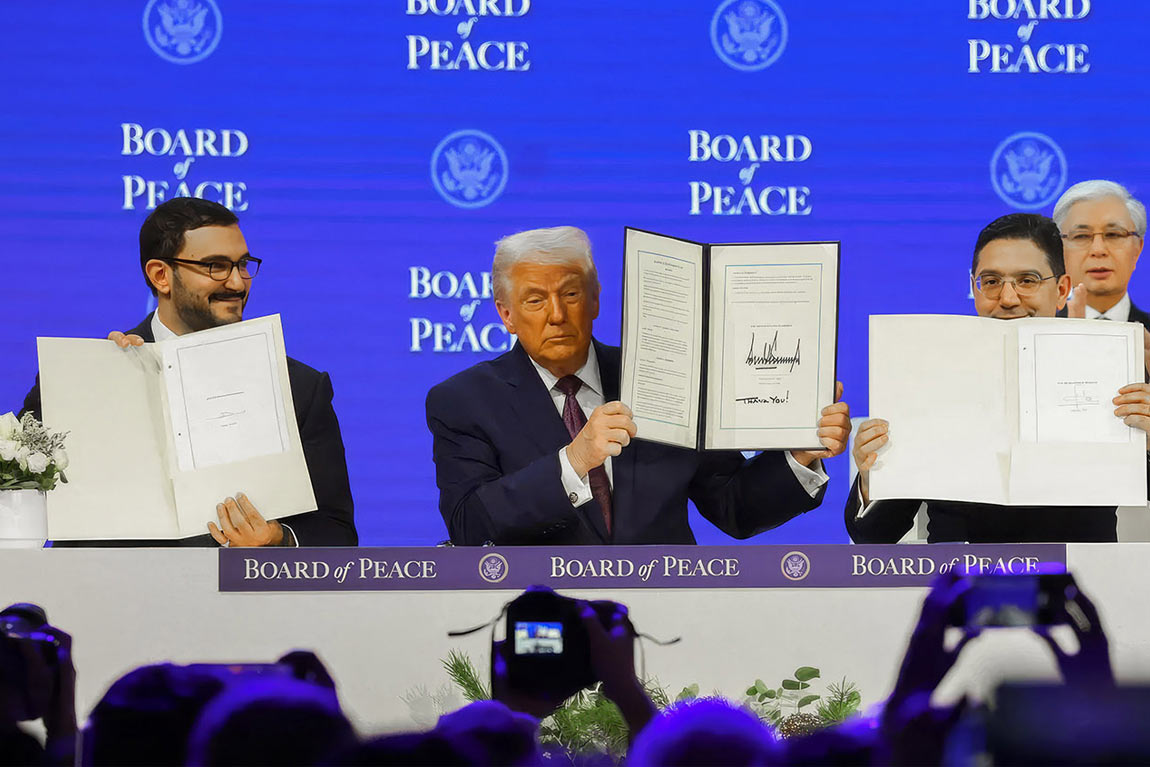
Bahrain received a formal invitation to join the Board of Peace (BoP) around mid-January, signaling its potential involvement in a new regional initiative aimed at fostering stability and development. This invitation marked a significant step for the Kingdom, positioning it as a key player in a new multilateral framework. The Kingdom of Bahrain subsequently announced its readiness to provide the necessary infrastructure and skills to establish an effective Government Digital Services platform for Gaza. This commitment shows Bahrain's proactive approach to addressing regional challenges and offering concrete solutions. The establishment of such a platform would be key for the modernization of governance and public services in Gaza, providing essential digital tools and expertise. This development notes Bahrain's commitment to supporting stability and development in the region, offering practical assistance alongside its diplomatic efforts.
Bahrain's Identity and US Partnership
King Hamad bin Isa Al Khalifa has issued royal directives concerning Bahrain's contributions to the Board of Peace's mandate. These directives are a clear indication of Bahrain's dedication to the principles and objectives of the BoP. These directives align with a national identity fostered by King Hamad, which emphasizes principles of peace, coexistence, and tolerance. This identity is deeply ingrained in the Kingdom's foreign policy and domestic values. King Hamad stated that "these values are at 'the heart' of Bahrain’s identity," showing their fundamental importance to the nation's ethos. The King Hamad Global Center for Coexistence and Tolerance, an institution dedicated to promoting these very principles, has proposed to the UN General Assembly that January 28 be adopted as the annual International Day of Peaceful Coexistence. This proposal reflects Bahrain's broader ambition to share its values on a global stage and encourage international dialogue on these critical themes. The Center's initiative notes Bahrain's role as an advocate for interfaith harmony and mutual understanding.
Bahrain's relationship with the United States has also been a focal point, as evidenced by a past interaction between its leadership and former President Donald Trump. During a discussion regarding the potential establishment of a "Donald J. Trump Institute of Peace," President Trump reportedly quipped to the King of Bahrain about taking "25 % of the building [the Donald J. Trump Institute of Peace] for about $6 billion." This interaction notes the unique and direct nature of diplomatic exchanges between the two nations, often characterized by a blend of serious policy discussions and informal dialogue. The King of Bahrain's engagement with President Trump further illustrates the depth of the bilateral relationship and the high-level access enjoyed by Bahraini leadership in Washington. These interactions are part of a long-standing strategic partnership that both countries value.
Navigating Fiscal Realities and Aid
Bahrain has implemented contributions to a US$7-billion fund designated for the Board of Peace’s operations and administration. This substantial financial commitment demonstrates Bahrain's serious long-term investment in the success and sustainability of the BoP. The fund is intended to cover a wide range of operational costs, administrative functions, and project implementations, ensuring the Board has the necessary resources to achieve its ambitious goals. Despite this, Bahrain's Minister of Sustainable Development, Noor bint Ali Alkhulaif, dismissed claims that Bahrain was paying US$1 billion for a permanent seat on the Board. Minister Alkhulaif clarified that Bahrain's contributions are part of a broader commitment to regional stability and development, not a transactional payment for a specific position. The Minister's statement aimed to provide transparency regarding Bahrain's financial involvement and to counter any misinterpretations of its role.
Concurrently, the Royal Humanitarian Foundation (RHF) announced a 100-ton consignment of humanitarian aid dispatched to Gaza. This significant aid delivery shows Bahrain's immediate response to humanitarian crises in the region, complementing its longer-term strategic initiatives. This aid delivery was facilitated in cooperation with Operation Gallant Knight 3, a major humanitarian effort, and the Emirates Red Crescent in the United Arab Emirates (UAE), showcasing regional collaboration in addressing urgent needs. The RHF's involvement notes Bahrain's commitment to alleviating suffering and providing essential support to affected populations. These financial commitments and aid efforts coincide with Bahrain's recent economic adjustments. At the beginning of the year, Bahrain implemented important economic reforms specifically aimed at fiscal consolidation. These reforms were designed to strengthen the Kingdom's financial position and ensure long-term economic stability, reflecting a strategic approach to managing national resources. Days after the Board of Peace meeting, Fitch Ratings downgraded Bahrain’s credit rating. This downgrade, occurring shortly after the high-profile BoP meeting, placed additional scrutiny on Bahrain's economic performance and its capacity to manage both domestic reforms and international financial commitments. The timing of the downgrade noted the complex interplay between Bahrain's economic health and its regional and global engagements.
Broader Geopolitical Significance
King Hamad bin Isa Al Khalifa traveled to Washington, DC, for the first Board of Peace (BoP) meeting in February. This high-level participation by the monarch himself showed the strategic importance Bahrain places on the BoP initiative and its relationship with the United States. The King's presence at the inaugural meeting signaled Bahrain's commitment to being a central figure in this new diplomatic endeavor. Bahrain's participation in the BoP is viewed as a mechanism to deepen and institutionalize its ties with the United States, separate from the Abraham Accords. This distinction is key, as it indicates a broader, more full framework for cooperation that extends beyond the normalization agreements with Israel. The BoP offers a new avenue for Bahrain to solidify its strategic partnership with the US, fostering collaboration on a wider array of regional issues.
Bahrain has sought to build on the Full Security Integration and Prosperity Agreement (C-SIPA), which was signed in September 2023. The C-SIPA itself represents a significant enhancement of the bilateral relationship, focusing on security, economic cooperation, and regional stability. The BoP is seen as a natural extension of these efforts, further embedding Bahrain into a US-led regional security and development architecture. His Highness Shaikh Isa bin Salman Al Khalifa attended the signing ceremony for the BoP charter in Davos. His presence at this international forum further emphasized Bahrain's dedication to the BoP and its global implications. At the ceremony, His Highness Shaikh Isa bin Salman Al Khalifa affirmed the importance of continuing to strengthen the historic bilateral and strategic relationship between Bahrain and the United States. This affirmation reiterated Bahrain's unwavering commitment to its alliance with Washington, noting the enduring nature of their partnership. The United Kingdom (UK) joined the C-SIPA framework in June 2025, expanding the agreement's reach and significance. This inclusion of the UK demonstrates the growing international interest in and support for the security and prosperity initiatives spearheaded by the US and its regional partners, including Bahrain. The expansion of C-SIPA to include another major global power further solidifies its role as a key regional security framework. Bahrain currently holds a non-permanent seat in the Security Council for the 2026–2027 term. This position on the UN Security Council provides Bahrain with an elevated platform to advocate for its foreign policy objectives, including the promotion of peace and stability, and to contribute to international decision-making on critical global issues. King Hamad bin Isa Al Khalifa previously stated that "these values are at 'the heart' of Bahrain’s identity," referring to principles of peace, coexistence, and tolerance. This consistent articulation of Bahrain's core values, both domestically and internationally, reinforces the Kingdom's image as a proponent of dialogue and resolution in a complex geopolitical landscape.