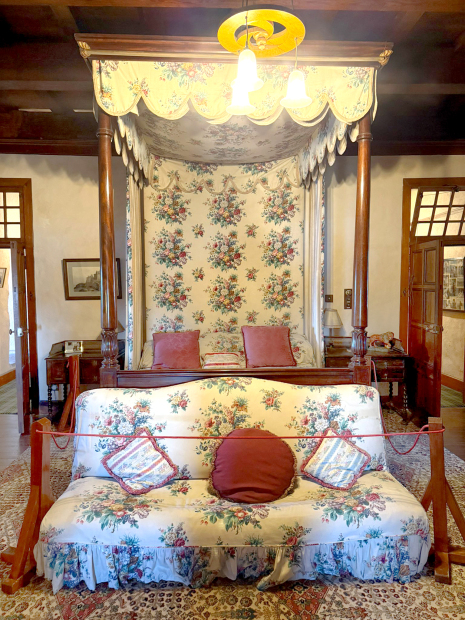
A historical Bahraini medal is currently on display in a cabinet within the Banqueting Hall of Duart Castle, located on the Isle of Mull, Scotland. The medal, described as a proud piece of Bahrain history, is a significant artifact now showcased in the Scottish castle. This particular medal, a proud piece of Bahrain history, is prominently displayed in the Banqueting Hall, offering a tangible connection between two distinct cultures. Duart Castle is a prominent landmark situated on the Isle of Mull, a part of the Inner Hebrides island group off the west coast of Scotland, making it an ideal location for such a unique exhibition. Its current exhibition provides a unique cross-cultural link between the Arabian Gulf nation and the historic Scottish estate, drawing attention to a moment of shared history.
Baron Maclean's Notable Roles
The medal was presented to Charles Hector Fitzroy Maclean, Baron Maclean, the 27th Clan Chief of Clan Maclean of Duart. Baron Maclean held the prestigious position of Lord Chamberlain to Britain’s late Queen Elizabeth II, serving in that capacity from 1971 until 1984. This role placed him at the heart of the British Royal Household, overseeing important ceremonial duties and acting as a key advisor. His significant contributions also extended to the Scouting movement, where he played a key international role. Baron Maclean was appointed Chief Scout of the UK, a role he fulfilled from 1959 to 1971, guiding the movement during a period of significant growth and change. Concurrently, he served as Chief Scout of the Commonwealth from 1959 to 1975, expanding his influence and dedication to youth development across numerous nations. The World Organisation of the Scout Movement recognized his exceptional dedication and service by awarding him the Bronze Wolf distinction, its highest honor, acknowledging his profound impact on Scouting worldwide.
Duart Castle's Rich History
Duart Castle, the ancestral seat of Clan Maclean, has stood overlooking the Sound of Mull and Loch Linnhe for over 700 years. The historic fortress was constructed in 1360, establishing its dominance over the strategic waterway and serving as a formidable stronghold for the clan. For more than seven centuries, the castle has commanded views over the Sound of Mull and Loch Linnhe, asserting its historical importance in the region. Its architectural and historical significance has also made it a notable location for film productions, attracting filmmakers seeking authentic and dramatic backdrops. The castle served as a filming site for the 1945 movie 'I Know Where I'm Going!', lending its ancient walls to the classic romantic comedy. It also featured in the 1971 film 'When Eight Bells Toll', a thriller that utilized the castle's rugged setting. More recently, the 1999 production 'Entrapment' showcased Duart Castle, further contributing to its cultural footprint beyond its clan history and solidifying its place in cinematic lore.
Island Setting and Clan Connection
The Isle of Mull, where Duart Castle is situated, is one of the larger islands of the Inner Hebrides off Scotland's west coast. The island's current population stands at 3,063 residents, making it a relatively sparsely populated area, known for its dramatic landscapes and rich wildlife. Despite its size and population, the island serves as a significant cultural and historical hub, largely due to landmarks like Duart Castle, the ancestral home of Clan Maclean. The castle's location offers commanding views over the Sound of Mull and Loch Linnhe, showing the island's strategic importance in historical clan territories and its enduring natural beauty. The serene yet imposing setting of the castle on the island adds to its mystique and historical resonance.
A Call for Cultural Exchange
The medal depicts the figure of the Late Amir His Highness Shaikh Isa bin Salman Al Khalifa, a significant historical figure for Bahrain. It is mounted on a ribbon featuring the colors of the kingdom, symbolizing its national identity. This specific depiction and design highlight the medal's importance as a cultural and historical artifact. In recent years, Duart Castle has received substantial investments exceeding BD600,000 for upgrades and maintenance, demonstrating a commitment to preserving its heritage. These significant funds have been key in ensuring the castle's structural integrity and its ability to continue hosting visitors and exhibitions. The castle suffered significant damage in the winter of 2013, losing four ceilings during that period, necessitating extensive restoration work to maintain its historical grandeur and ensure its future. The ongoing preservation efforts underline the castle's continued role as a vital historical and cultural landmark.