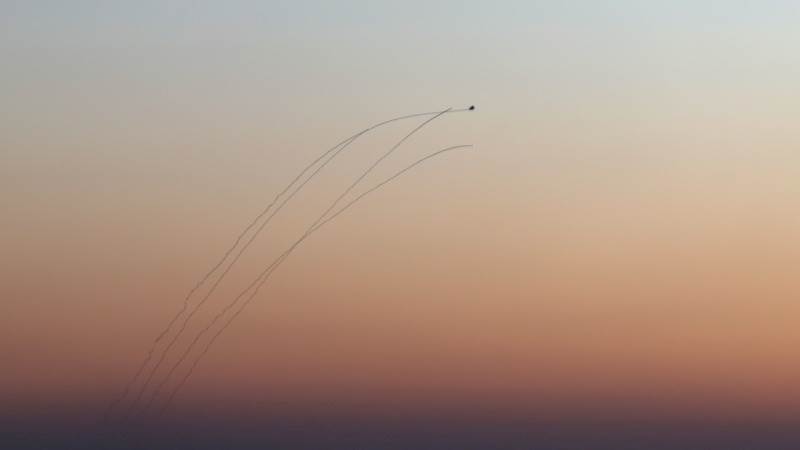
Bahrain condemned the latest Iranian missile attack against its territory and neighboring Kuwait on Saturday, describing the aggression as a flagrant violation of their sovereignty. US forces intercepted six of the seven ballistic missiles fired by Iran on Friday, with two reportedly falling apart en route to Kuwait, while a seventh failed to reach its target. The US military also shot down Iranian ballistic missiles and drones launched toward the Strait of Hormuz and Gulf Arab allies on Friday, downing multiple drones targeting American forces in Kuwait.
Iran’s Revolutionary Guard claimed responsibility for targeting the Ali Al Salem air base in Kuwait and the US Navy’s 5th Fleet in Bahrain, acknowledging it targeted the headquarters of the 5th Fleet and U.S. Military facilities in another country. U.S. And Bahraini forces intercepted missiles aimed at Bahrain, while Bahrain activated air raid sirens and instructed residents to move to the nearest safe location. The Bahraini Ministry of Foreign Affairs stated that "Iran’s aggression against the Kingdom of Bahrain and the State of Kuwait, and affirms that security is not built with missiles nor is stability preserved by planting mines." The ministry added that "This blatant aggression constitutes a flagrant violation of the sovereignty of both countries." The Kingdom of Bahrain specifically condemned on Saturday the latest Iranian attack against its territory and neighboring Kuwait, reiterating its firm stance against such hostile actions.
Kuwait Under Fire
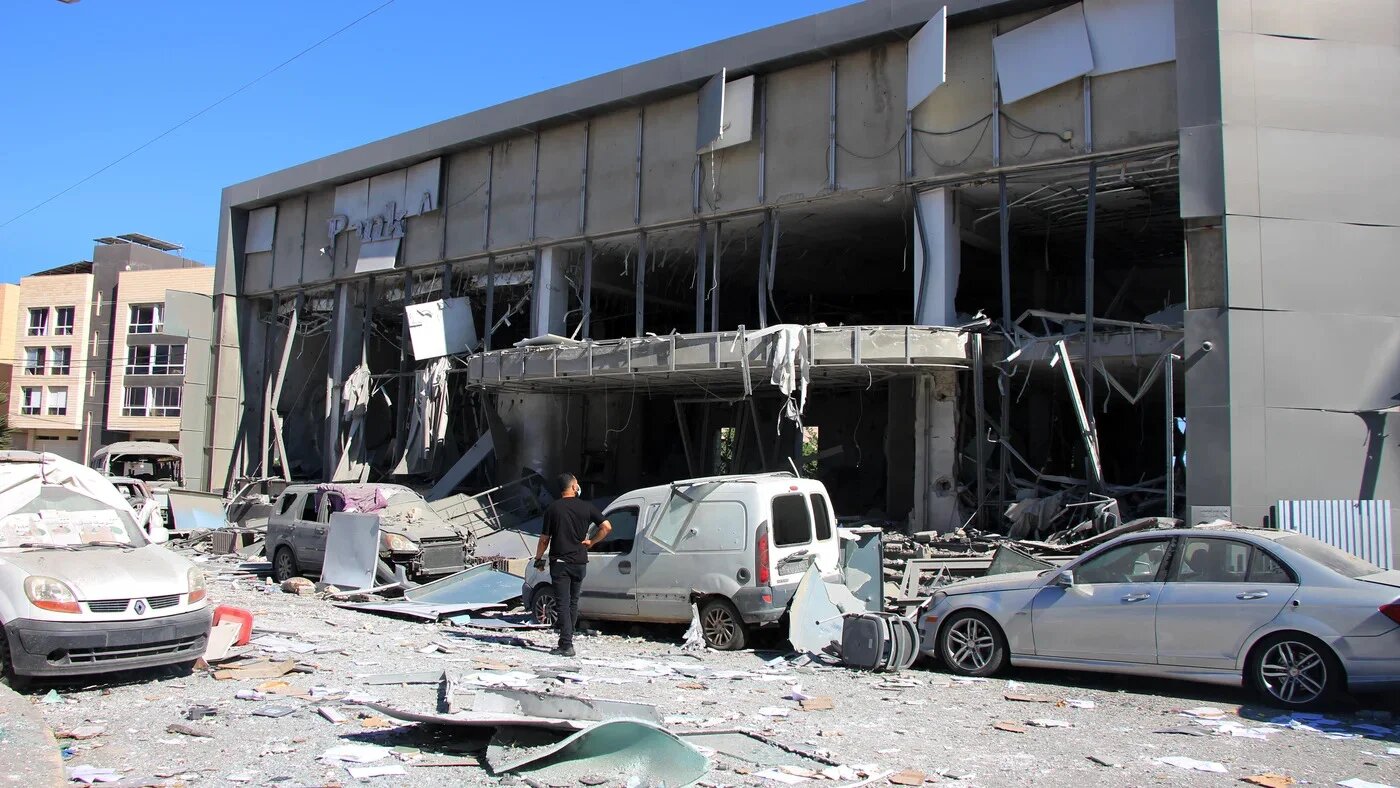
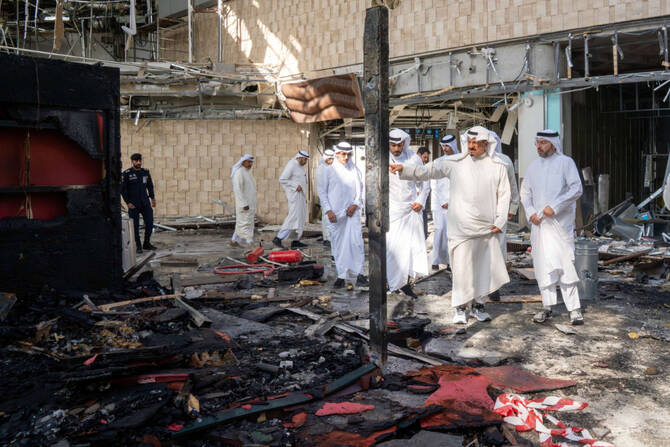
Kuwait’s military announced that its forces were intercepting missiles and drones that had attacked the country. The attack on Kuwait International Airport led to the brief closure of the airfield. Brig. Gen. Saud Abdulaziz Al-Otaibi, a spokesperson for Kuwait's Defense Ministry, stated that "a number of hostile drones" specifically targeted a passenger building at Kuwait International Airport.
Iran's paramilitary Revolutionary Guard claimed the terminal sustained damage from a U.S.-made interceptor that, according to them, failed to hit Iranian missiles. However, U.S. Central Command rejected Iran's claim as false, asserting that Iranian drones executed a "deliberate, calculated and unjustified attack" on the airport.
The assault resulted in the death of an Indian national. Additionally, 63 people were wounded in the incident, including both passengers and workers at the airport. Kuwait's Defense Ministry confirmed that its forces successfully destroyed over a dozen missiles and a similar number of drones launched from Iran. Following a partial reopening of the airport, Kuwait Airways flights resumed operations from a different terminal. The swift response by Kuwait's military was key in mitigating further damage and casualties, as forces were actively intercepting missiles and drones attacking the country.
US and Iranian Responses
US Central Command reported no harm to US personnel resulting from the missile attack. Following the missile barrages, US Central Command launched strikes against Iranian military sites. US Central Command struck Iranian coastal surveillance radar sites, including one located on an island in the Strait of Hormuz. The US also launched strikes on an Iranian military ground control station on Qeshm Island in the Strait of Hormuz. Iran's Foreign Ministry stated that a telecommunications tower was struck during these operations.
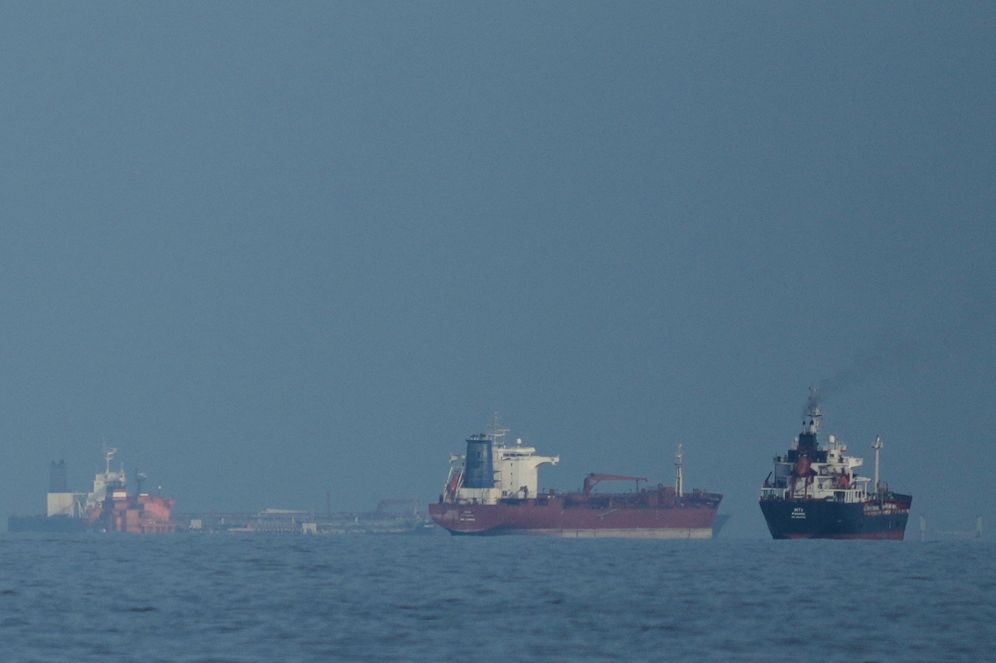
A US Central Command spokesperson stated the actions were taken "to defend against further attacks," adding that "The attack drones posed an immediate threat to regional maritime traffic." In addition, the U.S. Launched strikes against military sites located on an Iranian island. The Bahraini foreign ministry called on Iran to immediately cease attacks on its Gulf neighbors following the incident.
Reports indicated that US and Iranian negotiators had reached a tentative agreement a week prior to extend a ceasefire by 60 days. President Donald Trump, however, indicated that negotiations were ongoing to extend the Iran ceasefire. "the situation with Iran seems to be going quite well," Trump said, adding, "We’re going to come out of Iran very quickly and it’s going to be very strong one way or the other, whether it’s a piece of paper or the very tough way." He further commented, "The very tough way is maybe the easier way, but we’re going to come out, and your fertilizer prices are going to go way down, just like they were four months ago." These negotiations have been part of a broader diplomatic effort, as talks have dragged on for weeks with mediators seeking to establish a more enduring truce in the region.
When asked by reporters if the ceasefire remained in place, President Donald Trump stated, "We've been hitting them pretty hard." He elaborated, "I'd say in that part of the world a ceasefire is when you're shooting in a more moderate manner." Trump also remarked, "it’s a very hard thing for them," and, "There are things they never thought they’d be doing that they’re going to have to do. They’ve got no choice, and it takes a little while."
Broader Regional Tensions
The conflict between the United States and Iran is now in its fourth month, having commenced on February 28 with U.S. And Israeli strikes on Iran. Talks have continued for weeks as mediators seek to establish a more enduring truce in the region. Global fuel prices remain elevated due to the ongoing conflict. The war between the U.S. And Iran, which began on February 28 with U.S. And Israeli strikes on Iran, has contributed significantly to regional instability.
Fighting in Lebanon between Israel and Iran-backed Hezbollah militants is also straining these diplomatic efforts. Israeli forces have advanced deeper into Lebanon than at any point in over a quarter-century, while Hezbollah has launched rocket and drone attacks.
President Donald Trump confirmed on Monday that he had called Israeli Prime Minister Benjamin Netanyahu "crazy." Despite this, Mr. Trump stated that "the situation with Iran seems to be going quite well." He added, "We’re going to come out of Iran very quickly and it’s going to be very strong one way or the other, whether it’s a piece of paper or the very tough way." Mr. Trump suggested that "the very tough way is maybe the easier way," predicting that "your fertilizer prices are going to go way down, just like they were four months ago." He also remarked, concerning Iran, that "it’s a very hard thing for them" and that "There are things they never thought they’d be doing that they’re going to have to do. They’ve got no choice, and it takes a little while." Prime Minister Netanyahu, for his part, described the situation as "playing with fire," but also affirmed, "We always find a way to work out our differences."
Diplomatic Fallout
Earlier in the week, Iranian drones damaged a passenger terminal at Kuwait’s main airport, resulting in one fatality and dozens wounded. Following these events, Kuwait is expelling two Iranian diplomats, according to reports. President Donald Trump commented on the broader situation, stating that "the situation with Iran seems to be going quite well." Trump added that "We’re going to come out of Iran very quickly and it’s going to be very strong one way or the other, whether it’s a piece of paper or the very tough way." He further remarked, "The very tough way is maybe the easier way, but we’re going to come out, and your fertilizer prices are going to go way down, just like they were four months ago." Trump also indicated that Iran still possesses 21 percent to 22 percent of its missiles. He said that "it’s a very hard thing for them" and that "There are things they never thought they’d be doing that they’re going to have to do. They’ve got no choice, and it takes a little while."