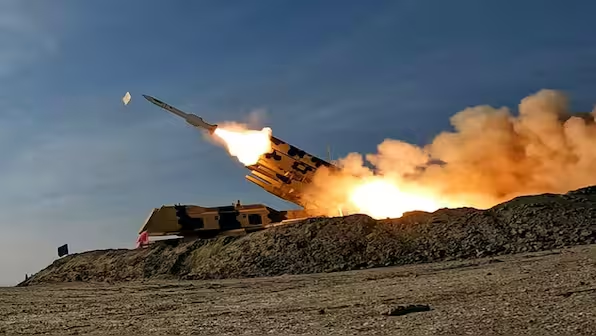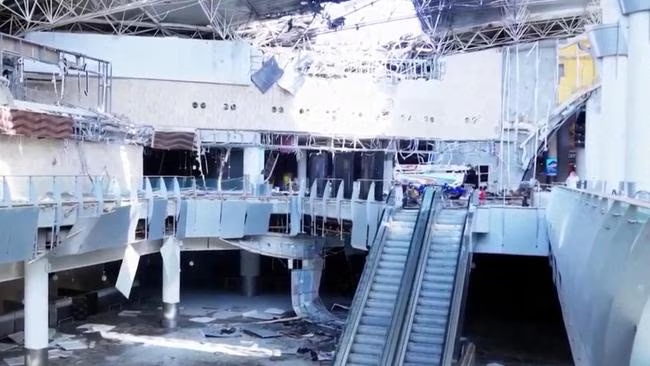
The United States military launched what it described as "self-defense strikes" at military installations on Iran’s Qeshm Island, specifically targeting a military ground control station. These targeted actions by the US military aimed at disrupting Iranian capabilities and were directly attributed to what American officials termed "unwarranted Iranian aggression during the ongoing ceasefire." Concurrently, American forces downed several Iranian missiles and drones, demonstrating a strong defensive posture in the region. In tandem with the self-defense strikes on Qeshm Island, US Central Command (CENTCOM) also shot down three one-way attack drones that Iranian forces had fired toward civilian mariners in the surrounding regional waters, noting the broader threat posed by Iranian military activities to maritime safety. According to US Central Command (CENTCOM), none of Iran's strikes successfully hit their intended targets, showing the effectiveness of US and allied air defense systems.
US Strikes Iranian Military Sites
Monday's strikes by the United States military focused on Iran's Qeshm Island, described by US Central Command as a key location where the Iranian regime houses ballistic missiles. This strategic island is considered a critical hub for Iran's missile program, according to US intelligence assessments. These ballistic missiles are reportedly used in ongoing attacks against Kuwait and Bahrain, directly threatening US allies and regional stability. Qeshm Island also hosts what US Central Command refers to as the Iranian regime's underground and heavily fortified "missile city," a complex network designed to protect and launch these weapons. The US military emphasized that these actions were direct responses to recent Iranian provocations, characterizing them as necessary measures to protect American personnel and interests.
The renewed US strikes occurred just one day after the Islamic Republic obliterated an American drone, a significant act of aggression that escalated tensions. This incident was followed by Iran ordering a separate drone strike on a US base located in Kuwait, further demonstrating Tehran's willingness to engage in direct confrontation. These preceding events provided immediate context for the US response, framing the American strikes as reactive and defensive. US Secretary of State Marco Rubio is actively working to reassure lawmakers that President Donald Trump’s strategy regarding the conflict with Iran is progressing as planned, seeking to maintain congressional support for the administration's approach to regional security. Mr. Rubio has been vocal about the need for a firm stance against Iranian aggression while also assuring that the overall strategy to combat the Iran war remains on track, despite the recent uptick in hostilities.
Iranian Attacks on Gulf Allies
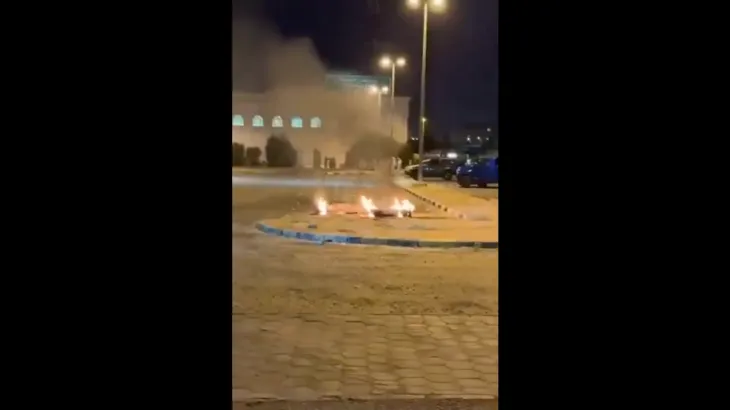
Iran launched missiles and drones overnight at US targets in Kuwait and Bahrain, with Kuwait's airport reportedly struck during the Iranian attack, though the full extent of the damage or casualties remains unclear from initial reports. Iranian state media, however, broadcast that three missiles hit "enemy bases" in Kuwait, presenting a different narrative of the events to its domestic audience. The Islamic Revolutionary Guard Corps (IRGC) described its attacks on Kuwait as a response to US forces' "brazen and blatant aggression" following strikes on Qeshm Island, framing their actions as retaliatory and justified. This rhetoric from the IRGC shows the tit-for-tat nature of the current exchanges and notes the cycle of escalation.
According to reports, the IRGC warned that Tuesday's strikes were merely an "initial response," suggesting the potential for further military action if the situation does not de-escalate. Tehran launched at least five missiles that ultimately failed to hit their intended targets in neighboring Gulf countries, indicating a lack of precision or effectiveness in their targeting. Two of these missiles fell short or splintered mid-air, failing to reach their intended destinations. Meanwhile, US and Bahraini air defense forces successfully intercepted three others, preventing potential damage or casualties and showcasing the strong defensive capabilities deployed in the region. This interception capability proved key in mitigating the impact of the Iranian missile barrage, further reinforcing US Central Command's assessment that none of Iran's strikes were successful in hitting their intended targets.
Regional Context and Warnings
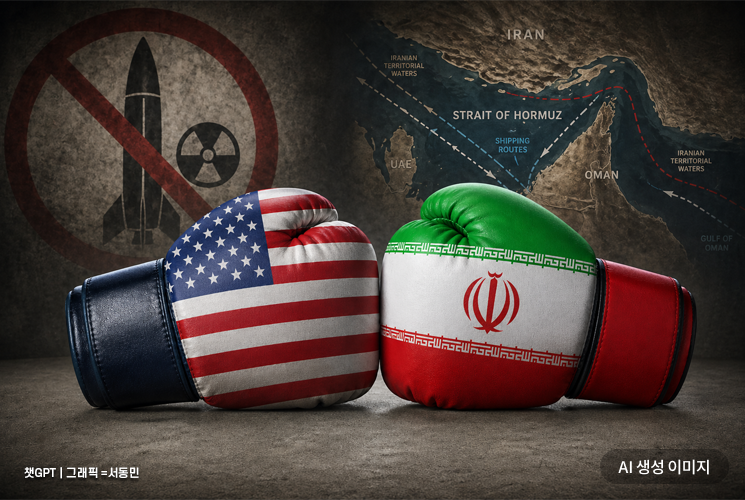
Qeshm Island, a significant location in the recent military exchanges, is strategically positioned along the critical Strait of Hormuz, a vital chokepoint for global oil shipments. Its geographic importance amplifies the significance of any military activity in its vicinity, given that approximately one-fifth of the world's total oil supply passes through this narrow waterway. The current series of firefights has escalated further since the Islamic Revolutionary Guard Corps (IRGC) engaged in mine-laying activities last week, an act that directly prompted American strikes in Bandar Abbas, Iran’s primary naval station. This earlier incident demonstrated a clear pattern of Iranian provocation followed by US response, setting a precedent for the recent confrontations. The US military has condemned these actions, labeling them "unwarranted Iranian aggression during the ongoing ceasefire," emphasizing the perceived violation of established norms and agreements. Separately, the US military characterized its own recent actions as "self-defense strikes," maintaining that their operations are solely aimed at protecting American interests and personnel from hostile acts. Meanwhile, Iran has asserted that diplomatic talks between the two nations are currently on hold. Tehran maintains that these discussions cannot resume until Israel ceases its attacks against Hezbollah in Lebanon, linking the regional conflict in the Gulf to broader geopolitical issues in the Middle East and adding another layer of complexity to potential de-escalation efforts.