The United States military conducted self-defense strikes on Iran's Qeshm Island, according to a statement from the US military. The military specifically stated it carried out ‘self-defence’ strikes on Iran’s Qeshm Island. This action followed an incident on Tuesday where U.S. Forces intercepted multiple Iranian ballistic missiles and drones. CENTCOM announced that these projectiles were launched toward regional neighbors, though none of them ultimately reached their intended targets.
Iranian Attacks Prompt US Retaliation
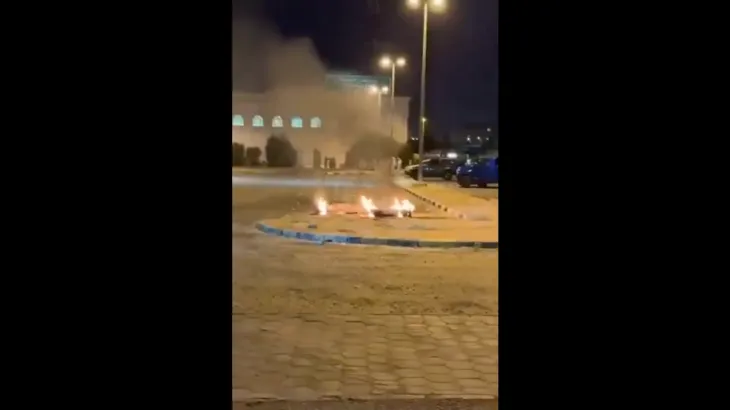
Iran had previously launched missiles and drones toward U.S. Bases in Kuwait and Bahrain, prompting Kuwait's air defenses to intercept hostile attacks. Bahrain also sounded warning sirens during the incident. These launches by Iran against U.S. Bases in Kuwait and Bahrain showed the volatile regional tensions. Following these events, reports indicated that explosions were heard near Qeshm Island, according to Iran’s state news agency. The United States also confirmed it fired at a tanker that was reportedly headed toward Iran. These developments occurred on June 3, 2026. The US military’s response on Qeshm Island came after these significant Iranian provocations.
Ceasefire Status and Broader Conflict
The United States maintains that the US-Iran ceasefire remains in effect following the recent strikes. This assertion comes amid a volatile stalemate that has settled over the conflict, with a shaky ceasefire in place, according to Reuters. The Strait of Hormuz continues to be largely closed to maritime traffic, a key indicator of ongoing instability despite any ceasefire declarations. Iran and the United States had previously announced last week that they reached a tentative initial agreement to halt the war. However, Reuters reported that both sides have yet to formally approve this deal, leaving the fragile truce in limbo. The renewed escalation, as noted by Reuters, occurred more than three months after the United States and Israel launched strikes against Iran, noting the persistent underlying tensions in the region. The conflict, which began on February 28, has since settled into a volatile stalemate, with a shaky ceasefire in place while the Strait of Hormuz remains largely closed to maritime traffic.
Regional Instability and Humanitarian Impact
The war, which commenced on February 28, has resulted in thousands of fatalities, predominantly in Iran and Lebanon, according to Reuters. The crisis has also triggered the latest round of fighting between Israel and Hezbollah, with Israel carrying out its deepest incursion into Lebanon in 25 years. This escalation marks a significant widening of the conflict beyond the direct US-Iran confrontation. Lebanese security sources reported that Israel continued strikes on several towns in southern Lebanon on Tuesday, despite a partial ceasefire brokered by the U.S. And announced on Monday. The continued Israeli military action in Lebanon further complicates efforts to de-escalate regional tensions.
Meanwhile, one of MSC's vessels was struck by two projectiles while docked at Iraq's Umm Qasr port the previous day. Iran's Revolutionary Guards claimed responsibility for the attack, stating it was in retaliation for a U.S. Strike on an Iranian vessel in the Gulf of Oman. This incident demonstrates the ongoing tit-for-tat nature of attacks in the region. UNICEF reported that escalating transport costs and disruptions to supply chains were hindering life-saving aid deliveries to Gaza, Lebanon, the Democratic Republic of Congo, Mali, Somalia, South Sudan, Nigeria, and other affected nations. The humanitarian impact of the widespread conflict is severe, affecting millions across multiple continents.