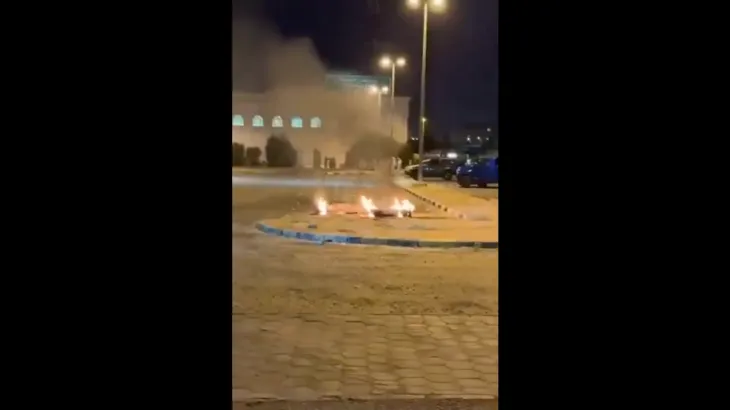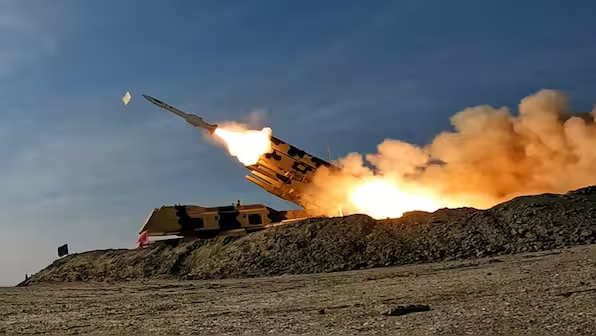
Iran launched missiles and drones toward Kuwait and Bahrain, with two ballistic missiles reportedly falling short or breaking apart en route to Kuwait. The incident occurred as American naval assets intercepted several Iranian drones. This latest escalation marks a significant increase in regional tensions, drawing international attention to the volatile situation in the Gulf.
US Navy forces shot down three one-way attack drones launched by Iran. The drones were tracking toward civilian commercial vessels operating in regional waters, according to US Central Command (CENTCOM). The interceptions were carried out by American naval assets, noting the ongoing vigilance required to protect maritime interests and civilian shipping in the area. These actions show the persistent threat posed by unmanned aerial vehicles in the strategic waterways of the Middle East.
Panic and Interception
The barrage activated air defense warning sirens and sent commuters scrambling for safety across Kuwait’s highways, according to reports. This sudden onset of alarm caused widespread disruption and fear among the civilian population. American forces downed several Iranian missiles and drones in tandem with the "self-defense strikes" on the island, US Central Command (CENTCOM) announced Tuesday night. This action occurred just one day after the Islamic Republic destroyed an American drone and ordered a drone strike on a US base in Kuwait, signaling a rapid tit-for-tat escalation. Motorists were seen abandoning their vehicles and fleeing on foot during the incident, a stark illustration of the panic that gripped the region. Footage shared on social media captured gridlocked traffic on a Kuwaiti highway as air raid sirens wailed across the country, painting a vivid picture of the chaos and uncertainty faced by ordinary citizens.
Anti-air interceptors streaked into the night sky over Kuwait. Two interceptors were launched from a MIM-104 “Patriot” Surface-to-Air Missile Battery positioned near Kuwait City, attempting to neutralize the incoming threats. In the Ardhiya district, residential areas faced close calls when what appeared to be a failed air-defense interceptor crashed back down, according to officials, narrowly avoiding civilian casualties. CENTCOM later stated that the intercepted projectiles "failed to hit their intended targets," a testament to the effectiveness of the defensive measures employed by US and allied forces. The Kuwaiti military, responding swiftly to the crisis, issued emergency broadcasts urging the public to remain calm and head to the nearest safe shelter, providing key guidance amidst the unfolding events.
These strikes came hours after the US Navy disabled an unladen oil tanker reportedly bound for Iran’s Kharg Island, following its repeated disregard of maritime warnings. This pre-emptive action by the US Navy against the tanker showed the broader context of maritime security operations in the Gulf. The ongoing firefights have escalated since Islamic Revolutionary Guard Corps (IRGC) mine-laying activities spurred American strikes in Bandar Abbas, Iran’s primary naval station, last week. The sequence of events suggests a dangerous cycle of provocation and retaliation that continues to destabilize the region, with each incident potentially leading to further, more severe confrontations.
US Response and Justification
The Iranian strike package "failed to hit their intended targets," according to a statement released by US Central Command (CENTCOM), which added that "All Iranian attacks on American and partner forces failed." This assessment from CENTCOM noted the success of defensive operations in mitigating the impact of the Iranian aggression. Three missiles targeting Bahrain were successfully intercepted and destroyed through a combined effort from US and Bahraini air defense forces, CENTCOM reported, demonstrating effective regional cooperation in defense. Following these events, American forces conducted "self-defense strikes" against an Iranian military ground control station on Qeshm Island. Soon after the US strikes, local residents on Qeshm Island reported explosions, confirming the impact of the American retaliatory actions.
Qeshm Island is identified by US Central Command as a key location where the Iranian regime houses ballistic missiles, which it uses in its continuing attacks against Kuwait and Bahrain. This strategic importance makes Qeshm Island a critical target in any conflict involving Iranian missile capabilities. The US military condemned what it termed "unwarranted Iranian aggression during the ongoing ceasefire," emphasizing its stance that Iran's actions were unprovoked and violated agreed-upon terms. CENTCOM forces "remain vigilant and ready to defend against unwarranted Iranian aggression during the ongoing ceasefire," the command stated, reiterating its commitment to regional security and the protection of its personnel and allies. The US military’s condemnation showed the gravity with which it views Iran’s actions, especially in the context of broader efforts to de-escalate tensions. Qeshm Island, strategically located along the critical Strait of Hormuz, holds immense significance for both Iran's military operations and global shipping lanes. Its position allows Iran to exert influence over one of the world's most vital maritime chokepoints, making any military activity in the area particularly sensitive.
In response, the Islamic Revolutionary Guard Corps (IRGC) described its attacks on Kuwait as an "initial response" to US forces' "brazen and blatant aggression" in strikes on Qeshm Island. This framing by the IRGC portrayed their actions as a defensive measure, attempting to justify their missile and drone launches. Reports indicated that Monday’s strikes also centered around Qeshm Island, which the Iranian regime refers to as its underground and heavily fortified "missile city." This designation notes the extensive military infrastructure Iran has developed on the island, showing its role as a central hub for missile deployment and control. The IRGC's narrative of "brazen and blatant aggression" suggests a deep-seated grievance and a readiness to engage in further retaliatory actions, raising concerns about the potential for a prolonged and intensified conflict. The repeated targeting of Qeshm Island by both sides shows its strategic value and its key role in the current cycle of military engagements.
Kuwait's Condemnation
Tehran launched at least five missiles that "failed to hit their intended targets" in neighboring Gulf countries, according to US Central Command (CENTCOM), though Iranian state media broadcast that three missiles struck "enemy bases" in Kuwait. This discrepancy in reporting notes the propaganda aspect of the conflict, with each side presenting a narrative that serves its own interests. Footage shared on social media captured gridlocked traffic on a Kuwaiti highway as air raid sirens wailed across the country, providing a civilian perspective on the immediate impact of the attacks. The Kuwaiti military issued emergency broadcasts during the incident, urging the public to remain calm and head to the nearest safe shelter, demonstrating a coordinated effort to manage public safety during the crisis. The conflicting reports from CENTCOM and Iranian state media further complicate the understanding of the actual damage and intent behind the strikes, making it difficult to ascertain the full scope of the incident.
Kuwait’s Cabinet, led by Prime Minister Sheikh Ahmad Abdullah Al Ahmad Al Sabah, issued a condemnation of Tehran following the attacks. The Cabinet called the strikes a "direct threat to civilians and critical infrastructure," showing the severe implications of the Iranian actions on Kuwaiti national security and public welfare. Kuwaiti officials asserted the nation’s sovereign right under Article 51 of the UN Charter to take any necessary measures to protect its national security, signaling their readiness to defend their territory and citizens. This invocation of international law provides a legal framework for any future defensive actions Kuwait might undertake. The Islamic Revolutionary Guard Corps (IRGC) warned that Tuesday’s strikes were merely an "initial response," suggesting that further military actions could be forthcoming and keeping the region on high alert. This warning from the IRGC adds another layer of uncertainty and threat to an already tense situation, indicating that the current hostilities may not be resolved quickly. The firm stance taken by Kuwait’s Cabinet reflects the serious nature of the threat perceived by the nation and its commitment to safeguarding its sovereignty and its populace.