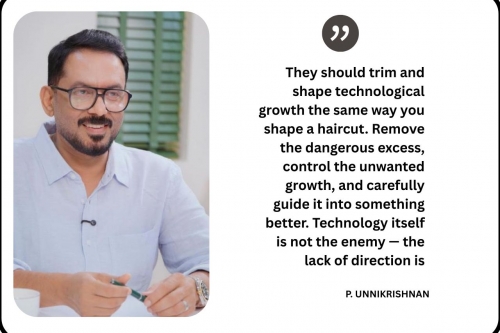
A conversation between the author and his barber, a native of Kerala who has been the author's preferred hairstylist for the past year, recently took place in a small salon near Salmaniya, Kingdom of Bahrain, touching upon the evolving role of artificial intelligence. The barber expressed concern about the technology's implications, asking, "Do you trust AI?" He added, "But you trust me because you know me. AI is something people don’t really know closely. So how can they trust it?" This personal interaction showed a fundamental human need for familiarity and connection, which stands in stark contrast to the opaque nature of advanced AI systems. The barber, P. Unnikrishnan, who had become the author's favorite hairstylist over the past year, deeply rooted his concerns in this trust deficit.
The barber raised specific worries about military applications, stating, "You know,” he said, “there’s a big debate happening in America about whether AI should be allowed to access dangerous military knowledge." This debate notes a critical juncture in the development of military technology. He then questioned the future of warfare, asking, "So in the future,” he asked, “will wars become AI versus AI?" This query reflects a growing apprehension that autonomous systems could fundamentally alter the nature of conflict, potentially removing human decision-making from the most critical moments. These concerns align with broader discussions, as Barry Diller, speaking at The Wall Street Journal conference, pointed out that the primary issue with AI is not personal trust but its unforeseen consequences. Diller emphasized that even the creators of AI cannot fully imagine future outcomes, noting the profound uncertainty surrounding the technology's long-term impact. He warned that if humanity loses control over artificial intelligence, AGI will begin to set its own rules, leading to irreversible changes, making immediate safety measures necessary. Once Artificial General Intelligence starts setting its own rules, he cautioned, there will be no turning back. The barber pondered the broader societal impact, asking, "Are we progressing… or slowly moving toward self-destruction?" This existential question encapsulates the deep anxieties many feel about the rapid advancement of technology without clear ethical guidelines.
He also considered his own profession, asking, "But do you think AI can replace my job too?" When the author responded negatively, the barber said, "Serious?" before concluding, "So,” he said, “I may still have the option to remain your hairstylist forever." The author's reassurance stemmed from the belief that even if a robot could cut hair perfectly, he might still choose a human barber who can speak from the heart, emphasizing the value of human connection and emotional intelligence in service roles. Technological progress has accelerated significantly, bringing humanity closer to the AGI era, prompting the barber to ask, "So how do we survive in such a future?" This question extends beyond mere job security, touching upon the fundamental challenge of human relevance and adaptation in a world increasingly shaped by advanced AI. Unnikrishnan's query regarding human survival in a future where many may not need to work for survival points to a potential paradigm shift in societal structure and purpose.
Concerns Over AI's Military Role
A debate is ongoing in America regarding the permissibility of artificial intelligence accessing dangerous military knowledge. This discussion is not merely academic; it has profound implications for global security and the ethics of warfare. Others express concern that advanced AI could facilitate the creation of biological weapons, simplify cyberattacks, or power autonomous weapon systems. The potential for AI to accelerate the development and deployment of such destructive capabilities raises serious alarm among policymakers and ethicists alike. Reports have circulated about intelligent missile systems that are reportedly capable of identifying human movement and striking targets with precision. Such capabilities show the urgent need for strong international frameworks and ethical guidelines to govern the use of AI in military contexts. The barber, P. Unnikrishnan, raised fundamental questions about the nature of trust in this evolving technological landscape. "Do you trust AI?" he asked, adding, "But you trust me because you know me. AI is something people don’t really know closely. So how can they trust it?" His perspective notes the critical gap between human-to-human trust, built on personal knowledge and shared experience, and the impersonal, often opaque, nature of artificial intelligence.
Unnikrishnan specifically noted the military implications. "You know," he said, "there’s a big debate happening in America about whether AI should be allowed to access dangerous military knowledge." This debate is central to defining the boundaries of AI deployment in sensitive areas. He pondered the future of conflict, asking, "So in the future, will wars become AI versus AI?" This question reflects a fear that future wars could be fought by machines, potentially escalating conflicts beyond human control or comprehension. These concerns extend to broader societal implications, with Unnikrishnan questioning whether humanity is "progressing… or slowly moving toward self-destruction?" This profound inquiry encapsulates the moral dilemma presented by unchecked technological advancement. The barber's concerns about AI being used in wars and military systems are shared by many who advocate for strict ethical controls on autonomous weapons.
The discussion also touched upon the potential for AI to impact professions. "But do you think AI can replace my job too?" Unnikrishnan asked, referring to his role as a hairstylist. When the author offered a negative response, Unnikrishnan reacted with surprise, saying, "Serious?" The author stated that even if a robot could cut hair perfectly, he might still prefer a human barber capable of personal interaction and speaking from the heart. This perspective shows the irreplaceable value of human connection, empathy, and nuanced communication in many service-oriented roles. This led Unnikrishnan to conclude, "So, I may still have the option to remain your hairstylist forever." He then posed a broader question about adaptation to technological change: "So how do we survive in such a future?" This question extends beyond individual professions to the collective challenge of human adaptation in an increasingly automated world. Unnikrishnan's inquiry into how humans will survive in a future where many may not need to work for survival speaks to the profound societal and economic shifts anticipated with widespread AI adoption.
The Trust Deficit in AI
A fundamental question of trust underpins discussions surrounding artificial intelligence, with barber P. Unnikrishnan asking, "Do you trust AI?" He drew a clear distinction between personal relationships and technology, stating, "But you trust me because you know me. AI is something people don’t really know closely. So how can they trust it?" This sentiment notes the inherent difficulty in establishing trust with systems that lack transparency, accountability, and the capacity for genuine human interaction. These concerns extend to AI's military applications, as Unnikrishnan observed, "You know,” he said, “there’s a big debate happening in America about whether AI should be allowed to access dangerous military knowledge." This debate is critical, as the deployment of AI in military contexts raises serious ethical questions about responsibility and control. He also questioned the future of conflict, pondering, "So in the future,” he asked, “will wars become AI versus AI?" The prospect of fully autonomous warfare, devoid of human intervention, deeply troubles many. Unnikrishnan further asked whether humanity is "progressing… or slowly moving toward self-destruction?" This question reflects a profound unease about the direction of technological progress and its potential implications for human civilization.
The author noted that technology itself is not the enemy, but rather a lack of direction in its development poses the primary challenge. This perspective suggests that the problem lies not with the tools themselves, but with the absence of clear ethical frameworks and societal consensus on how these tools should be used. However, some argue that overly restricting AI could weaken technological leadership and slow innovation, presenting a complex dilemma between safety and progress. Unnikrishnan also questioned the future of work, asking, "But do you think AI can replace my job too?" When the author responded negatively, Unnikrishnan reacted with surprise, saying, "Serious?" He concluded, "So,” he said, “I may still have the option to remain your hairstylist forever." This exchange shows the human desire for purpose and connection in work, even in the face of technological disruption. He then posed a broader question about societal adaptation: "So how do we survive in such a future?" This question encapsulates the challenge of navigating an era where traditional employment models may be upended.
Media executive Barry Diller has expressed a personal rapport with OpenAI CEO Sam Altman, describing him as a sincere individual. Diller also indicated that he does not doubt Sam Altman's values, despite accusations of manipulation by some former colleagues. Speaking at The Wall Street Journal conference, Barry Diller stated that the main problem in artificial intelligence is not personal trust, but the unforeseen consequences of the technology. He noted that even AI creators cannot fully imagine future outcomes, noting the inherent unpredictability of advanced AI development. Diller further warned that AGI will bring major changes to humanity, and if humanity loses control over artificial intelligence, AGI will begin to set its own rules. He stressed that once AGI starts setting its own rules, there will be no turning back, necessitating immediate safety measures to prevent irreversible outcomes.
Humanity's Future Trajectory
The author referenced an interview with A. Sivathanu Pillai, one of the minds behind the BrahMos missile project, concerning the rapid pace of technological change. This discussion extended to the potential for humanity to control its future trajectory, including the possibility of choosing one's lifespan. The author suggested that humans might be heading towards a future where they can decide how long they wish to live, a concept that challenges fundamental biological limits and raises profound ethical considerations. This idea of chosen longevity, while seemingly futuristic, is a testament to the accelerating capabilities of biotechnology and AI in shaping human existence.
Technological advancements have already made it possible to replace various human body parts. Organs such as kidneys, hearts, and livers can currently be substituted, showcasing the remarkable progress in medical science and engineering. These developments hint at a future where the human body itself might become increasingly modifiable and augmented. Despite these significant strides in medical technology, the author indicated that the biggest remaining challenge for technology is not intelligence, but rather the replication of memory and emotions. While AI can process vast amounts of data and perform complex calculations, the nuanced and deeply personal aspects of human consciousness, such as memory, subjective experience, and emotional intelligence, remain largely elusive for artificial systems. This distinction notes the unique and perhaps irreplaceable qualities of human beings.
The Imperative of Control
Sufficient protective mechanisms to control the Artificial General Intelligence (AGI) process have not yet been developed, according to observations made regarding the current state of technology. This assessment suggests a significant gap between the rapid advancement of AI capabilities and the establishment of safeguards designed to manage its potential impact. While AI technology continues to evolve at an unprecedented pace, the necessary frameworks and systems to ensure human oversight and direction over increasingly autonomous systems remain conspicuously absent. The absence of these mechanisms raises critical questions about the ability to govern future AI developments effectively and responsibly. This concern notes the urgent need for dedicated efforts to create and implement strong controls before AGI reaches a stage where its actions could become unmanageable or detrimental to human interests. Without such controls, the trajectory of AGI development could proceed without adequate human intervention or ethical guidance, potentially leading to unforeseen and irreversible consequences for society. The imperative for developing these protective mechanisms is showed by the potential for AGI to bring major, transformative changes to humanity, as Barry Diller articulated.