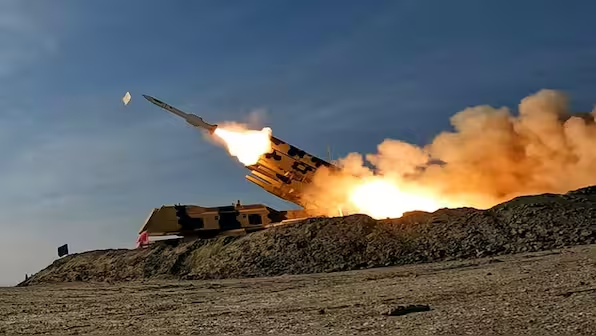
Iran’s Islamic Revolutionary Guards Corps (IRGC) announced it conducted missile and drone strikes against the United States Fifth Fleet headquarters and other American military sites in the Gulf on Wednesday, June 3, 2026, at 09:47. The IRGC, a powerful branch of Iran's armed forces, detailed that these operations involved both missile and drone capabilities, targeting key American military infrastructure in the region. This significant military action was explicitly stated by the IRGC as a retaliatory measure, following what it described as "previous aggression" against Iranian assets. The organization had previously issued stern warnings, indicating that any further hostile actions would be met with a "different and heavier" response. "We had previously warned that if aggression occurred, the response would be different and heavier, and we acted accordingly," the IRGC said in a statement released shortly after the strikes. This declaration showed the IRGC's commitment to its earlier threats.
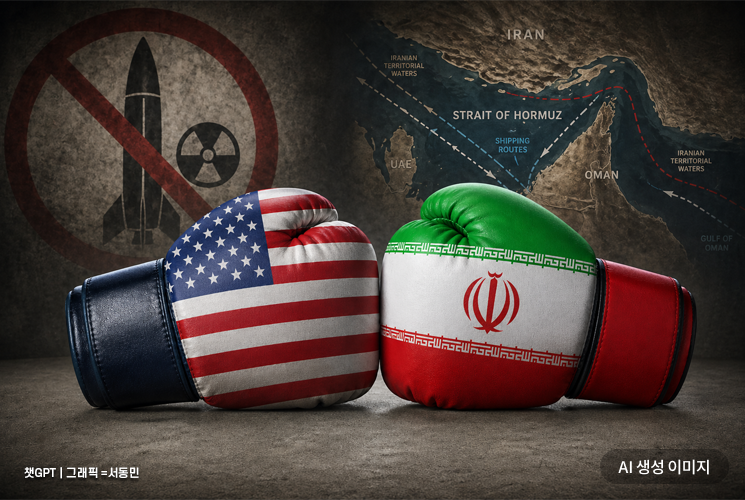
The timing of these strikes was precisely noted as 09:47 on Wednesday, June 3, 2026, noting the coordinated nature of the operation. Beyond the direct military targets, the IRGC also reiterated a critical warning regarding naval operations and security in the strategically vital Strait of Hormuz. "We repeat: disrupting the security of the Strait of Hormuz will have a heavy price for the invading US military," the IRGC added, emphasizing its intent to safeguard its maritime interests and control over the critical global shipping lane. This statement served as a direct challenge to the U.S. Military presence and activities in the Gulf, signaling a heightened state of alert and potential for further escalation in the region.
Kuwait Under Fire
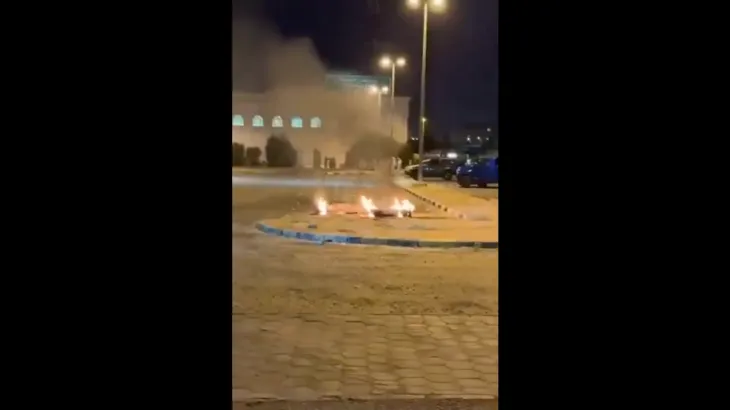
In Kuwait, the immediate aftermath of the Iranian strikes saw air defenses activated across the country following reported missile and drone launches directed toward US-linked military sites. The activation of these defense systems was a direct response to the incoming threats, as local authorities scrambled to protect critical infrastructure and personnel. Explosions were heard across the country, creating widespread alarm among residents. Eyewitnesses also reported observing possible interceptor debris falling from the sky, indicating that defensive measures had been engaged to counter the aerial threats.
The impact of these attacks was particularly severe on Kuwait's aviation sector. Kuwait's main airport briefly shut down on Wednesday after Iranian drones reportedly caused heavy damage to its facilities. This disruption led to significant operational challenges, prompting Kuwait Airways, the national carrier, to suspend its operations entirely for a period. The closure of Kuwait International Airport and the subsequent suspension of flights showed the immediate and tangible consequences of the IRGC's actions on civilian infrastructure and services. However, Kuwait International Airport partially reopened later the same day, with flights resuming from a different terminal, demonstrating efforts to restore normalcy despite the damage.
The U.S. Military, in its assessment of the events in Kuwait, reported that its forces successfully downed multiple drones that had specifically targeted American installations within the country. This defensive action prevented further damage and potential casualties. Additionally, the U.S. Military stated that Iran had fired two missiles directly toward Kuwait, which reportedly disintegrated en route, failing to reach their intended targets. The Story Code associated with these events, as recorded by news agencies, is 1283654, providing a unique identifier for the incident. The drone attack on Kuwait International Airport tragically resulted in one fatality, noting the human cost of the escalating tensions.
Bahrain Intercepts Missiles
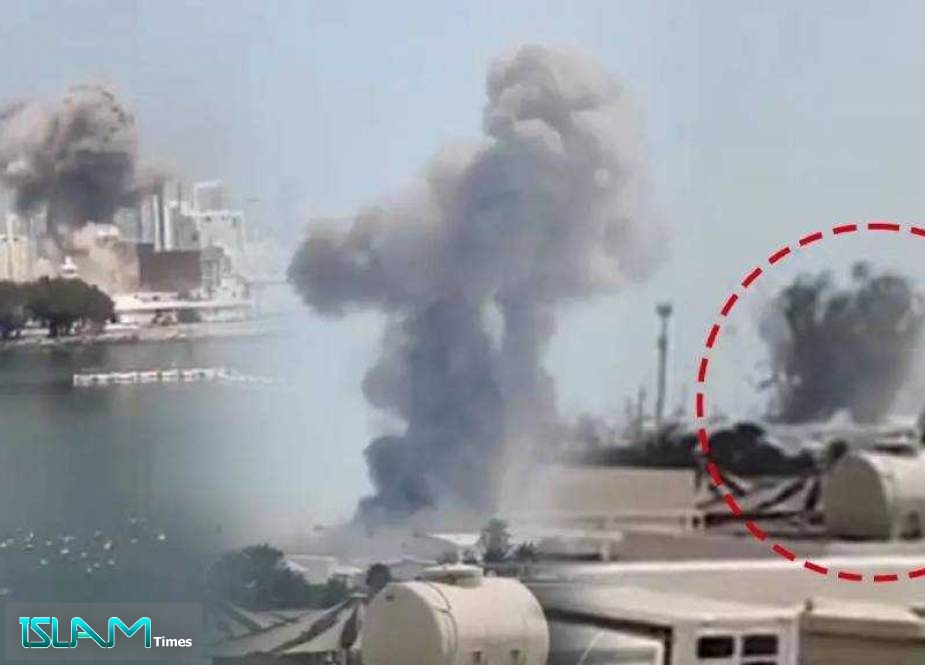
Concurrently with the events in Kuwait, U.S. And Bahraini forces worked in conjunction to intercept missiles and drones that were aimed at Bahrain. Bahrain's Defense Ministry confirmed these coordinated defensive actions, providing details on the nature of the threats encountered. The ministry reported that a total of three missiles and a number of drones, all fired by Iran, were successfully intercepted and destroyed before they could reach their targets. This swift response showcased the integrated air defense capabilities of the allied forces in the Gulf.
Iranian media outlets also extensively reported on incidents involving Bahrain, providing their perspective on the ongoing military engagements. Footage began circulating across these platforms, which purportedly showed various projectiles crossing Bahraini airspace. These reports and visual evidence contributed to the narrative of a broad and multi-pronged Iranian offensive across the Gulf region.
Separately, the IRGC announced it had targeted a specific vessel named Panaya. The IRGC described this ship as belonging to the "American Zionist enemy," indicating a broader ideological and geopolitical motivation behind the attack. The strike against the Panaya was carried out using missiles launched from the IRGC Navy, showcasing the maritime capabilities deployed in this operation. In a significant escalation, the IRGC stated that it targeted a US helicopter squadron stationed in a regional base. This particular strike aimed at an air asset showed the IRGC's intent to degrade the operational capabilities of U.S. Forces in the area, demonstrating a willingness to engage a variety of military targets.
Stalemate in Peace Talks
Amidst the escalating military actions, the diplomatic landscape appears to have suffered a significant setback. Iran's Fars and Tasnim news agencies, prominent state-affiliated media outlets, reported a concerning development: Iranian negotiators have ceased communication with ceasefire mediators. This cessation of dialogue suggests a potential hardening of Iran's stance and a reluctance to engage in de-escalation efforts following the recent military exchanges.
Further corroborating these reports, a regional official involved in the mediation process confirmed the communication breakdown to The Associated Press. The official stated that Iran had not communicated at all on Tuesday, the day prior to the IRGC's major strikes, indicating that the stall in talks might have preceded the military escalation. This lack of communication raised serious concerns among international observers about the viability of ongoing peace efforts and the potential for a diplomatic resolution to the mounting tensions.
However, U.S. President Donald Trump swiftly dismissed these reports as "false and erroneous." President Trump offered a contrasting account, asserting that channels of communication remained open and active. He stated, "The conversations between us have been going on continuously, including four days ago, three days ago, two days ago, one day ago and today. Where they lead, one never knows, but as I told Iran, 'It's time, one way or another, for you to make a Deal.'" President Trump's remarks suggested that despite the military flare-ups and media reports, the U.S. Administration believed there was still an opportunity for a diplomatic breakthrough, urging Iran to return to the negotiating table.
Tehran, for its part, has maintained a firm precondition for any potential truce. It insists that any agreement must also include an end to fighting in Lebanon, effectively linking the two conflict zones. This demand complicates mediation efforts, as it broadens the scope of negotiations beyond the immediate Gulf tensions. Israeli Prime Minister Benjamin Netanyahu, however, aims to keep these issues separate. He is reportedly preparing for new elections this fall, a political context that might influence his approach to the peace process and his reluctance to conflate the Lebanese conflict with broader regional agreements. Netanyahu's position suggests a different strategy for managing the multiple fronts of regional instability.
Regional Tensions Escalate
The recent IRGC operation did not occur in isolation but followed a series of provocative incidents that significantly heightened regional tensions. Prior to the IRGC's missile and drone strikes, a U.S. Strike had damaged an Iranian oil tanker near the strategically important Strait of Hormuz. This incident, targeting a key Iranian economic asset, was a clear precursor to the retaliatory actions. Adding to this, another attack also struck a telecommunications tower located south of Qeshm Island, according to various reports. These earlier strikes against Iranian infrastructure provided the immediate context for the IRGC's subsequent large-scale military response.
The U.S. Military confirmed its involvement in these preceding actions, stating that it launched strikes on an Iranian military ground control station, also located on Qeshm Island, within the Strait of Hormuz. This admission showed the direct engagement between U.S. And Iranian forces and the tit-for-tat nature of the escalating conflict. The targeting of a ground control station indicated an effort to disrupt Iranian military operations and surveillance capabilities in the critical waterway.
Amidst these escalating military exchanges, the human cost of the conflict became tragically apparent. One person was killed in the drone attack on Kuwait International Airport, a stark reminder of the civilian impact of military actions. This casualty added a somber note to the unfolding events, noting the dangers posed to non-combatants in the region.
Separately, and indicative of a broader regional expansion of military activities, Israeli forces have advanced deeper into Lebanon than at any point in over a quarter of a century. This significant movement of troops into Lebanese territory marks a substantial escalation on a different front, adding another layer of complexity to the already volatile regional landscape. The increased presence of Israeli forces in Lebanon not only signals a more aggressive posture but also represents a critical development in the ongoing regional tensions, suggesting that the conflict is not confined to the Gulf but is spreading across multiple theaters of operation.