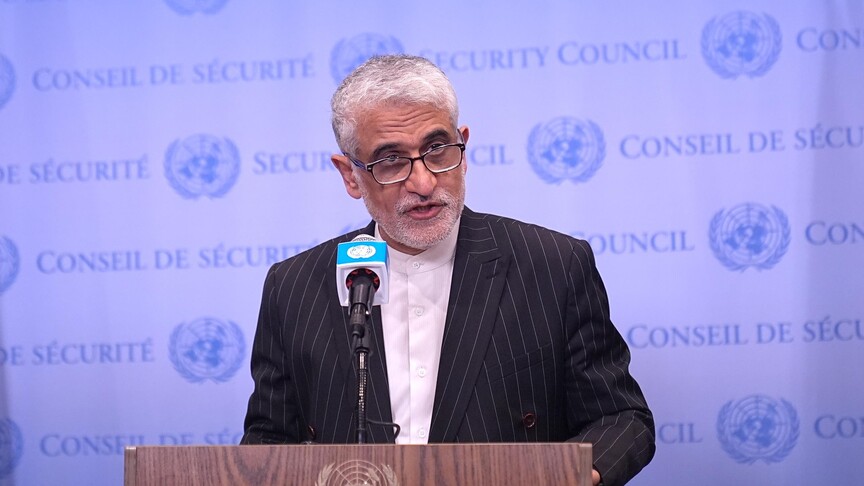
Iran's permanent representative to the United Nations criticized a draft UN Security Council resolution sponsored by the United States and Bahrain on Thursday. The resolution focuses on the Strait of Hormuz, a critical maritime chokepoint. Iran claims the US is pushing this resolution to advance its political agenda and legitimize unlawful actions rather than genuinely attempting to resolve the ongoing crisis. This criticism follows the US enforcement of a naval blockade targeting Iranian maritime traffic in the Strait of Hormuz, which has been in effect since April 13.
Iran's Counterclaims on Resolution
Iran's envoy described the draft resolution by the United States and Bahrain as "deeply flawed, one-sided, and politically motivated" regarding the situation in and around the Strait of Hormuz. The envoy specifically stated that the US and Bahrain jointly tabled this "deeply flawed, one-sided, and politically motivated draft resolution on the situation in and around the Strait of Hormuz." Iran asserted that recent US actions in the Gulf contradict Washington's stated objectives and have contributed to increased instability in the region. The Islamic Republic argued that the draft resolution does not aim to protect international navigation.
Ambassador Amir Saeid Iravani stated, "The real purpose is to legitimize the unlawful action of the United States against Iran in the Persian Gulf and the Strait of Hormuz, including its illegal maritime blockade." Iran maintained that the draft resolution ignores the fundamental cause of the current situation. The nation warned that its adoption would significantly damage the credibility and impartiality of the United Nations Security Council. Iran further affirmed its readiness to restore normal maritime traffic through the Strait of Hormuz, provided that hostilities cease and existing restrictions are removed. The Iranian representative emphasized that their nation remains prepared to restore normal maritime traffic through this vital waterway if hostilities cease and the current restrictions are removed.
Background of Regional Tensions
Regional tensions escalated following joint strikes by the United States and Israel against Iran on February 28. These strikes marked a significant turning point, prompting a strong reaction from Tehran. Tehran retaliated against Israel and American allies in the Gulf, resulting in the closure of the Strait of Hormuz. The closure of the Strait, a key global oil transit route, immediately raised concerns about international trade and energy security. A ceasefire took effect on April 8, which was brokered through Pakistani mediation efforts. This temporary halt in hostilities offered a glimmer of hope for de-escalation in the volatile region. However, subsequent talks in Islamabad did not yield a lasting agreement between the parties. The failure of these negotiations showed the deep-seated disagreements and mistrust between the involved nations. The truce was later extended by Trump without a specified deadline, leaving the long-term stability of the region uncertain.
On Tuesday, Trump announced that the US military would temporarily pause "Project Freedom," an operation aimed at restoring freedom of navigation for commercial shipping through the Strait of Hormuz. Despite this pause, Trump stated that the American blockade would remain “in full force and effect.” This declaration noted the US's continued pressure on Iranian maritime activities, even as it adjusted certain operational aspects. The ongoing naval blockade, which has been rigorously enforced since April 13, specifically targets Iranian maritime traffic, further exacerbating economic pressures on the Islamic Republic.
US and Allies' Stated Aims
The United States and Bahrain claim their draft resolution aims to protect freedom of navigation in the Strait of Hormuz. The two nations, along with Saudi Arabia, the United Arab Emirates, Kuwait, and Qatar, collaborated on the UN Security Council Resolution to defend maritime passage in the critical waterway. This collaborative effort by several key regional and international players shows the perceived importance of maintaining open shipping lanes in the Strait. The resolution includes what the US and Bahrain describe as baseless allegations against Iran. Specifically, the draft resolution requires Iran to cease attacks, mining activities, and the imposition of tolls within the Strait of Hormuz. These demands reflect the concerns of the sponsoring nations regarding alleged Iranian actions that they claim threaten international shipping and regional stability. The US and Bahrain maintain that their resolution is intended to protect freedom of navigation in the Strait of Hormuz, while simultaneously making these allegations against Iran.