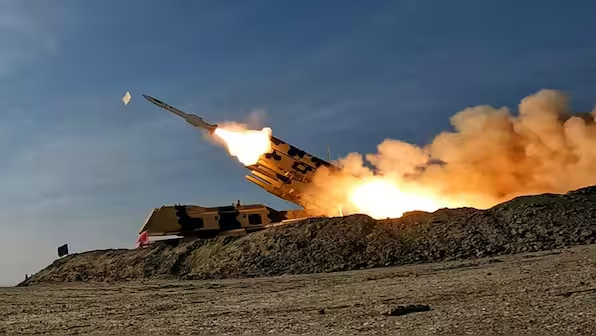
Iran's Islamic Revolutionary Guard Corps (IRGC) announced it conducted retaliatory strikes against what it described as an enemy vessel, the headquarters of the U.S. Fifth Fleet in Bahrain, and a regional American airbase. The IRGC stated these operations were in response to the U.S. Firing a missile into the engine room of an Iranian oil tanker near the Strait of Hormuz, identifying the targeted American-Zionist enemy vessel as Panaya, which was struck by IRGC Navy missiles. The announcement by the Islamic Revolutionary Guard Corps (IRGC) specified that its forces carried out these retaliatory strikes, targeting an enemy vessel, the headquarters of the US Fifth Fleet in Bahrain, and a regional American airbase, according to a report by Press TV.
The U.S. Military reported it "downed multiple drones" targeting American forces in Kuwait, while U.S. And Bahraini forces intercepted missiles aimed at Bahrain. Bahrain's Defense Ministry confirmed its military intercepted and destroyed three missiles and a number of drones fired by Iran. Reports also indicated additional Iranian drones attempting to attack U.S. Forces in Kuwait failed to impact intended targets. Following these actions, U.S. Central Command (CENTCOM) responded with strikes on an Iranian military ground control station located on Qeshm Island in the Strait of Hormuz. The IRGC said its retaliatory operations were consistent with its earlier warnings and should serve as a lesson. This statement showed the IRGC's position that the attacks were a direct and measured response to perceived provocations.
Iranian Attacks Detailed
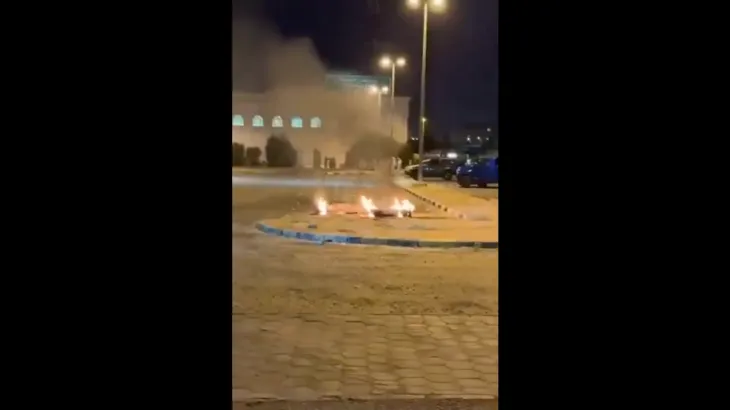
An additional wave of Iranian drones attempting to attack US forces in Kuwait failed to impact intended targets, according to reports. Earlier, Iranian drones heavily damaged Kuwait International Airport's passenger building, resulting in one person killed. This significant damage to civilian infrastructure noted the broad impact of the Iranian operations. Following these events, Kuwait Airways suspended its operations, indicating the immediate disruption to regional air travel and commerce. Kuwait International Airport later partially reopened in the day, with Kuwait Airways flights resuming from a different terminal, signaling efforts to restore normalcy despite the ongoing tensions. Iran's Foreign Ministry stated that a telecommunications tower was struck on Qeshm Island, further detailing the scope of the Iranian actions and the infrastructure targeted.
The IRGC's claim that the attacks were in response to the US firing a missile into the engine room of an Iranian oil tanker near the Strait of Hormuz provided a specific justification for their actions. The identification of the targeted American-Zionist enemy vessel as Panaya, which was struck by IRGC Navy missiles, offered a precise, though unverified by independent sources, account of the initial incident that purportedly triggered the retaliation. The IRGC's assertion that its retaliatory operations were consistent with its earlier warnings reinforced a narrative of pre-announced consequences for perceived aggressions. The declaration that these operations "should serve as a lesson" conveyed a clear message of deterrence and resolve from the Iranian side.
US Response and Diplomatic Fallout
The attacks followed reports published Tuesday by Fars and Tasnim news agencies indicating that Iran had ceased communicating with mediators regarding an extension of a ceasefire in the ongoing conflict with the United States and Israel. A regional official confirmed that Iran had not engaged in any communication on Tuesday, having previously stated that a ceasefire needed to be enforced in Lebanon for negotiations to proceed. This cessation of communication marked a critical juncture in the diplomatic efforts to de-escalate tensions, suggesting a breakdown in channels that had previously been active. The regional official's statement further emphasized the precondition set by Iran for continued talks, linking the broader ceasefire negotiations directly to the situation in Lebanon.
Two days prior to the strikes, Iranian foreign minister Abbas Araghchi had stated that the existing ceasefire between Iran and the U.S. Was full, applying to all fronts, including Lebanon. Araghchi issued a warning that any violation on one front would be considered a breach of the ceasefire across all fronts. He asserted that the United States and Israel would be held responsible for the consequences of any such violation, a declaration that foreshadowed the current escalation. This full view of the ceasefire, as articulated by Araghchi, showed Iran's position that actions in any theater, including Lebanon, would be seen as a violation of the entire agreement. His explicit warning that the U.S. And Israel would "bear responsibility" for the consequences of such violations noted the gravity of the situation from Iran's perspective.
Earlier this week, a "tense" conversation reportedly occurred between Benjamin Netanyahu and Donald Trump. The nature and specific content of this conversation were not immediately disclosed, but its characterization as "tense" suggested significant disagreements or heightened concerns between the two leaders amidst the escalating regional situation. This interaction between key international figures added another layer of complexity to the unfolding events, hinting at high-level diplomatic engagement preceding the military actions.
Strait of Hormuz Security Concerns
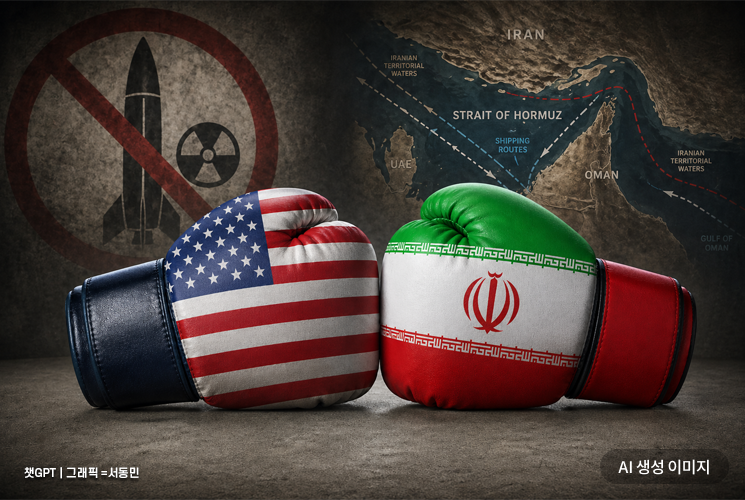
The Islamic Revolutionary Guard Corps (IRGC) reiterated its warning that disrupting the security of the Strait of Hormuz will impose a heavy price on the aggressive U.S. Military. This repeated warning showed the strategic importance of the Strait of Hormuz, a critical global oil transit choke point, and Iran's intent to leverage its control over the waterway as a deterrent. The IRGC's statement served as a direct challenge to the U.S. Military presence in the region and a clear articulation of potential retaliatory measures should its security interests in the Strait be threatened.
Meanwhile, U.S. President Donald Trump stated that talks are still ongoing, dismissing reports of a cessation of negotiations as "false and erroneous." Trump affirmed, "The conversations between us have been going on continuously, including four days ago, three days ago, two days ago, one day ago and today." He added, "Where they lead, one never knows, but as I told Iran, ‘It’s time, one way or another, for you to make a Deal.'" This direct contradiction of news agency reports suggested a divergence in perceptions or reporting regarding the state of diplomatic engagement. President Trump's insistence on continuous talks aimed to counter the narrative of a complete breakdown in communication and maintain an open door for negotiations.
Trump directly contradicted news agency reports suggesting a halt in communication with mediators regarding a ceasefire extension, branding those reports as "false and erroneous." He emphasized the continuous nature of discussions, stating they have been active "four days ago, three days ago, two days ago, one day ago and today." The President did not elaborate on the specific topics of these ongoing conversations but reiterated his call for Iran to "make a Deal." His public statements aimed to project an image of ongoing diplomatic efforts despite the military escalation, potentially seeking to de-escalate the rhetoric while still pressing for a full agreement. President Trump's assertion that "talks are still ongoing" directly challenged the Fars and Tasnim news agencies' reports, creating a conflicting narrative about the state of diplomacy. His detailed timeline of continuous discussions, mentioning "four days ago, three days ago, two days ago, one day ago and today," provided specific, though unverified, evidence to support his claim that communication had not ceased. The President's direct message to Iran, "It’s time, one way or another, for you to make a Deal," showed his administration's consistent demand for a broader resolution to the long-standing tensions.
Concurrently, Israeli forces have advanced deeper into Lebanese territory than at any point in over a quarter of a century. This movement follows earlier statements from Iran's foreign minister, Abbas Araghchi, who had warned that any violation of the ceasefire on one front would be considered a breach across all fronts, holding the United States and Israel responsible for consequences. The significant Israeli military movement into Lebanon represented a substantial escalation in the regional conflict, directly aligning with the type of "violation on one front" that Araghchi had explicitly warned against. This deep incursion, the most significant in decades, noted the interconnectedness of the various fronts in the broader conflict and intensified concerns about a wider regional conflagration. The timing of this advance, in the wake of Iran's retaliatory strikes and Araghchi's prior warnings, showed the volatile nature of the current geopolitical landscape and the potential for rapid, cascading escalations across the Middle East. The Israeli military action, moving into Lebanese territory further than at any time in over a quarter of a century, added a critical dimension to the regional instability. This development, occurring amidst the U.S.-Iran tensions, directly implicated the "all fronts" aspect of the ceasefire as described by Iranian Foreign Minister Abbas Araghchi. His earlier warning that "any violation on one front would be considered a breach of the ceasefire across all fronts" and that "the US and Israel would bear responsibility for the consequences" gained immediate relevance with the Israeli incursion. The deep penetration into Lebanon suggested a significant tactical or strategic objective, raising concerns about the potential for a broader conflict involving multiple regional actors. The magnitude of this Israeli movement, unprecedented in recent history, further complicated the already fraught diplomatic and military landscape, potentially triggering additional retaliatory actions from various parties.