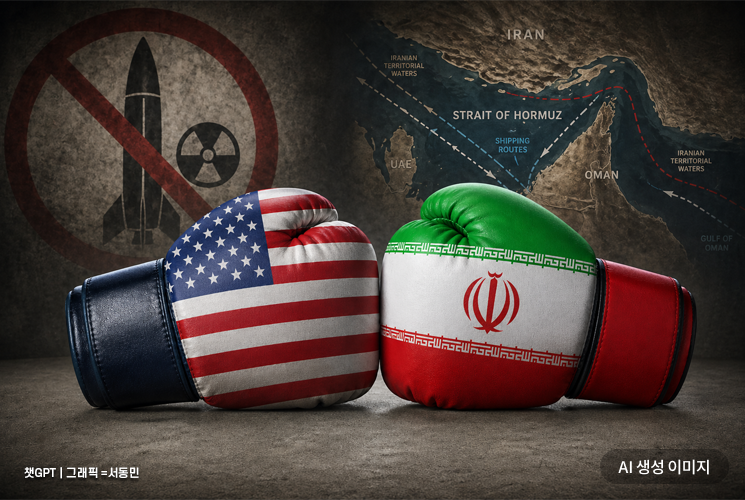
Iran's Revolutionary Guard launched a barrage of missiles and drones at Kuwait and Bahrain, with Kuwait's Defense Ministry reporting it destroyed over a dozen missiles and a similar number of drones originating from Iran. The attacks, which occurred as the region entered its fourth month of war, resulted in significant damage to a passenger terminal at Kuwait's international airport. One person was killed and at least 60 people were wounded in the strikes on Kuwait. According to reports, the individual killed in the drone attack at Kuwait's main airport was an Indian national. This recent surge in hostilities marks a significant escalation in the ongoing conflict, which began on February 28 with U.S. And Israeli strikes on Iran.
Kuwait briefly shut its main airport on Wednesday following the incidents. The country's main airport had only reopened on Monday after a months-long closure attributed to the ongoing conflict. The temporary closure showed the immediate impact of the attacks on civilian infrastructure and regional stability. Iran's paramilitary Revolutionary Guard acknowledged targeting the headquarters of the U.S. 5th Fleet and U.S. Military facilities in another nation. This admission notes the direct challenge Iran poses to U.S. Military presence in the Middle East. U.S. And Bahraini forces reportedly intercepted missiles aimed at Bahrain, demonstrating a coordinated defense response. The war began on February 28 with U.S. And Israeli strikes on Iran, setting the stage for the current retaliatory actions.
Escalation of Regional Conflict
The attacks in Kuwait occurred after U.S. Strikes on Iran’s Qeshm Island. The U.S. Military reported that two Iranian missiles broke apart before reaching Kuwait, indicating potential technical failures or successful defensive measures. Additionally, the U.S. Military stated that it "downed multiple drones" targeting American forces in Kuwait, further illustrating the intensity of the aerial confrontation. These actions followed U.S. Military strikes on an Iranian military ground control station, also located on Qeshm Island in the Strait of Hormuz, which served as a direct precursor to Iran's retaliatory measures. The U.S. Military's proactive strikes on Iranian positions have clearly intensified the cycle of violence in the region.
In Lebanon, Israeli bombs struck buildings adjacent to Jabal Amel Hospital in Tyre, resulting in the deaths of four individuals and injuries to 127 others, including hospital staff. This incident sparked international concern regarding the protection of civilian infrastructure and medical personnel in conflict zones. Israeli forces have advanced deeper into Lebanese territory than at any point in the last 25 years, marking a significant territorial push. Hezbollah has responded by launching rocket and drone attacks, contributing to the volatile security situation along the border. Despite the ongoing hostilities, the declared ceasefire in Lebanon is officially still in effect, though its efficacy is increasingly questioned by the continuous violence. On Tuesday, Israel killed at least eight people in southern Lebanon, among them two children and their father, noting the tragic human cost of the conflict.
Separately, Israeli forces killed at least four Palestinians in Gaza during various strikes across the besieged strip on Tuesday. An airstrike targeting a vehicle east of Deir al-Balah killed one person and wounded four others, adding to the growing casualty count. Since the U.S.-brokered ceasefire implemented last October, Israel has killed approximately 930 Palestinians in Gaza, a figure that shows the persistent violence in the territory despite diplomatic efforts. These ongoing strikes and casualties continue to fuel regional tensions and complicate any prospects for lasting peace.
Diplomatic and Sanctions Landscape
Secretary of State Marco Rubio informed Congress on Tuesday that Washington would not lift sanctions on Tehran in exchange for reopening the Strait of Hormuz. Rubio maintained that any sanctions relief is conditional on Iran surrendering its enriched uranium, a core demand in the international community's efforts to prevent nuclear proliferation. This firm stance by the U.S. Indicates a continued policy of maximum pressure on Iran. Iran’s chief negotiator, speaking on the condition of anonymity, cautioned that if Israel’s assault on Lebanon persists, Iran would withdraw from negotiations with Washington and engage in direct military confrontation with Israel. This warning signals a potential collapse of diplomatic channels and a dangerous escalation of military engagement.
The Treasury Department announced a new round of sanctions, specifically targeting four Iranian cryptocurrency exchanges. This move aims to disrupt Iran's ability to circumvent traditional financial systems and fund its operations, particularly in light of its alleged support for regional proxies. Additionally, President Trump stated in an interview with the New York Post that the Strait of Hormuz “could be [closed through Labor Day].” Such a closure would have profound implications for global oil markets and international trade, given the strait's critical role as a shipping lane. These diplomatic maneuvers and economic pressures are central to the international community's strategy in managing the Iranian situation.
In a related development, Acting Attorney General Todd Blanche announced the termination of a $1.8 billion slush fund that had been designated for Trump’s allies. This decision reflects a shift in resource allocation and potentially a reevaluation of political priorities within the administration. Meanwhile, the settlement reached between President Trump and the IRS concerning the leaking of his tax returns remains in effect. This settlement includes an addendum that permanently bars the IRS from investigating President Trump, his family, and his businesses. The specifics of this agreement have drawn scrutiny regarding its implications for accountability and the independence of federal agencies.
Separately, Donald Trump confirmed a report that he had called Israeli Prime Minister Benjamin Netanyahu "crazy" on Monday. Trump described Netanyahu as “a little bit perturbed” by the comment but added, “we've worked very well together.” This candid remark from Trump notes the often-strained personal dynamics between international leaders, even among allies. Prime Minister Netanyahu acknowledged "tactical disagreements" with Trump but stressed their "common goals," seeking to downplay any significant rift. Netanyahu further stated, "We agree on the main things. He respects me. I respect him. We always find a way to work out our differences," emphasizing the enduring strategic partnership between the two nations despite occasional public spats.
Domestic Political Developments
President Trump named MAGA loyalist Bill Pulte as acting director of national intelligence. Pulte replaced Tulsi Gabbard, who announced her resignation in May, signaling a continued reshuffling of key intelligence leadership. Pulte had been serving as director of the Federal Housing Finance Agency prior to this appointment. During his tenure at the agency, Pulte made criminal referrals over claims of mortgage fraud targeting California Senator Adam Schiff, New York Attorney General Letitia James, and Federal Reserve officials Jerome Powell and Lisa Cook. These referrals show his assertive approach and his alignment with the administration's political objectives.
Separately, the Pentagon hired Elias Irizarry, a convicted January 6 rioter, to a counterterrorism role. This appointment has drawn considerable attention and criticism given Irizarry's past legal issues. Irizarry pleaded guilty in 2022 to a federal misdemeanor charge of entering and remaining in the Capitol during the January 6 insurrection. He was among more than 1,500 rioters who received pardons or had their sentences commuted on President Trump's first day back in office, a move that sparked significant debate about justice and accountability for the events of that day.
The Supreme Court ruled on Tuesday that Alabama can use a new congressional map which removes one of two House districts represented by a Black Democratic congressmember. This controversial ruling has significant implications for electoral representation and voting rights. This ruling means Alabama’s midterm elections will feature six Republican-leaning districts and only one Democratic-leaning one, potentially altering the state's political landscape for years to come.
In California's governor's race, MAGA-supporting Republican Steve Hilton is leading the field, indicating a strong showing for conservative candidates in a historically liberal state. Former California Attorney General Xavier Becerra, a Democrat, is behind Hilton, facing an uphill battle. Democrat Tom Steyer is currently in third place, further fragmenting the progressive vote and complicating the path to victory for the Democratic party.
Media and Legal Challenges
Veteran “60 Minutes” correspondent Scott Pelley was fired by CBS News on Tuesday after confronting the show’s new management at a staff meeting. Pelley's departure follows a period of internal turmoil at the long-running news program. Pelley stated about new executive producer Nick Bilton and editor-in-chief Bari Weiss, "She is murdering '60 Minutes.' She does not love this place. She was brought in to kill it, and she’s been doing exactly that." This strong accusation notes deep divisions within the organization regarding its direction and editorial integrity. Following his termination, Pelley wrote in a statement, "The leadership of '60 Minutes' is no longer recognizable. The principles I hold dear are gone, and so I must leave as well," showing his profound disagreement with the new management.
Separately, New Jersey’s attorney general filed a lawsuit against the private prison company GEO Group. The lawsuit alleges GEO Group violated state law by blocking inspectors from the facility’s medical unit, sleeping quarters, and bathing areas during a visit last Friday. This legal action comes amidst growing scrutiny of private prison operations and their adherence to regulations. The city of Newark also filed a lawsuit against the GEO Group in April, indicating a pattern of legal challenges against the company. Hundreds of immigrants detained at the ICE jail are continuing their hunger and labor strike, protesting conditions and policies within the facility. Former U.S. Border Patrol chief Gregory Bovino attended the annual “Remigration Summit” in Portugal alongside white nationalist leader Jared Taylor. Bovino was fired after immigration agents under his command killed 37-year-old VA nurse Alex Pretti in Minneapolis, an incident that drew national condemnation. In municipal politics, incumbent Mayor Karen Bass will advance to a runoff in Los Angeles, facing a continued challenge for her leadership.