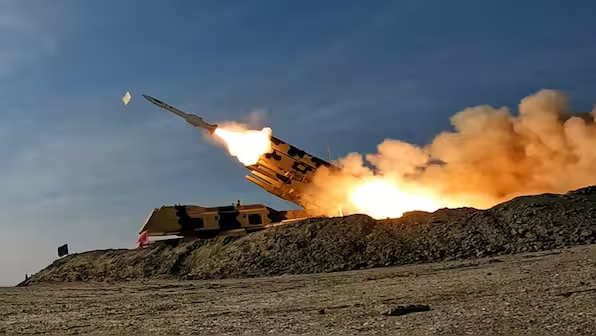
Arab countries and organizations on Wednesday condemned Iranian attacks targeting Kuwait and Bahrain, prompting widespread regional concern over escalating tensions. The unified condemnation from across the Arab world showed the gravity of the situation and the perceived threat to regional stability. The U.S. Military reported that two Iranian missiles failed en route to Kuwait, disintegrating before reaching their intended targets. American forces in Kuwait successfully downed multiple drones that were also part of the Iranian assault, preventing further damage and potential casualties. Egypt strongly condemned the Iranian attack on both nations, characterizing it as a dangerous escalation and reaffirming its full support and solidarity with Kuwait and Bahrain. This strong stance from Egypt noted the collective regional concern over the Iranian actions. Mohammed Al Yamahi, President of the Arab Parliament, also condemned what he termed Iranian aggression against Kuwait and Bahrain, emphasizing the severity of the attacks. Gulf Cooperation Council (GCC) Secretary-General Jasem Al Budaiwi further condemned the continuing Iranian aggression, stating, "GCC member states stood united in confronting the attacks and fully supported the measures taken by Bahrain and Kuwait to defend their security, sovereignty and territorial integrity." This statement from the GCC leader showed the collective defense posture of the Gulf states in the face of external threats.
Devastation and Interceptions
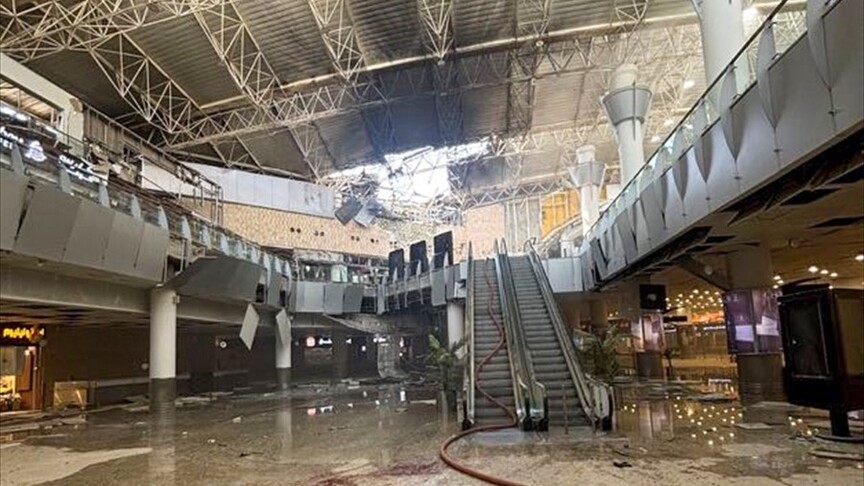
Iranian drones inflicted heavy damage on a passenger terminal at Kuwait International Airport, causing significant structural harm and disrupting operations. The attack resulted in one fatality and injuries to 63 people, including passengers and workers, noting the indiscriminate nature of the assault. The airport temporarily ceased operations on Wednesday following the attack, leading to widespread flight cancellations and delays. This closure severely impacted air travel in the region, causing considerable inconvenience for thousands of travelers. Kuwait Airways flights later resumed service from a different terminal after the airport partially reopened to air traffic, indicating a swift, albeit partial, recovery effort. In response to the escalating situation and the direct targeting of its territory, Kuwait expelled two Iranian diplomats, signaling a severe diplomatic downturn between the two nations. This diplomatic action showed Kuwait's firm stance against what it perceived as unprovoked aggression.
The broader conflict initiating the current tensions began on February 28 with U.S. And Israeli strikes targeting Iran, marking a significant escalation in regional hostilities. The U.S. Military launched strikes on an Iranian military ground control station located on Qeshm Island in the Strait of Hormuz, a strategically vital waterway. These strikes targeted key infrastructure, aiming to degrade Iran's military capabilities in the region. Iran's Foreign Ministry confirmed that a telecommunications tower was hit during the attack on Qeshm Island, acknowledging the impact of the U.S. Military action. Separately, Hezbollah has initiated rocket and drone attacks, further contributing to the complex and volatile security landscape in the Middle East. These multiple fronts of conflict show the widespread nature of the current regional instability.
International Law and Sovereignty Violated
The United Arab Emirates (UAE) condemned Iranian attacks on Bahrain involving missiles and drones. The UAE stated these strikes were a flagrant violation of Bahrain’s sovereignty, a breach of international law, and a threat to its security and stability. This strong condemnation from a key regional player emphasized the perceived illegality and destabilizing nature of Iran's actions. Lebanese President Joseph Aoun also condemned Iranian attacks on civilian targets in Kuwait and Bahrain, noting the humanitarian impact of the assaults. Ahmed Aboul Gheit, Secretary-General of the Arab League, stated the strikes were a dangerous escalation and a blatant violation of the United Nations Charter, international humanitarian law, and the 1949 Geneva Conventions and their additional protocols. His statement provided a full legal framework for the condemnation, showing the multiple international legal principles that were allegedly breached. Mohammed Al Yamahi, President of the Arab Parliament, reiterated his condemnation, stating that the aggression constituted a clear violation of international laws, conventions, and humanitarian principles. This consistent message from various Arab leaders and organizations demonstrated a unified front against Iran's actions.
Grand Imam of Al-Azhar, Sheikh Ahmed El-Tayeb, stated the attacks threatened civilian safety and undermined sovereignty, expressing deep concern for the well-being of innocent populations. Al-Azhar, a leading Sunni Islamic institution, said the continuation of the attacks represented a direct violation of a ceasefire agreement and a dangerous escalation that could threaten the security and stability of Gulf states and further increase regional tensions. The institution also expressed hope that the spirit of Islamic brotherhood would prevail, urging all parties to emerge from what it described as a dark period. Al-Azhar called for adherence to the ceasefire agreement, embracing wisdom, reason and dialogue, and placing the interests of innocent civilians above all other considerations, advocating for a peaceful resolution to the escalating crisis.
The Muslim World League condemned Iranian attacks targeting Bahrain and Kuwait, stating that the attacks violated religious values and international humanitarian laws. This condemnation from another influential Islamic organization added to the chorus of voices criticizing Iran's actions on both religious and legal grounds. Gulf Cooperation Council Secretary-General Jasem Al Budaiwi called the aggression a dangerous and unprecedented escalation, reflecting the deep concern among Gulf states regarding the trajectory of regional events. These widespread condemnations from influential Arab and Islamic bodies showed the broad regional consensus viewing Iran's actions as a serious breach of international norms and a threat to stability.
Broader Geopolitical Context
Kuwait's Defense Ministry reported destroying over a dozen missiles and a similar number of drones launched from Iran, showcasing the effectiveness of its air defense systems. This successful interception prevented further damage and casualties within Kuwaiti territory. Bahrain's Defense Ministry stated its military intercepted and destroyed three missiles and a number of drones fired by Iran, demonstrating its own defensive capabilities. U.S. And Bahraini forces also intercepted missiles aimed at Bahrain, according to reports, indicating a coordinated defense effort to protect the island nation. These interceptions noted the sophisticated air defense networks in place in the Gulf region, designed to counter such aerial threats. Iran's paramilitary Revolutionary Guard claimed it targeted the headquarters of the 5th Fleet and U.S. Military facilities in an unnamed country, a statement that was widely interpreted as an attempt to project strength and deter further U.S. And Israeli actions. This claim, though unverified in its specifics, added another layer of complexity to the unfolding geopolitical situation.
Israeli forces have advanced deeper into Lebanon than at any point in over 25 years, marking a significant and concerning shift in the conflict dynamics along the Israeli-Lebanese border. This deep penetration into Lebanese territory indicated an intensified military campaign and raised fears of a broader conflict spreading across the Levant. The Israeli military operations were reportedly targeting Hezbollah infrastructure and capabilities, aiming to degrade the group's ability to launch attacks against Israel. This escalation in Lebanon ran parallel to the rising tensions in the Gulf, creating a multifaceted regional crisis. The interconnectedness of these conflicts showed the fragility of peace and security across the Middle East.
Amid these regional developments, President Donald Trump confirmed on Monday he had referred to Israeli Prime Minister Benjamin Netanyahu as "crazy." This candid admission from the former U.S. President offered a glimpse into the complex personal and political dynamics between the two leaders. Trump said he was "a little bit perturbed" by Netanyahu, suggesting underlying frustrations despite their public alliance during his presidency. However, Trump added, "we've worked very well together," attempting to temper the impact of his strong remark and emphasize periods of cooperation. Netanyahu, for his part, acknowledged "tactical disagreements" with Trump but emphasized their "common goals." He stated, "We agree on the main things," adding, "He respects me. I respect him. We always find a way to work out our differences." This exchange between Trump and Netanyahu noted the intricate and sometimes strained relationship between key international figures involved in the region's geopolitical landscape. The public airing of such sentiments, even after Trump's presidency, showed the deeply personal nature of high-stakes international diplomacy and its potential impact on regional alliances and strategies. The implications of such comments, even if historical, could resonate within the complex web of Middle Eastern politics, influencing perceptions and future interactions among leaders.