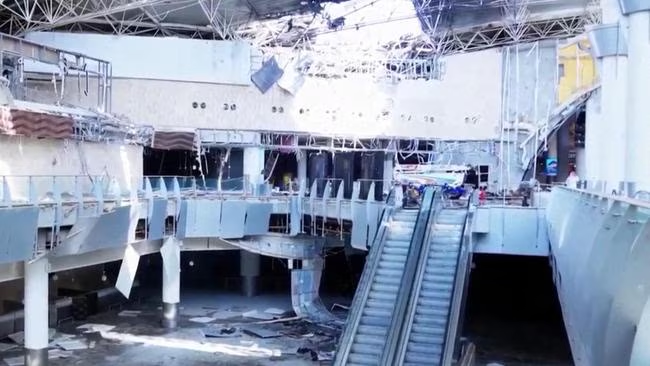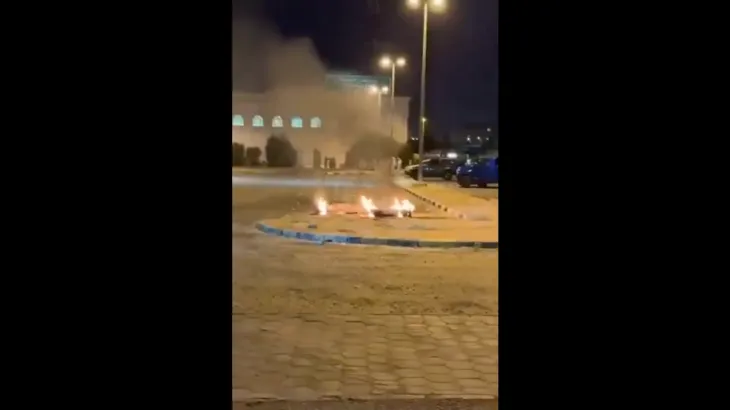
Bahrain's military intercepted three ballistic missiles and several drones targeting civilian sites, including three missiles directed at Bahrain, while Kuwait’s military also intercepted 13 ballistic missiles and 17 hostile drones. The incidents occurred as US forces downed Iranian drones targeting civilian ships in the region, working to prevent further escalation. Bahrain hosts a major U.S. Naval base, a strategic asset in the Gulf region, and reports indicated fires appeared to be burning in Kuwait International Airport’s Terminal 1 building during the attacks, causing significant alarm. The presence of these fires in Terminal 1, a key part of Kuwait's international air travel infrastructure, showed the direct impact on civilian operations and infrastructure.
US Central Command stated that all attacks failed and affirmed that US forces remained ready to repel "unwarranted Iranian aggression." This strong declaration showed the ongoing commitment of the United States to regional security. Bahrain's military confirmed its interceptions were aimed at "civilian sites," noting the civilian impact of these aggressive actions. The statement from US Central Command served as a clear message regarding the United States' resolve to protect its interests and allies in the face of these persistent threats.
Escalation and Interceptions
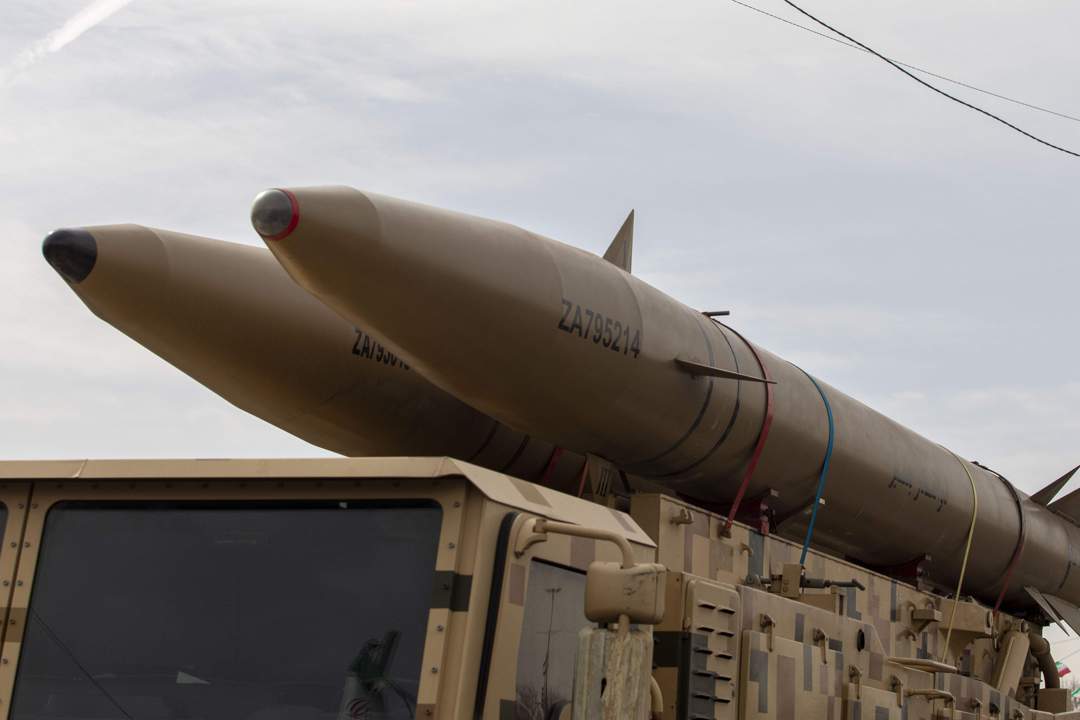
Several Iranian ballistic missiles aimed at regional targets, including two shot at Kuwait, failed, either falling short or breaking apart in flight, demonstrating the effectiveness of defensive measures and potentially the limitations of the offensive capabilities. Since the conflict began in late February, reports indicated that Iran has repeatedly attacked targets in the Gulf region where US military bases are located, signaling a persistent pattern of aggression. US forces carried out strikes on Qeshm Island near the Strait of Hormuz following attempted attacks by Iran, with U.S. And Iranian forces exchanging fire during the incident, marking a direct confrontation between the two powers. Iran stated the U.S. Struck a tanker and a communications tower on Qeshm Island, providing its perspective on the targets of the American retaliation. Iranian media reported that the Islamic Revolutionary Guard Corps' (IRGC) navy targeted a vessel it identified as "Panaya," claiming responsibility for specific maritime actions. These exchanges of fire and targeted strikes illustrate the heightened state of military readiness and the potential for rapid escalation in the region.
Amid these regional tensions, US President Donald Trump stated that negotiations have not stopped, attempting to project an image of continued diplomatic engagement despite the military clashes. Mr. Trump has repeatedly said he is close to a deal that would end the fighting and allow negotiators to tackle thorny issues, including the future of Iran’s nuclear program, since mid-March, maintaining a consistent message of optimism for a resolution. "The conversations between us have been going on continuously, including four days ago, three days ago, two days ago, one day ago, and today," President Trump said, emphasizing the persistent nature of the dialogue. He also affirmed he "couldn't care less" about certain aspects of the ongoing discussions, perhaps indicating a focus on core objectives rather than peripheral details. President Trump's top priority remains preventing Iran from acquiring nuclear weapons, a long-standing objective of U.S. Foreign policy that shapes its approach to the ongoing negotiations. This unwavering focus on nuclear non-proliferation is a central pillar of the United States' strategy in dealing with Iran.
Iran denies it is developing a nuclear bomb, stating its atomic program is for peaceful purposes, a claim it has consistently maintained on the international stage. Tehran is seeking access to billions of dollars in oil revenues, waivers on crude exports, a lifting of a US blockade on its ports, and continued leverage over the Strait of Hormuz, outlining its key demands for any potential agreement. These demands represent significant economic and strategic concessions that Iran seeks from the international community in exchange for de-escalation and potential diplomatic resolutions.
Regional Impact and Diplomacy
The latest flare-up of hostilities lifted oil prices by more than 1% in early trade on Wednesday, illustrating the immediate economic repercussions of regional instability. The war has also caused global economic pain by pushing up energy prices globally, affecting consumers and industries worldwide. The Strait of Hormuz is largely closed to maritime traffic amid the ongoing conflict, a critical development given its importance as a global energy chokepoint. Before the war, the Strait of Hormuz handled a fifth of the world’s oil and liquefied natural gas traffic, showing the immense disruption caused by its closure. The closure of such a vital waterway has immediate and broad consequences for global energy markets and supply chains, impacting economies far beyond the immediate conflict zone.
While Iran and the US said last week they had reached a tentative initial agreement to halt the war, Iranian media reported that Tehran has not communicated with Washington for several days, casting doubt on the progress of peace efforts. The U.S. And Iranian strikes occurred as peace negotiations appeared to stall, suggesting a direct link between military action and diplomatic setbacks. Iranian state media reported the country planned to pull out of peace negotiations, a significant threat to the prospects of a peaceful resolution. This reported intention to withdraw from negotiations signals a potential hardening of positions and a greater challenges for diplomatic efforts.
US Secretary of State Marco Rubio told lawmakers on Tuesday that the US would agree to sanctions relief only if Iran agrees to give up its nuclear activity, reiterating a firm condition for any concessions. Secretary Rubio stated, "The war is over," a declaration that seemed to contradict the ongoing military engagements and diplomatic impasse. This declaration came despite the ongoing developments, creating a perplexing narrative for observers. The discrepancy between the Secretary's statement and the continued military actions notes the complex and often contradictory nature of international diplomacy and conflict resolution.
The war, which began on 28 February, has killed thousands of people, mainly in Iran and Lebanon, noting the devastating human cost of the conflict. The conflict triggered the latest round of fighting between Israel and Lebanese militant group Hezbollah, broadening the scope of regional instability. Israel is currently pursuing its deepest incursion into Lebanon in 25 years, according to reports from the region, indicating a significant escalation in that theater. The humanitarian toll and the expansion of the conflict to include other regional actors show the severe and widespread consequences of the ongoing hostilities.
Broader Conflict Context
Iranian state media reported that the Islamic Revolutionary Guard Corps’ (IRGC) navy attacked targets in Bahrain and Kuwait, including the US Fifth Fleet headquarters in Bahrain, a critical American military installation in the region, as well as an airbase and helicopters in an unspecified regional country using missiles and drones. This detailed reporting from Iranian sources provided specific claims about their military operations. An Iranian drone struck a terminal building at Kuwait International Airport on Wednesday, two days after it fully reopened following earlier Iranian attacks, which included a March drone strike that damaged a fuel tank but caused no casualties. The strike on Kuwait's airport killed one Indian national and injured at least 63 more, tragically showing the human toll of these attacks; Kuwait’s Ministry of Health reported that seven of these individuals required "urgent major surgical procedures," indicating the severity of the injuries sustained. Reports indicated the strike damaged "vital installations, including diplomatic missions," according to the Kuwaiti government, suggesting a wide impact beyond the airport terminal itself. Iran stated that Bahrain and Kuwait had direct and clear responsibility for the U.S. Strikes, attempting to shift blame for the American retaliatory actions onto the host nations. This attribution of responsibility by Iran adds another layer of complexity to the diplomatic landscape, as it seeks to justify its actions by implicating other regional states.
The conflict began in late February and has been mired in a stalemate under a shaky ceasefire, indicating a fragile and unstable peace. On Monday, Iranian Foreign Minister Abbas Araghchi condemned Israel’s air strikes and ground campaign against Hezbollah in Lebanon, aligning Iran with the Lebanese militant group. On Tuesday, Israel kept up strikes on a string of towns in southern Lebanon, continuing its military pressure. Foreign Minister Araghchi stated, "The ceasefire between Iran and the US is unequivocally a ceasefire on all fronts, including in Lebanon," attempting to define the terms of the broader cessation of hostilities. He added that "A violation on any front, including in Lebanon, would violate the entire deal and Iran would hold the U.S. And Israel responsible," issuing a stark warning about the interconnectedness of regional conflicts. The IRGC claimed these actions were in response to a US attack on a communications tower south of Qeshm, providing a justification for their military operations. Foreign Minister Araghchi also noted that "The U.S. And Iranian strikes come as peace negotiations appear to stall between the two sides," drawing a direct link between the military confrontations and the faltering diplomatic process. The ongoing military actions and the stalled peace talks paint a complex picture of a region grappling with significant instability and unresolved tensions, where every military action has immediate diplomatic repercussions.