Iran initiated attacks on Bahrain, Kuwait, and Jordan in direct response to recent United States airstrikes. The coordinated actions by Iran targeted facilities within the three Arab nations, marking a significant and concerning escalation in regional tensions. This series of events represents a direct challenge to the security landscape of the Middle East, impacting nations that host key international military assets. The attacks follow a period of heightened military activity in the region, involving various regional and international actors, contributing to an increasingly volatile environment. The precision and coordination of these strikes suggest a deliberate strategy by Iran to project its capabilities and respond to perceived aggressions.
Attacks Detail and Impact
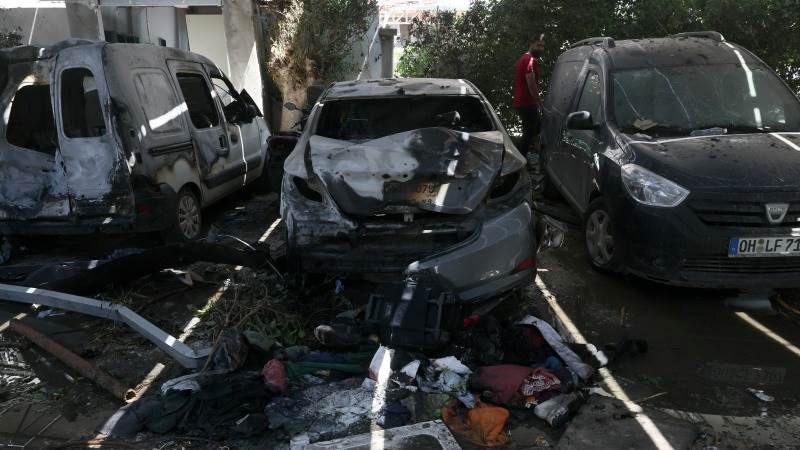
Bahrain's Interior Ministry reported that an 11-year-old girl sustained injuries during the attacks, showing the immediate human cost of the escalating conflict. The ministry also confirmed widespread damage to several cars and homes in the kingdom, indicating that civilian areas were directly impacted by the projectiles. The incident in Bahrain noted the immediate civilian impact of the strikes, with residential areas unexpectedly caught in the crossfire. Details regarding the specific nature of the damage to homes and vehicles were not immediately available from official statements, leaving many questions unanswered about the full extent of the destruction. The ministry did not specify the type of munition used in the attack or its point of origin, prompting ongoing investigations. Investigations into the full extent of the damage and the circumstances surrounding the girl's injuries are reportedly underway, aiming to provide a clearer picture of the attack's consequences. The attacks signify a direct hit on civilian infrastructure, raising profound concerns about the safety of non-combatants in the escalating regional tensions and the broader implications for regional stability.
Context of US Airstrikes
The United States maintains a significant military presence in Bahrain, hosting a key naval base that serves as the headquarters for the Fifth Fleet. This facility is key for U.S. Operations in the region, providing vital strategic support for maritime security and counter-terrorism efforts across the Persian Gulf, Red Sea, and parts of the Indian Ocean. The base provides logistical support, command and control, and operational readiness for naval forces deployed to the area, making it an indispensable asset for American interests. Its presence underlies the broader strategic interests of the United States in the Middle East, particularly concerning regional stability, the protection of international shipping lanes, and the projection of power. The U.S. Military installation in Bahrain is one of several strategic assets across the Gulf states, forming a full network for the American defense posture in a critical geopolitical area. The existence of such a prominent U.S. Military installation in Bahrain adds another layer of complexity to the recent Iranian attacks, potentially linking them to the broader geopolitical rivalry.
Regional Tensions Escalate
The recent attacks by Iran against Bahrain, Kuwait, and Jordan represent a significant escalation in regional tensions following United States airstrikes. These coordinated actions, which targeted facilities within the three Arab nations, show the volatile security environment across the Middle East and the readiness of regional actors to engage in retaliatory measures. The incidents have drawn attention to the broader strategic implications for countries hosting foreign military assets and those situated in close proximity to ongoing conflicts, noting their vulnerability. Bahrain's Interior Ministry previously reported civilian casualties and property damage in its territory, noting the immediate human cost of these strikes and the direct impact on innocent lives. The broader context involves a complex interplay of regional powers and international actors, with the United States maintaining a significant military presence in the region, including its key naval base in Bahrain. This series of events signals a deepening of the security challenges facing the United States and its allies in the Gulf, as well as the potential for wider destabilization across the entire Middle East. The international community watches closely as these tensions continue to mount.