Bahrain and the United Arab Emirates have urged the UN Security Council to take action following Iran's recent attacks on the UAE. On May 4, Iran launched 12 ballistic missiles, three cruise missiles, and four unmanned aerial vehicles (UAVs) directly at the United Arab Emirates, according to UAE Ambassador Mohamed Abushahab. Bahrain Ambassador Jamal Fares Alrowaiei reiterated "full solidarity" with the UAE and condemned "Iran’s attacks against the UAE on May 4," calling them unlawful. Both nations condemned Iran’s recent attacks on the UAE.
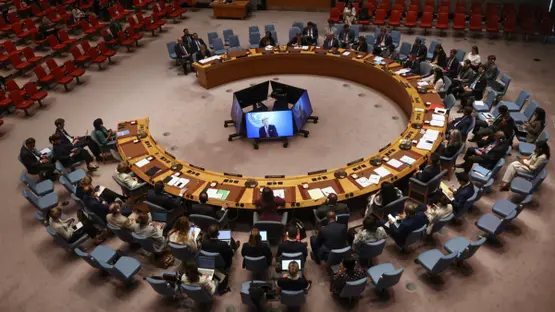
The UAE’s air defenses successfully intercepted most of these threats, limiting the damage, though reports indicated three civilians were injured. The UAE air defenses successfully intercepted the majority of these threats, limiting the damage caused by the projectiles. The UAE officially condemned these actions in the strongest possible terms, emphasizing the severity of the unprovoked assaults. Ambassador Alrowaiei stated that "the security of the region is indivisible, and such attacks must cease immediately… they require credible, united and decisive response from the international community and particularly from the Security Council." UN Security Council members began closed talks on Tuesday regarding a resolution drafted by the United States in response to the escalating situation. These discussions commenced as international concern mounted over the repeated incidents.
Diplomatic Push for Resolution
The attacks against the UAE violate Security Council Resolution 2817, according to reports. This specific resolution provides a legal framework that the UAE and its allies believe Iran has contravened. Bahrain, Saudi Arabia, the United Arab Emirates, Kuwait, and Qatar collectively demanded that Iran cease its attacks and discontinue laying mines in the Strait of Hormuz. A potential resolution under consideration could lead to sanctions against Iran and potentially authorize the use of force, reports indicated. Three Western diplomats confirmed these details, adding weight to the possibility of strong international recourse. These diplomats showed the gravity of the situation and the potential for significant punitive measures should Iran continue its actions.
An earlier Bahraini resolution, which had U.S. Backing, failed to pass after Russia and China blocked its adoption. This previous attempt noted the diplomatic challenges involved in securing a unified international response. The new draft resolution currently being discussed operates under Chapter VII of the U.N. Charter, according to reports. This classification is significant as Chapter VII resolutions allow the Security Council to take action, including imposing sanctions or authorizing military force, to maintain or restore international peace and security. This framework provides the legal basis for potentially strong measures. This resolution condemns Iran's alleged violations of the ceasefire and its "continuing actions and threats aimed at closing, obstructing, tolling, or otherwise interfering with the lawful exercise of navigational rights and freedoms through the Strait of Hormuz," which includes the laying of sea mines. The full nature of this condemnation reflects the broad scope of Iran's alleged disruptive activities in the critical waterway.
Washington aims to circulate a final draft of the resolution by May 8 and plans to hold a vote early the following week. This timeline indicates a push for swift action to address the ongoing tensions. Russia and China still have a competing text under consideration, reports indicated, suggesting ongoing diplomatic complexities surrounding the proposed measures. The presence of alternative drafts shows the deep divisions within the Security Council on how best to address Iran's actions.
Escalating Regional Tensions
Recent developments have further heightened regional tensions, with Iranian missiles striking a UAE oil port on Monday. This incident followed an earlier attack on May 4, when Iran launched 12 ballistic missiles, three cruise missiles, and four unmanned aerial vehicles (UAVs) directly at the United Arab Emirates. UAE Ambassador Mohamed Abushahab confirmed the May 4 attacks, stating, "Iran launched 12 ballistic missiles, three cruise missiles and four UAVs directly at the United Arab Emirates." These actions included drone strikes that resulted in a fire in the Fujairah oil Industry Zone, causing significant concern over the safety of critical infrastructure.
Fresh exchanges of fire were reported on Monday, indicating a continuation of hostile activities. These exchanges contribute to the volatile security environment in the region. Simultaneously, the United States announced it had destroyed six Iranian small boats on Monday, amidst ongoing reports of commercial vessels in the Strait of Hormuz being struck. The Strait of Hormuz, a critical shipping lane, has been a focal point for these incidents, with repeated attacks threatening global maritime commerce. Commercial vessels in the Strait of Hormuz continue to be struck, adding to the instability and risk for international shipping.
A proposed resolution aims to address these escalations, with reports indicating it calls on Tehran to cooperate with United Nations efforts to establish a humanitarian corridor through the Strait of Hormuz. This measure seeks to mitigate the impact of the ongoing incidents on maritime navigation and trade, ensuring the safe passage of essential goods. The text specifically calls on Tehran to cooperate with U.N. Efforts to establish a humanitarian corridor through the Strait, noting the urgency of ensuring humanitarian access and safety amidst the escalating tensions.
The draft resolution also includes provisions for the UN Secretary-General to report back within 30 days on compliance with the proposed measures. This reporting mechanism is intended to monitor Tehran's adherence to any agreed-upon terms and assess the effectiveness of the UN's diplomatic efforts. The U.N. Secretary general would report back within 30 days on compliance with the measures, providing a key accountability mechanism. The cumulative effect of these repeated incidents has showed the urgency of international intervention to de-escalate the situation in the vital waterway and surrounding areas. The international community is increasingly concerned about the potential for broader conflict and disruption to global trade.
Multinational Maritime Efforts
Washington has initiated "Project Freedom," a U.S.-led undertaking designed to facilitate the movement of stranded tankers and other vessels through the Strait of Hormuz. This effort shows a broader strategy to address maritime security in the critical waterway, aiming to ensure the continuity of vital shipping operations. Washington launched "Project Freedom," a U.S.-led effort to move stranded tankers and other vessels through Hormuz, demonstrating a proactive approach to maintaining maritime stability.
Concurrently, the United States has circulated a proposal for the establishment of a new multinational maritime coalition, to be known as the Maritime Freedom Construct (MFC). This proposed construct aims to enhance cooperation among international naval forces to safeguard navigation and deter hostile activities in the region. The initiative reflects a diplomatic push to formalize and expand existing security operations, creating a more strong and coordinated international presence. Washington has circulated a proposal for a new multinational maritime coalition, the Maritime Freedom Construct (MFC), indicating a strategic vision for long-term regional security.
The current efforts within the United Nations Security Council to address the incidents involving Iran are being pursued in parallel with this diplomatic outreach for the Maritime Freedom Construct. This dual approach indicates a multifaceted strategy by Washington to tackle both immediate security concerns and longer-term stability in the Strait of Hormuz. The Security Council push is being pursued alongside diplomatic outreach on the MFC, illustrating a full diplomatic and security strategy. The parallel initiatives highlight the complexity of the regional challenges and the intent to coordinate various international responses to ensure maritime security and freedom of navigation.
The proposed Maritime Freedom Construct would operate in conjunction with a distinct Franco-British maritime mission that involves approximately 30 countries. This collaborative framework suggests an integrated approach to maritime security, leveraging the resources and expertise of multiple nations. The MFC would work with a separate Franco-British maritime mission involving around 30 countries, creating a broad international coalition. The aim is to create a full and strong international presence capable of responding to threats and ensuring the free flow of commerce through the vital shipping lane. The coordination between these separate but complementary missions is intended to bolster overall security and deter potential disruptions in the region, providing a layered defense against maritime aggression.