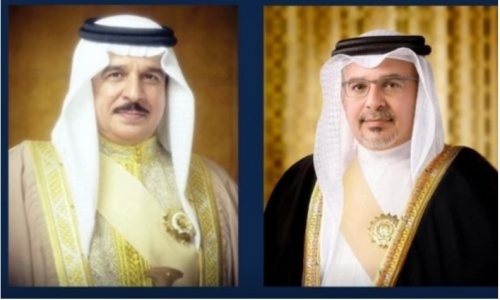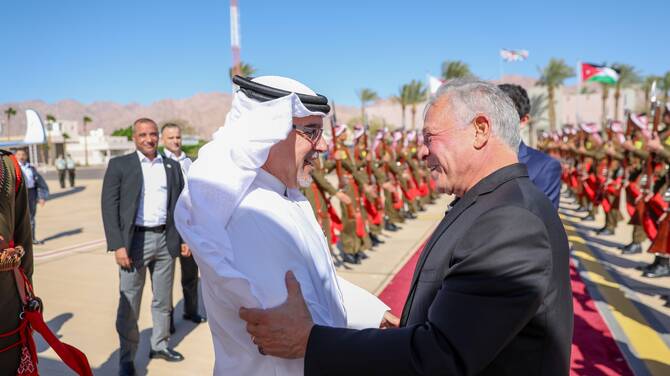
Jordan’s King Abdullah II met with Bahrain’s Crown Prince Salman bin Hamad Al-Khalifa in Aqaba on Friday to discuss Middle East security and regional stability. Crown Prince Hussein bin Abdullah II also attended the talks, which focused on the need for enhanced global efforts regarding a US-Iran ceasefire. The high-level meeting showed the deep strategic partnership between the two nations and their shared commitment to fostering peace in a volatile region.
King Abdullah showed the necessity of intensifying international efforts to reinforce the US-Iran ceasefire agreement, according to reports. He noted that any deal to end the war must safeguard the security of Arab states, recognizing the broader implications for regional stability. The discussions took place amidst recent security incidents in the Gulf region, noting the urgent need for de-escalation and a lasting resolution. In Bahrain, two people were injured and several houses sustained damage from falling shrapnel originating from an intercepted Iranian drone. This incident occurred as Iran continued launching rockets and drones against targets in the Gulf. Separately, the UAE's Defense Ministry stated it was dealing with a ballistic missile attack, which resulted in three injuries and a fire at the Abu Dhabi Haabshan gas complex. The article detailing these events was published on May 01, 2026. These occurrences serve as stark reminders of the ongoing threats to civilian safety and critical infrastructure in the Gulf.
Regional Security Concerns Addressed
The discussions between King Abdullah II and Crown Prince Salman bin Hamad Al-Khalifa specifically focused on the strong ties and cooperation between Jordan and Bahrain across various sectors. This emphasis on bilateral relations reflects a broader strategy to strengthen alliances and present a united front against regional challenges. King Abdullah reaffirmed Jordan’s solidarity with Bahrain and other Gulf states, stressing that the security of the Arab Gulf is integral to the region’s overall stability. He emphasized that the collective security of Arab nations is critical for maintaining equilibrium and preventing further destabilization.
The talks also noted the importance of strengthening Arab coordination to address the economic impact of recent regional escalation. Leaders recognized that prolonged conflict and insecurity have significant repercussions on trade, investment, and overall economic development, necessitating a unified approach to mitigate these effects. The Bahraini crown prince thanked Jordan for its support and emphasized the importance of expanding cooperation and exploring new opportunities between the two countries. This commitment to enhanced collaboration extends beyond security matters, encompassing economic, cultural, and social spheres, aiming to build a more resilient and prosperous future for both nations.
Separately, Saudi Arabia has demanded a halt to attacks against facilities in Gulf States. This demand comes as missile strikes were reported as ongoing in Bahrain and the United Arab Emirates, according to reports, indicating a persistent pattern of aggression despite diplomatic overtures. The Kingdom of Saudi Arabia views such attacks as a direct threat to regional stability and global energy supplies, calling for immediate cessation of hostilities targeting vital infrastructure.
Ceasefire Agreement Details and Reactions
The Gulf States announced on Wednesday they welcomed the ceasefire agreement reached between the United States, Israel, and Iran. This agreement will halt fighting for the next two weeks, providing a key window for de-escalation and diplomatic engagement. Negotiations associated with the ceasefire are scheduled to commence in Islamabad, Pakistan, signalling a concerted international effort to find a sustainable political solution. The choice of Islamabad as a neutral venue for these sensitive talks shows the global interest in resolving the conflict.
Oman and Saudi Arabia were among the first nations to express their welcome for the ceasefire agreement, noting their immediate recognition of its potential to reduce regional tensions. Their endorsement provided early momentum for broader acceptance among Gulf nations. Qatar also welcomed the agreement, further demanding that the Strait of Hormuz be completely secured and free of transit. This demand from Qatar emphasizes the critical importance of maritime security for global trade and energy flows, which have been repeatedly threatened by regional instability. Ensuring the unimpeded passage through this vital waterway is a key concern for many international actors.
Following the announcement, Iranian proxy groups, including Iraq's Islamic Resistance and Lebanon's Hezbollah, acknowledged the ceasefire in official statements. This acknowledgement, while cautious, signifies a potential, albeit fragile, adherence to the terms of the temporary truce by various armed factions. Despite the agreement, Kuwait's Army has intercepted several drones targeting the country's vital oil facilities and power stations since the ceasefire began. These incidents show the precarious nature of the ceasefire and the enduring challenges in achieving full security across the region, demonstrating that even with a diplomatic agreement in place, vigilance remains essential. The continued targeting of critical infrastructure notes the deep-seated nature of the conflict and the ongoing need for strong defensive measures.
Broader Regional Stability
The broader implications of regional security were a central theme in the discussions. King Abdullah II and Bahrain's Crown Prince Salman bin Hamad Al-Khalifa showed the importance of collective Arab security, emphasizing that the stability of one nation is intrinsically linked to the stability of all. The Jordanian monarch reiterated that the security of Arab Gulf states is fundamental to the stability of the entire region, advocating for a holistic approach to defense and diplomacy. Crown Prince Salman acknowledged Jordan's steadfast support for Bahrain and the Gulf states, emphasizing the need for expanded cooperation to address shared threats and opportunities.
These high-level talks in Aqaba occurred amidst escalating tensions and recent security incidents across the Gulf, providing a timely platform for leaders to coordinate their responses. Bahrain experienced damage to houses and injuries from falling shrapnel, attributed to an intercepted Iranian drone, illustrating the direct impact of regional conflicts on civilian populations. Concurrently, the UAE's Defense Ministry reported a ballistic missile attack on Abu Dhabi, resulting in three injuries and a fire at the Haabshan gas complex. These events highlight the persistent threats facing the region, even as diplomatic efforts for de-escalation are underway, showing the complex security landscape. The attacks on energy infrastructure, in particular, raise concerns about their potential to disrupt global markets and supply chains.
The leaders' call for enhanced global efforts to secure a US-Iran ceasefire agreement directly addresses these widespread security concerns. They stressed that any resolution must prioritize the safeguarding of Arab states' security, ensuring that their territorial integrity and economic interests are protected. The recent ceasefire agreement, which temporarily halted fighting for two weeks, was welcomed by the Gulf States, including Oman, Saudi Arabia, and Qatar, as a necessary step towards de-escalation. While negotiations are set to commence in Islamabad, Pakistan, the continued interception of drones targeting Kuwait's vital oil facilities and power stations by its army shows the fragile nature of regional stability and the ongoing need for strong security measures. The article detailing these developments is 288 words long, and its publication on May 01, 2026, reflects the urgency with which these issues are being addressed on the international stage. The leaders' shared vision for a secure and stable Middle East hinges on sustained diplomatic engagement and a commitment from all parties to uphold peace.