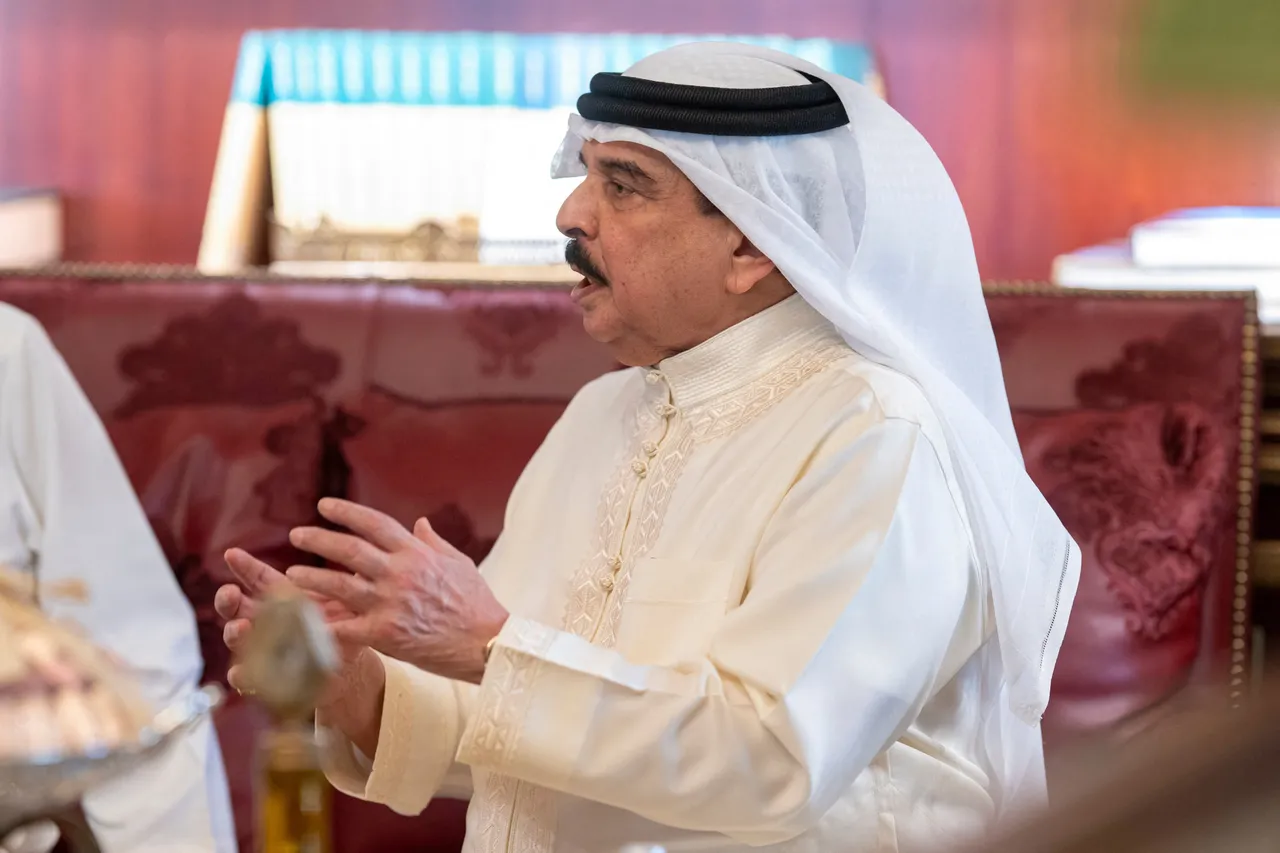
Bahrain's King Hamad bin Isa Al Khalifa on Thursday demanded that Iran cease interfering in the internal affairs of Bahrain and other Gulf states. The remarks, carried by the state-run Bahrain News Agency, included King Hamad's assertion that Bahrain has been subjected to "heinous Iranian aggression" targeting its security, stability, and people. This strong condemnation from the Bahraini monarch shows the growing tensions in the region. King Hamad's statement, delivered through the official news outlet, noted the severity with which Bahrain views Iran's actions. "The ordeal the country has gone through has exposed faces and removed masks," King Hamad stated, adding that "Iran must cease interfering in the internal affairs of Bahrain and the Gulf states." He described the situation as a "betrayal that cannot be forgiven" and expressed "strong anger" over what he characterized as persistent Iranian meddling.
While Tehran has stated it is targeting US assets and interests in its recent actions, strikes have also reportedly hit energy infrastructure, civilian sites, airports, and residential buildings and hotels across the Gulf. These widespread impacts have caused significant alarm among Gulf nations, leading to increased calls for de-escalation and an end to regional destabilization. King Hamad emphasized that "citizenship [is] 'not a piece of paper but a covenant,' adding that those who break it forfeit their right to it." This statement appears to be directed at individuals within Bahrain perceived as sympathetic to Iran, signaling a firm stance against any internal support for external adversaries. The King's address reflects a full concern for both external threats and internal cohesion in the face of regional volatility.
Iran's Retaliation and Bahrain's Defense
All six Gulf Co-operation Council nations were struck during Iran's retaliation campaign targeting Israel and Gulf nations hosting US assets. This widespread targeting demonstrated the broad reach of Iran's military capabilities and the significant risks posed to regional stability. Bahrain, a key ally of the United States in the Gulf region, found itself directly in the path of these retaliatory actions. Bahrain's Ministry of Defense reported that its air defenses successfully intercepted and destroyed a significant number of incoming threats, protecting its territory and critical infrastructure. According to the ministry, Bahraini forces eliminated 194 Iranian missiles and 523 drones, showcasing the effectiveness of the kingdom's defensive capabilities. This strong response was key in mitigating potential damage and ensuring the safety of its population and assets.
The retaliatory actions by Iran led to widespread concerns across the region, prompting international calls for restraint and diplomatic engagement. The scale and nature of the attacks showed the urgent need for a peaceful resolution to the escalating conflict. A Pakistan-mediated ceasefire subsequently came into effect on April 8, aiming to de-escalate the broader conflict and prevent further military confrontations. This diplomatic intervention provided a temporary reprieve, though underlying tensions remain high. The ceasefire was a critical step in halting immediate hostilities, but the long-term stability of the region continues to be a subject of international concern and diplomatic efforts.
Crackdown on Internal Sympathizers
In a concerted effort to counter perceived internal threats linked to Iranian influence, Bahraini authorities have undertaken a series of decisive legal and administrative actions. A Bahraini court has sentenced five individuals to life in prison after convicting them of plotting terrorist acts in coordination with Iran. These severe sentences reflect the government's determination to prosecute those it deems a threat to national security. Concurrently, another 25 people received sentences of up to ten years for sharing or expressing support for recent Iranian attacks. These judicial actions follow a broader move by the Bahraini government to address perceived internal sympathizers and to reinforce its stance against foreign interference. The legal proceedings highlight the kingdom's zero-tolerance policy towards any activities that could undermine its sovereignty or stability.
Bahrain also revoked the citizenship of 69 individuals, accusing them of sympathizing with or glorifying Iran's actions against the kingdom. This measure is part of a broader strategy to disincentivize any form of support for Iran within Bahraini society. The government views such actions as a direct challenge to national unity and security. In a separate development earlier this year, 14 people were charged in March with spying for Iran's Revolutionary Guard Corps. These charges show the ongoing intelligence efforts by Bahrain to dismantle alleged Iranian espionage networks operating within its borders. Additionally, three other individuals face distinct charges of channeling charitable funds to Hezbollah, an organization designated as a terrorist group by Bahrain and several other nations. This particular case notes concerns about the financing of groups deemed to be proxies for Iranian influence in the region. These measures collectively show Bahrain's strong response to what it describes as Iranian interference in its internal affairs and its efforts to counter alleged influence within the country, aiming to safeguard its national security and political independence.
King's Warning and Future Alert
Bahrain's armed forces remain on high alert following recent regional developments and King Hamad bin Isa Al Khalifa's strong statements regarding Iranian interference. This heightened state of readiness is a direct consequence of the volatile security environment in the Gulf. The ongoing readiness posture reflects the kingdom's assessment of persistent threats to its security and stability, particularly in light of recent missile and drone attacks. Bahrain's military forces are maintaining an elevated state of vigilance across its borders and strategic installations, including critical infrastructure and key defense sites. This alert status is part of a broader national security strategy to counter potential aggression from external actors and to protect critical infrastructure, ensuring the continued safety and operational capacity of the nation.
The government has emphasized its unwavering commitment to safeguarding the nation against any attempts to undermine its sovereignty, reinforcing its defensive capabilities in response to the volatile regional landscape. This commitment includes continuous monitoring of regional developments and adapting defense strategies as needed. King Hamad's firm stance and the subsequent military alert signal Bahrain's resolve to protect its interests and deter any further acts of aggression or interference. The kingdom is actively working to enhance its defensive posture and maintain regional alliances to ensure collective security. This proactive approach aims to reassure its citizens and allies of its capacity to defend against threats, while also sending a clear message to any potential adversaries regarding its readiness to respond.