Iran's Islamic Revolutionary Guard Corps (IRGC) Navy issued a stark warning on Tuesday, following recent strikes on four Iranian tankers in the Gulf of Oman. The warning comes amidst escalating tensions with the United States in the region, marking a significant uptick in military posturing and direct engagements. The incidents occurred in a critical maritime area for global oil shipments, a waterway vital for international commerce and energy supply.
US Strikes Iranian Tankers
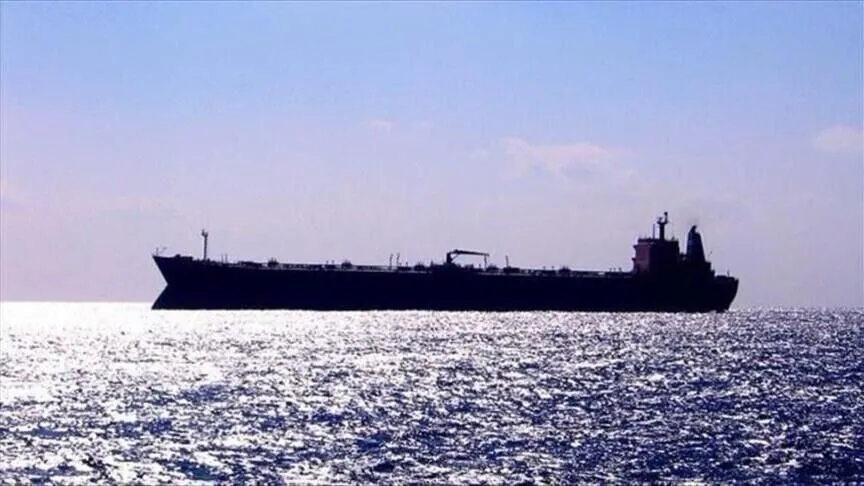
The US military reported on Tuesday that it had destroyed five Iranian crude oil carriers in a series of targeted operations. These strikes were described by US officials as a direct response to prior provocations. One Iranian tanker was struck near Kharg Island in the Persian Gulf, a key oil terminal for Iran. US Central Command (CENTCOM) stated that crews were ordered to abandon the tankers before the vessels were struck and rendered inoperable, indicating a deliberate effort to minimize casualties while disabling the vessels. The US military emphasized that these actions were taken to ensure the tankers could no longer be used for their intended purposes.
Iranian state media, however, presented a different account, reporting that two tankers were hit in separate incidents, rather than the five claimed by the US. According to Iranian reports, one Iranian tanker was hit approximately four miles from Kharg Island, a location consistent with US claims of a strike in that vicinity. Another Iranian tanker was reportedly hit off Jask, a southern Iranian port city, near the Gulf of Oman, further noting the geographical spread of the reported incidents. Iranian media also reported that crews were being taken ashore in lifeboats following these incidents, suggesting that personnel were able to evacuate the vessels before significant damage or casualties occurred.
Further details emerged regarding the attacks on the Iranian vessels. A small Iranian oil tanker was struck by a US missile approximately four miles from Kharg Island, confirming the nature and proximity of at least one of the strikes. Iranian media reported no casualties from the strike near Kharg Island, which aligns with CENTCOM's statement about crews abandoning the vessels. Separately, multiple explosions were reported in Jask, a southern Iranian port city located strategically near the Strait of Hormuz. These blasts were heard around 9:45 pm local time in Jask, indicating a nighttime operation and adding to the gravity of the situation in the vital shipping lane. The timing and location of these explosions showed the heightened military activity in the region.
IRGC Retaliation and Accusations
The IRGC's warning was specifically directed at tanker crews operating near ports in Kuwait and Bahrain. The organization stated that these ports host "American terrorists" and are partners in "hostile actions" against Iran, explicitly naming the two Gulf nations as complicit in perceived aggression. "We warn all crews aboard oil tankers in the vicinity of ports in Kuwait and Bahrain — which host these (American) terrorists and are partners in their hostile actions — to immediately leave their vessels, whether they are at anchor or docked at the ports, as the vessels will be targeted," the IRGC declared, issuing an unequivocal threat to commercial shipping in the area. The warning from the IRGC was a clear escalation, broadening the scope of potential targets to include commercial vessels associated with countries hosting US forces.
The IRGC characterized the strikes on the tankers as a direct response to what it described as US attacks on Iranian vessels. This declaration explicitly linked the IRGC's actions to earlier US military operations, framing their threats as retaliatory. The US action targeting Iranian tankers, in turn, followed two attempted ballistic missile attacks by Iran’s IRGC on a US Navy warship. These incidents marked a further escalation in military engagements between the two nations, demonstrating a dangerous cycle of action and counter-action. The US military reported that its warship successfully evaded both ballistic missile attacks launched by Iran's IRGC, with no American personnel injured in these incidents, noting the effectiveness of the warship's defensive capabilities.
Separately, the IRGC claimed to have launched "devastating" missile strikes on a US military base located in Jordan. This assertion by the IRGC indicated a broader scope of potential retaliatory actions beyond maritime targets, extending the conflict geographically. However, reports from Jordan indicated that two ballistic missiles fell in unpopulated areas within the country. This suggests the missiles either missed their intended target or were not aimed at a populated area, casting doubt on the IRGC's claim of "devastating" strikes. The discrepancy between the IRGC's claim and the actual impact reports shows the fog of war and the differing narratives presented by the involved parties.
Regional Context and Diplomacy
The Islamic Revolutionary Guard Corps (IRGC) issued a warning to crews aboard oil tankers operating near ports in Kuwait and Bahrain, advising them to "immediately leave their vessels, whether they are at anchor or docked at the ports, as the vessels will be targeted." This specific warning targeted commercial shipping, raising concerns for the safety of maritime trade in the Gulf. The IRGC accused Kuwait and Bahrain of hosting US forces and supporting what it termed as "hostile actions" against Iran, thereby implicating these nations in the ongoing tensions. A spokesperson for the IRGC reiterated the threat, stating, "We warn all crews aboard oil tankers in the vicinity of ports in Kuwait and Bahrain — which host these (American) terrorists and are partners in their hostile actions — to immediately leave their vessels, whether they are at anchor or docked at the ports, as the vessels will be targeted." This repeated emphasis on the warning showed its seriousness and the IRGC's intent.
The US military reported that its warship successfully evaded two ballistic missile attacks launched by Iran's IRGC. No American personnel were injured in these incidents, a testament to the defensive measures employed by the US Navy. Separately, Jordan’s army announced that it had intercepted 18 of 20 ballistic missiles fired from Iranian territory towards Jordan. The interceptions indicate a broader pattern of missile activity in the region, suggesting that Iran's military actions are not confined to maritime engagements. The fact that two ballistic missiles fell in unpopulated areas in Jordan, as reported by Jordanian authorities, further illustrates the reach of these projectiles and the potential for unintended consequences in a volatile region. This series of events, from naval strikes to missile attacks, paints a picture of rapidly escalating tensions that could have broad implications for regional stability and international security. The international community continues to monitor the situation closely, urging de-escalation and diplomatic solutions to prevent further conflict.