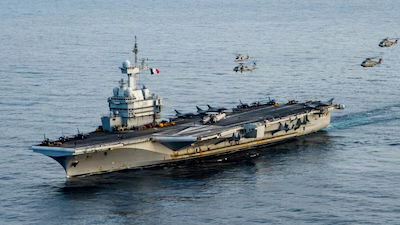
Iranian missile and drone strikes caused significant damage to the US Navy’s base in Bahrain during attacks carried out between late February and June. The strikes specifically targeted Naval Support Activity (NSA) Bahrain, which serves as the headquarters for the US Fifth Fleet. The attacks have prompted a strategic reassessment by US defense officials regarding the security of key military installations in the region, noting vulnerabilities exposed across American facilities in West Asia.
Extent of Damage and Official Response
The strikes inflicted substantial damage on Naval Support Activity (NSA) Bahrain. This included impacting the command headquarters, at least 12 other buildings, and two satellite communications terminals. The precision and scale of the attacks show the evolving threat landscape in the region. Despite the clear physical evidence of destruction, the Pentagon has not publicly acknowledged the full extent of this damage at the US Navy base. This lack of transparency has drawn scrutiny, particularly given the strategic importance of NSA Bahrain.
In April, the US government took action to restrict access to commercial satellite imagery that depicted destruction at American facilities, a move that further fueled speculation about the true scale of the damage. Pentagon officials have also refrained from disclosing the total cost incurred due to the damage from the attacks, citing ongoing assessments and security concerns. The decision to limit public access to visual evidence and financial details suggests a concerted effort to manage the narrative surrounding the incidents.
Broader Conflict and Financial Impact
Iran launched more than 8,000 missiles and drones during the broader conflict across the region, demonstrating a significant capability to project force. Despite this extensive barrage, only two strikes resulted in American fatalities, a testament to defensive measures and personnel protection protocols. However, the financial implications of these attacks are considerable. The Pentagon's preliminary estimate for the war's cost, initially set at $29 billion, did not encompass the damage incurred by military bases, indicating that the total financial burden is likely much higher. This initial estimate, while substantial, focused primarily on operational expenditures rather than infrastructure repair and replacement.
The financial repercussions for damaged infrastructure are significant. The Wall Street Journal estimated that the reconstruction costs for buildings damaged at Naval Support Activity (NSA) Bahrain alone would be around $400 million. This figure represents a substantial investment required to restore critical operational capabilities at the Fifth Fleet's headquarters. A report issued by the Center for Strategic and International Studies (CSIS) presented a broader assessment, estimating the total damage to US bases to be between $2.2 billion and $5.1 billion. This wider figure reflects the financial implications beyond the specific Bahraini installation, encompassing numerous other American military and diplomatic sites that sustained damage during the period of attacks. The disparity between the initial Pentagon estimate and subsequent analyses notes the complex and evolving nature of assessing the full cost of the conflict.
Strategic Reassessment and Future Posture
Damage sustained at Naval Support Activity (NSA) Bahrain, along with strikes on at least 20 other American military and diplomatic sites in the region, has prompted urgent discussions within the US administration regarding a reshaping of its military posture in West Asia. This full reassessment aims to address the vulnerabilities exposed by the recent conflict and ensure the long-term security and effectiveness of US operations in a volatile environment. Officials are actively considering several options to enhance resilience and adaptability. These include redesigning the Bahrain base to improve its defensive capabilities against modern threats, potentially incorporating more hardened structures and advanced air defense systems.
Further proposals under consideration include reducing troop deployments in both Kuwait and Saudi Arabia, a move that could signify a shift towards a more agile and less footprint-heavy presence. The strategic reassessment also involves potentially relocating some US military functions further west, away from immediate Iranian missile range, and moving command facilities underground to enhance protection against aerial assaults. Israel is among the locations being considered by US officials for hosting certain military capabilities as part of this broader restructuring, leveraging existing alliances and secure infrastructure. Retired military officials have stated that the recent conflict exposed critical vulnerabilities in US installations. Many of these facilities were constructed decades before Iran developed its current arsenal of precision missiles and drones, noting a critical gap in defenses against modern threats and necessitating a fundamental re-evaluation of base design and deployment strategies.
Prioritizing Personnel Over Infrastructure
Throughout the attacks, the US military maintained that no personnel were killed in the attacks on Naval Support Activity (NSA) Bahrain and asserted that base operations were not significantly affected. This emphasis on personnel safety and operational continuity shows a key priority during the sustained period of strikes. Most personnel underwent evacuation from the facility as a precautionary measure, mitigating potential casualties from the incoming barrages. Although a small contingent remains stationed there, according to military statements, the larger evacuation effort demonstrates a proactive approach to protecting service members while managing essential base functions. The ability to evacuate personnel quickly and maintain critical operations reflects established protocols designed to minimize human cost even when infrastructure sustains damage.