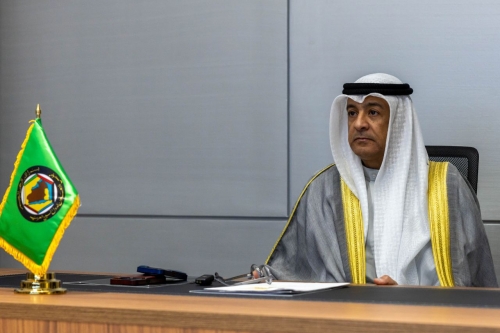
Gulf Cooperation Council (GCC) member states have activated alternative logistics corridors and rerouted shipments away from traditional Gulf ports, a strategic shift prompted by escalating regional tensions and disruptions to maritime navigation. GCC Secretary-General Jasem Mohamed Albudaiwi stated that these actions were taken at a critical juncture, citing Iranian attacks against GCC states and ongoing disruptions to navigation in the Strait of Hormuz as key reasons for the strategic shift. These incidents, he emphasized, constitute a "direct threat" impacting global markets and necessitating immediate and decisive responses. The ongoing conflict with Iran is anticipated to lead to permanent adjustments in supply chain management as shippers seek to manage increased risks and vulnerabilities. Shippers are actively assessing strategies to minimise both the higher costs and the escalating disruption to supply chains that rely on critical chokepoints, including the Strait of Hormuz, the Bab al-Mandab Strait, and the Suez Canal.
"These actions have caused human casualties and material damage and have directly affected the stability of global energy markets and supply chains, particularly food commodities and agricultural inputs, foremost among them chemical fertilisers," Secretary-General Albudaiwi said. He elaborated that the attacks specifically targeted civilian facilities, infrastructure, and energy installations, including vital oil and gas assets. The ramifications of these disruptions have been keenly felt in commodity markets, with urea prices, a critical agricultural input, rising by 30 to 40 percent. The persistent instability showed by these events is driving a fundamental re-evaluation of global logistics and trade routes.
Navigating Disruptions and Tensions
Disruptions to maritime navigation have significantly contributed to shortages in oil, gas, and petrochemical products across global markets. Over a 45-day period starting February 28, Iran and its regional allies carried out nearly 7,000 attacks using ballistic missiles and drones. These attacks specifically targeted civilian facilities, essential infrastructure, and key energy installations, including oil and gas assets, demonstrating a clear intent to destabilize the region's economic lifelines. The impact of these disruptions has been particularly severe in commodity markets, with urea prices experiencing a substantial increase of 30 to 40 percent, noting the vulnerability of global supply chains to regional conflicts.
The severity of the situation necessitates coordinated international action, including the implementation of effective price stability mechanisms and significantly strengthened logistical cooperation among nations. The GCC welcomed UN Security Council Resolution 2817, which unequivocally condemned the attacks and issued a clear call for a halt to all threats against maritime navigation in the Gulf and the Strait of Hormuz. However, despite this international condemnation and call to action, Iran has not complied with UN Security Council Resolution 2817, continuing its destabilizing activities.
Dialogue and diplomacy are consistently considered the preferred path to resolving these complex crises, with persistent calls urging Iran to respect the sovereignty of other nations and refrain from interfering in their internal affairs. The critical importance of these issues was showed during a virtual meeting focused on 'Supporting Food Security and Access to Fertilisers'. This high-level discussion saw the participation of prominent international figures, including Italian Deputy Prime Minister and Foreign Minister Antonio Tajani and Croatia’s Foreign and European Affairs Minister Gordan Grlić Radman, reflecting the global concern over these disruptions.
New Land and Sea Corridors
Measures to reroute trade include diverting cargo to ports on the Red Sea and the Arabian Sea, a strategy supported by coordinated customs and logistical facilitation to ensure smooth and efficient transit. The ongoing blockade of the Strait of Hormuz is acting as a powerful catalyst for the establishment of alternative supply chains, including a proposed landbridge that would span Saudi Arabia and Egypt to the Mediterranean. Reports indicated that this ambitious landbridge would connect Gulf nations via a full rail network across Saudi Arabia to various Red Sea ports, including the strategically important Jeddah Islamic Port, King Abdullah Port, and the nascent Port of Neom.
From these Red Sea ports, cargoes would then be efficiently shipped across the Red Sea to the Egyptian ports of Sokhna and Safaga, further diversifying transit options. Subsequently, cargo would move by rail from Sokhna and Safaga to Egypt’s Mediterranean coast port of Damietta, creating a smooth intermodal connection. An existing roll-on/roll-off (roro) service from Damietta to Trieste, coupled with the introduction of new container services, would then complete the vital supply chain link between the Gulf region and Europe, according to officials, offering a strong alternative to traditional maritime routes.
The landbridge project is also expected to integrate smoothly with the 2,117-kilometre GCC Railway project, enhancing regional connectivity and efficiency. The GCC Railway project is currently scheduled for completion in 2030, according to official reports, promising a transformative impact on regional logistics. This extensive railway network includes a high-speed 785-kilometre track specifically designed to link the major cities of Riyadh and Doha, significantly reducing travel and transit times. Shippers are reportedly assessing strategies aimed at minimising both the higher costs and the escalating disruption to supply chains that rely on critical chokepoints, including the Strait of Hormuz, the Bab al-Mandab Strait, and the Suez Canal, all of which have seen increased instability.
Infrastructure Enhancements
Significant infrastructure developments are already materializing to support these new trade corridors. The Red Sea Container Terminal commenced operations in January at Sokhna on Egypt’s Red Sea coast, marking a key step in enhancing regional port capacity. Phase One of the Red Sea Container Terminal features an impressive 1,200-meter quay with an 18-meter draft, according to reports, allowing it to handle large vessels. Concurrently, the expansive 93-hectare Damietta Alliance Container Terminals (DACT) on Egypt’s Mediterranean coast also began operations in February, further bolstering the region's port infrastructure. The DACT facility represents a significant joint venture, as officials indicated, between Hapag-Lloyd Damietta GmbH, Eurogate GmbH, and Contship Italia, combining international expertise and investment.
Further infrastructure enhancements are actively underway at key regional ports to accommodate the anticipated increase in cargo traffic. The Red Sea Gateway Terminal at Jeddah Islamic Port is undergoing a substantial Phase 1 expansion, which will significantly increase its capacity, allowing it to accommodate vessels of up to 19,000 TEU. Additionally, a fully autonomous container terminal is currently under development at the Port of Neom, aimed at revolutionizing port operations and enhancing efficiency and capacity within the region's shipping network through advanced technology. These projects collectively aim to bolster the capacity and connectivity of maritime trade routes, particularly those designed to bypass traditional chokepoints and offer more secure and reliable transit options in an increasingly volatile geopolitical landscape.