A month-old ceasefire appeared to be holding on Saturday, according to statements following a period of heightened tensions in the Persian Gulf. This tenuous ceasefire, now a month-old, has been a focal point of international concern and diplomatic maneuvering. U.S. President Donald Trump insisted the ceasefire remained in effect, a claim echoed by military reports. Hours earlier, military forces had stated that they thwarted attacks on three Navy ships and subsequently struck Iranian military facilities in the Strait of Hormuz, an event that showed the fragility of the current calm. The military's swift response to these alleged attacks noted the ongoing volatility in the critical waterway. Despite these incidents, the fact that the ceasefire was still in place offered a glimmer of hope amidst the persistent regional instability.
U.S. Military Actions and Iran's Response
The U.S. Military reported Friday that its forces had disabled two Iranian tankers attempting to breach an American blockade of Iran’s ports. The military statement detailed how these actions were taken to enforce the blockade. Video released by the military showed two tankers as their smokestacks were struck by an American fighter jet, providing visual evidence of the engagement. The United States has imposed its own blockade of Iran’s ports, a significant measure that has been in effect as Iran has mostly blocked the critical waterway for global energy since the U.S. And Israel launched a war on February 28. This blockade has been a key point of contention and a major factor in the escalating tensions. Reports indicated that earlier in the week, an American military jet had shot out the rudder of a tanker the U.S. Military stated was also attempting to breach its blockade, demonstrating a pattern of enforcement actions. These incidents illustrate the intense military presence and operational activities in the region aimed at maintaining the blockade. A U.S. Strike overnight killed at least one sailor and injured 10 others aboard a cargo vessel that subsequently caught fire, further noting the human cost and inherent dangers of the ongoing conflict. President Donald Trump reiterated threats to resume full-scale bombing if Iran does not accept an agreement to reopen the Strait of Hormuz and roll back its nuclear program, according to reports. These stern warnings from the U.S. President show the high stakes involved in the current standoff and the potential for a rapid escalation if diplomatic efforts fail. The U.S. Position remains firm: a full agreement is necessary to de-escalate the situation permanently.
Bahrain's Detentions and Regional Context
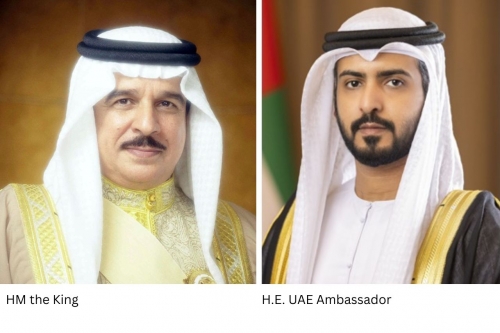
Bahrain arrested 41 individuals it alleges are affiliated with Iran’s Revolutionary Guard. The arrests come amid heightened regional tensions and reflect deep-seated concerns within the Gulf kingdom. Bahrain, a nation led by a Sunni Muslim monarchy, has a population that is predominantly Shiite. This demographic composition contrasts sharply with its ruling structure, aligning it culturally and religiously with Iran, which also has a majority Shiite population. The detentions show ongoing concerns within the kingdom regarding alleged external interference in its internal affairs, particularly from Iran. The government in Manama has consistently expressed worries about what it describes as Iran's destabilizing activities in the region, often citing historical precedents and alleged current covert operations. The recent arrests are presented by Bahraini authorities as part of broader efforts to counter such perceived threats and maintain internal security and national sovereignty. The exact nature of the alleged affiliation with Iran’s Revolutionary Guard was not immediately detailed by Bahraini officials, leaving some aspects of the arrests open to speculation. However, the move signals Bahrain's resolve to address what it views as a critical national security issue. The backdrop of these arrests is a complex regional dynamic where sectarian divisions often intertwine with geopolitical rivalries, making internal stability a constant challenge for the Bahraini monarchy.
Diplomatic Efforts for Lasting Peace
Washington awaits an Iranian response to its latest proposal for an agreement aimed at ending the ongoing war, reopening the Strait of Hormuz, and rolling back Tehran’s disputed nuclear program. This proposal represents a significant diplomatic push by the U.S. To achieve a full resolution to the multifaceted crisis. The terms of the proposed agreement are designed to address key areas of conflict and instability, from military engagements to nuclear proliferation concerns. Simultaneously, international calls for continued engagement have intensified, with numerous global actors stressing the urgency of a negotiated settlement. Russia and Saudi Arabia have urged sustained diplomatic efforts to achieve what Russia’s foreign ministry described as a "sustainable, long-term agreement" to conclude the conflict. Their joint call notes a shared understanding of the need for a durable peace that goes beyond temporary ceasefires.
Egyptian and Qatari top diplomats have also reiterated their belief that diplomacy represents the sole viable path to finding a resolution, emphasizing that military solutions are unsustainable and fraught with peril. Their statements show a broad regional consensus among key Arab states regarding the necessity of negotiation. Pakistani Prime Minister Shehbaz Sharif confirmed his country's active involvement in these efforts, stating that Pakistan has been in contact with both the U.S. And Iran "day and night" in an attempt to extend the current ceasefire and broker a full peace deal. This continuous engagement by Pakistan demonstrates the critical role that neutral parties can play in facilitating dialogue between adversaries. These multilateral engagements show a concerted push to de-escalate tensions and secure a lasting resolution through negotiation, reflecting a global desire to prevent further conflict in a region already grappling with significant challenges. The international community's unified stance on diplomacy as the primary tool for conflict resolution provides a key framework for ongoing and future discussions.