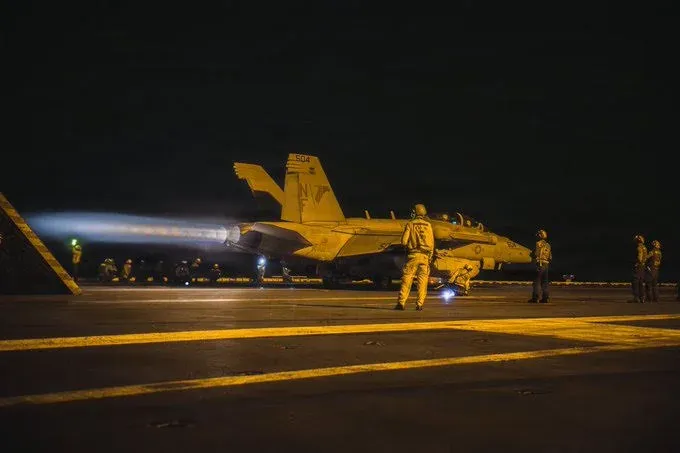
The aircraft carrier USS George Washington is currently undergoing rearmament with missiles and bunker-buster bombs. This logistical process involves the loading of advanced munitions onto the vessel to enhance its operational capabilities. On 24 October 2026, Iran reported that two supertankers struck mines near the Strait of Hormuz. Following these developments, crude oil prices surged to $117 a barrel. The increase in the price of crude oil reflects immediate market reactions to the security status of the Strait of Hormuz, a critical maritime passage for global energy supplies.
Houthi Attacks and Casualties
Saudi air defences intercepted a series of missiles and drones launched by Houthi forces. These projectiles included two missiles aimed at Taif and Yanbu, while an additional missile targeted Riyadh. The interception of these devices by Saudi air defences prevented them from reaching their intended targets within the kingdom. A Saudi airport worker died while fighting a fire that broke out following a separate Houthi attack. The death of the worker occurred during efforts to extinguish the blaze caused by the strike on the facility.
Houthi media reported conflicting casualty figures regarding retaliatory Saudi strikes. Statements from the Houthi outlets claimed that Saudi strikes killed 11 people in Sanaa. The same media reports alleged that five members of one family died in Hodeida during the military actions. These figures represent the claims disseminated by Houthi-affiliated communication channels regarding the impact of the Saudi military response in both Sanaa and Hodeida.
Diplomatic Movements and Challenges
Iranian President Masoud Pezeshkian is scheduled to travel to Moscow for a meeting with Russian President Vladimir Putin. This diplomatic engagement occurs as the Iranian leadership addresses the domestic impact of current regional instability. The scheduled meeting between Masoud Pezeshkian and Vladimir Putin is intended to facilitate high-level discussions between the two nations.
Reflecting on the economic pressure facing his citizens, Masoud Pezeshkian stated, "Many Iranians are struggling to put food on the table under wartime conditions." He further emphasized the urgency of shifting the current state of affairs, noting, "Tehran must also get out of this situation." The meeting between Masoud Pezeshkian and Vladimir Putin will focus on bilateral relations and regional security concerns. No further details regarding the agenda were provided by official sources ahead of the visit. The diplomatic visit to Moscow shows the focus of the Iranian government on managing the economic and security challenges resulting from recent events. The discussions are expected to cover the strategic partnership between Iran and Russia as both leaders evaluate the regional landscape. Official sources have maintained that the agenda for the Moscow summit remains focused on the core interests of both Tehran and Moscow, though specific policy outcomes remain undisclosed. The reliance on established diplomatic channels notes the ongoing efforts by the Iranian administration to navigate the complex environment currently affecting the nation.