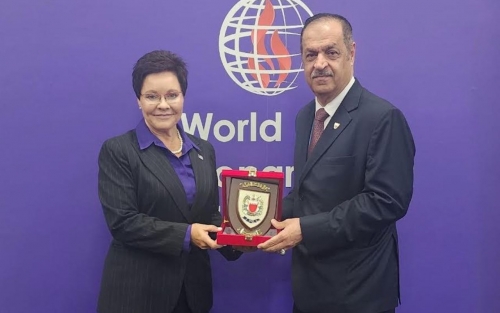
Cyprus and Bahrain signed a memorandum of understanding on maritime cooperation on Sunday during a bilateral meeting, marking a significant step in strengthening their bilateral relations within the shipping sector. Cyprus' Shipping Deputy Minister Marina Hadjimanolis and Bahrain’s Minister of Transportation and Telecommunications, Sheikh Abdullah bin Ahmed Al Khalifa, formalized the agreement, showing the commitment of both nations to enhance maritime collaboration. This development occurred as the 22nd session of the International Maritime Organisation (IMO) working group, held in London from September 1 to 4, concluded without resolving key concerns that have prevented the final adoption of its Net-Zero Framework. The inability to reach a consensus meant that commercially important details from the IMO meeting were deferred to another round of negotiations scheduled for November.
Bilateral Maritime Pact
The maritime cooperation agreement between Cyprus and Bahrain encompasses several key areas, establishing a strong framework for future collaboration. Specifically, the pact addresses maritime safety, aiming to enhance standards and practices to protect life at sea and prevent accidents. It also focuses on training programs, facilitating the development of skilled personnel and promoting best practices within the maritime workforce of both countries. The agreement covers search and rescue operations, ensuring coordinated responses to emergencies and bolstering regional maritime security. The pact also aims to foster innovation within the maritime sector, encouraging the adoption of new technologies and sustainable practices, and to facilitate the exchange of expertise between the two nations, allowing for mutual learning and capacity building. This bilateral understanding establishes a full framework for collaborative efforts in these critical domains, enhancing operational standards and mutual support as both nations seek to modernize and strengthen their maritime industries.
Global Net-Zero Shipping Talks
Nearly 1,200 participants engaged in the International Maritime Organisation (IMO) meeting, attending both in person and online, reflecting the global interest and urgency surrounding maritime decarbonisation. Discussions at the IMO working group centered on proposals previously submitted to the Marine Environment Protection Committee (MEPC) 84 and 85, as well as outcomes from earlier working-group sessions and ISWG-GHG 22. These extensive discussions aimed at addressing outstanding concerns related to proposed amendments to MARPOL Annex VI. This annex regulates the prevention of air pollution from ships, and the proposed changes are key for advancing decarbonisation efforts within the global shipping industry. The extensive participation showed the broad interest in establishing a unified approach to maritime environmental regulations, despite the ongoing challenges in reaching a consensus on specific framework details. The working group's mandate was to refine and resolve contentious points, but ultimately, a full resolution remained elusive, necessitating further deliberation.
Future Negotiations Ahead
The International Maritime Organisation (IMO) is expected to resume discussions on its Net-Zero Framework during the next round of negotiations. These critical talks are scheduled for November, following the recent working group session in London where concerns preventing final adoption remained unresolved. The upcoming negotiations will aim to address the outstanding issues related to proposed amendments to MARPOL Annex VI, which governs the prevention of air pollution from ships. The outcome of these discussions is vital for establishing a clear pathway towards reducing greenhouse gas emissions from international shipping. Cyprus and Bahrain, having recently deepened their bilateral maritime ties, will continue to monitor these global developments closely, as the international regulatory landscape directly impacts their respective shipping sectors. The progress made in November will be essential for advancing decarbonisation efforts across the international shipping industry and for providing regulatory certainty to maritime stakeholders worldwide. Further details regarding the specific agenda and participants for the November discussions are anticipated from the IMO as the date approaches.