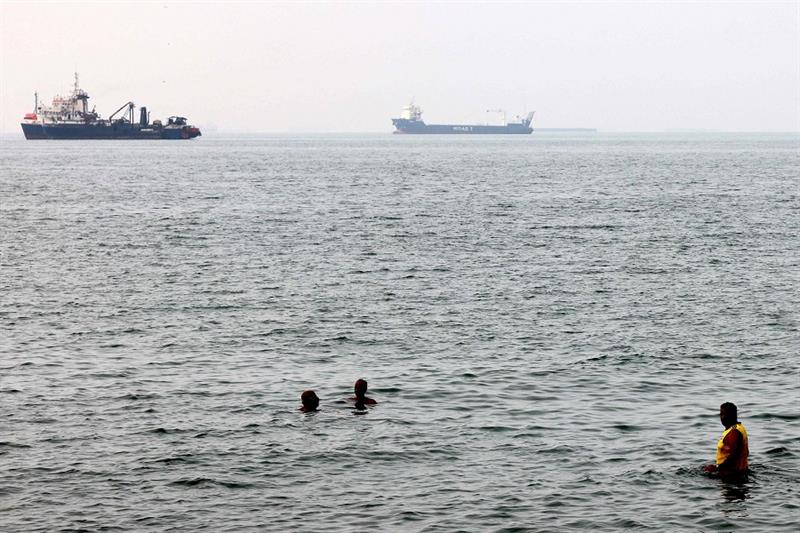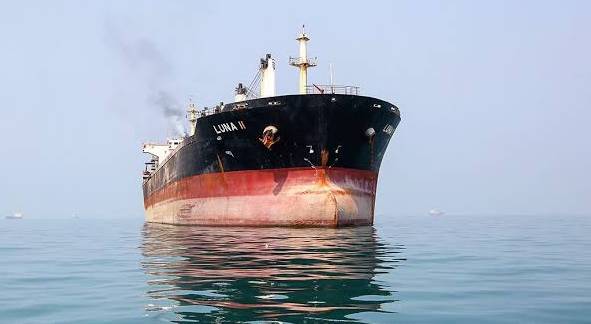
Bahrain's Foreign Ministry announced Saturday it would not participate in any collective meeting concerning the Strait of Hormuz if Iran is involved, until diplomatic relations between the two nations are fully restored. The Kingdom's Foreign Ministry explicitly stated on Saturday that it would not take part in any proposed collective meeting on the situation in the Strait of Hormuz that includes Iran until diplomatic relations between the two countries are restored. The statement from the Kingdom outlined its position on regional discussions, emphasizing the prerequisite of fully restored diplomatic ties with Tehran for any such engagement. Bahrain's refusal to engage with Iran in such forums shows its firm stance on the bilateral relationship. This decision impacts potential multilateral initiatives aimed at addressing the situation in the vital waterway, linking future participation to a prerequisite normalization of ties with Tehran. The Strait of Hormuz is a critical maritime chokepoint for global oil shipments, making its security and navigation a matter of international concern.
Bahrain's Stance on Regional Security
Bahrain stated that dialogue could not be based on "ignoring facts," referencing attacks that have targeted the Kingdom's infrastructure. The ministry pointed to attacks that have targeted the Kingdom’s infrastructure, including an attack on an ammonia tank that it said could have led to a major disaster, as evidence that facts cannot be ignored. Among these, an attack on an ammonia tank was noted, which Bahrain said could have resulted in a major disaster. The ministry additionally cited Friday’s attack on the East-West oil pipeline in Saudi Arabia, noting that this incident shows the continued threat to civilian infrastructure across the region. The ministry specifically mentioned the incident involving the East-West oil pipeline in Saudi Arabia on Friday, noting it as an example of the ongoing danger to civilian infrastructure across the region. Bahrain stressed that regional security cannot be achieved through appeasement or by overlooking such attacks. The Kingdom outlined four principles it believes should underpin peace: an end to attacks, international responsibility and compensation for damages, respect for state sovereignty and a prohibition on using national territory to attack neighboring countries, and the resolution of outstanding disputes via legal channels. These principles form the bedrock of Bahrain's approach to regional stability and security.
Conditions for Strait of Hormuz Navigation
The Kingdom also reiterated its position that any arrangement governing navigation through the Strait of Hormuz must adhere to the principles outlined in the 1982 United Nations Convention on the Law of the Sea. Bahrain emphasized that such an arrangement should also be adopted by the International Maritime Organization to ensure its global recognition and enforcement. This adherence to established international maritime law is considered fundamental by Bahrain for any agreement concerning the critical waterway.
Bahrain further stated that any agreement on the strait's navigation must guarantee the right of transit passage for all vessels. This passage, it specified, should be without discrimination or the imposition of fees, ensuring free and unhindered movement through the international strait. Bahrain asserted that such an arrangement must include the full participation of all Gulf Cooperation Council states to ensure full regional involvement and consensus on matters of vital importance to the Gulf region. This collective participation is seen as essential for the legitimacy and effectiveness of any future agreement.
Diplomatic Context and Communication
The Bahraini Foreign Ministry communicated its stance to Oman through official channels, according to a statement from the ministry. The ministry confirmed that Bahrain had conveyed its position to Oman through these official channels. This communication follows intensified regional diplomatic efforts regarding the security and navigation of the Strait of Hormuz. Oman has been actively seeking to facilitate discussions involving Iran and various Gulf countries on these matters, attempting to bridge diplomatic gaps. The broader diplomatic landscape sees Oman attempting to bridge differences and foster dialogue among regional actors concerning the vital waterway, making Bahrain's clear communication of its conditions particularly noteworthy in the ongoing regional discussions. The statement comes as regional diplomatic efforts intensify over the security and navigation of the Strait of Hormuz, with Oman seeking to facilitate talks involving Iran and Gulf countries, showing the importance and timeliness of Bahrain's declaration.