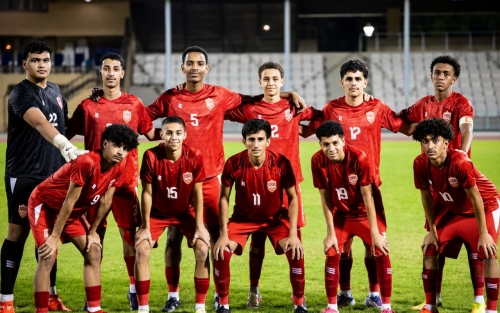
Bahrain’s under-17 football team is set to learn its group-stage opponents today as the draw for the expanded 2026 Gulf U17 Cup takes place. The tournament is scheduled to be held in Qatar from October 16 to November 4. The draw proceedings will be conducted virtually from the Arab Gulf Cup Football Federation’s headquarters in Doha at 12pm, determining the path for the participating nations in the upcoming competition. This significant event will reveal the challenging fixtures awaiting Bahrain’s young squad as they prepare for the prestigious regional tournament. The anticipation is high among the teams, particularly given the expanded nature of this year's competition, which promises a more diverse and competitive field.
Draw Mechanics and Seeding
The upcoming draw for the 2026 Gulf U17 Cup will utilize five seeding pots to determine the group placements for the participating nations. This structured approach ensures a balanced distribution of teams across the groups, reflecting their previous performances and host status. Hosts Qatar and reigning champions Saudi Arabia are positioned in Pot One, reflecting their status for the tournament and granting them top seeding. This strategic placement acknowledges their strong historical performance and Qatar's role as the host nation.
Pot Two consists of the United Arab Emirates and Iraq, both strong contenders in regional youth football. These teams are expected to pose significant challenges in their respective groups. Kuwait and Oman make up Pot Three in the seeding arrangement, representing other established footballing nations within the Gulf region. Bahrain has been placed in Pot Four, alongside Yemen, ahead of the virtual draw. This positioning means Bahrain will face at least one higher-seeded opponent in the group stage. The two guest teams, whose identities have not yet been disclosed, complete the seedings in Pot Five. Their inclusion adds an element of unpredictability and fresh competition to the tournament.
Once the draw is conducted, the teams will be allocated into two distinct groups, each comprising five teams. This format ensures that each team will play four group stage matches, providing ample opportunity to showcase their talent and vie for a spot in the knockout rounds. As the host nation, Qatar will automatically head Group A, securing its top position in that section. This guarantees them a prominent starting point in the competition. Similarly, the tournament's holders, Saudi Arabia, will take their designated place at the top of Group B, a testament to their championship victory in the previous edition. Following the group stage matches, the two leading teams from each section will advance to the semi-finals, progressing further in the competition. This knockout phase will pit the top four teams against each other in a bid to reach the final.
Tournament History and Context
The upcoming tournament will feature a record 10 nations, marking its largest field to date. This expansion shows the growing interest and development of youth football in the region. This edition represents the second time the youth tournament has been relaunched under the Arab Gulf Cup Football Federation since its revival last year. The federation's commitment to nurturing young talent is evident in this renewed focus on the U17 competition. The origins of the competition can be traced back to the former GCC U17 Championship, which was initially staged in 2001, noting a long-standing tradition of regional youth tournaments. For the first time, Egypt and China will participate, joining the Arab Gulf Cup Football Federation’s eight member nations as invited participants in the expanded event. Their inclusion is a significant development, bringing diverse playing styles and increased competitive depth to the championship. This broader participation reflects an effort to enhance the quality and exposure of the tournament for all involved teams.
Bahrain's Past Performance and Future Outlook
Bahrain experienced a challenging campaign in the 2025 Gulf U17 Cup, struggling to find their footing against strong regional opponents. They suffered a 4-0 defeat to Saudi Arabia, a result that noted the strength of the eventual champions. This was followed by a 2-0 loss against Iraq, further complicating their path in the tournament. Their involvement in the group stage concluded with a 3-2 defeat against Kuwait, a narrow loss that sealed their early exit from the competition. These results show the competitive nature of the Gulf U17 Cup and the high standards required to advance.
The eventual champions of that 2025 tournament secured their sixth title overall by beating the UAE 2-0 in the final held at Grand Hamad Stadium in Doha. This victory cemented Saudi Arabia's dominance in the youth category, adding another trophy to their impressive record. In that final match, Abdulaziz Al Fawaz and Abdulrahman Sufyani scored the decisive goals, showcasing their talent on the biggest stage. Abdulrahman Sufyani was also recognized as the tournament’s best player for 2025, an individual accolade that showed his outstanding performance throughout the championship. His contributions were key to his team's success.
The upcoming Gulf event will serve as Bahrain's final competitive preparation before the 2027 AFC U17 Asian Cup qualifiers. This makes the tournament a key stepping stone for the team, allowing them to fine-tune their strategies and assess player readiness. These qualifiers are scheduled to commence just four days after the Gulf event concludes, with matches taking place in Salalah, Oman. This tight turnaround means Bahrain's performance in Qatar will directly influence their momentum going into the continental qualifiers. Bahrain has been drawn into Group G for the 2027 AFC U17 Asian Cup qualifiers, where they will compete against Kuwait, Brunei Darussalam, hosts Oman, and Lebanon. This challenging group will test Bahrain's resilience and skill, as they face familiar regional rivals and other determined opponents. Only the top team from Group G will advance to the continental finals, placing immense pressure on Bahrain to perform at their peak in every match. The Gulf U17 Cup therefore offers an invaluable opportunity for the team to build cohesion and confidence ahead of these critical international fixtures.