Bahrain declined to attend a ministerial meeting held in Oman, citing the presence of Iran at the gathering. The decision shows the Kingdom of Bahrain's firm stance regarding its diplomatic engagement with Tehran. This refusal comes amid ongoing regional discussions and reflects Bahrain's preconditions for normalizing relations with the Islamic Republic. Its participation in such forums remains contingent on specific diplomatic considerations, particularly concerning Iran's regional conduct. The move signals a continued cautious approach from Manama regarding its interactions within broader Gulf state dialogues that involve Iranian representation.
Conditions for Dialogue
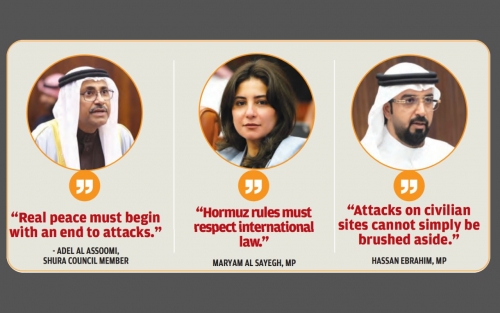
Shura Council member Adel Al Assoomi stated that Bahrain would not participate in diplomatic talks before relations with Iran are fully restored. Al Assoomi emphasized the need for a cessation of attacks and a resolution of outstanding issues through legal channels. He asserted, "Real peace must begin with an end to attacks and the settlement of outstanding matters through legal means." Al Assoomi further linked the security of the Strait of Hormuz to the respect for the security and sovereignty of Gulf states. He stressed that lasting stability in the critical waterway is contingent upon Iran's adherence to international norms and recognition of regional nations' territorial integrity.
Strait of Hormuz Security
Any resumption of talks between Bahrain and Iran must be founded on principles of respect for sovereignty, non-interference in internal affairs, and explicit guarantees against future attacks, according to statements from Bahraini officials. These conditions establish a framework for potential diplomatic re-engagement, emphasizing the need for Tehran to alter its regional conduct before any substantial dialogue can proceed. The Kingdom of Bahrain has consistently linked normalized relations to a cessation of actions perceived as destabilizing.
MP Maryam Al Sayegh further stipulated that any regulations governing shipping through the vital Strait of Hormuz must strictly adhere to the 1982 UN Convention on the Law of the Sea. She added that such rules would also require approval from the International Maritime Organization to ensure international legal compliance and secure passage through the critical waterway. This stance shows Bahrain's insistence on international law as the basis for maritime security in the Gulf.
Oman's Diplomatic Efforts
Members of both chambers in Bahrain praised Oman's ongoing efforts to ease regional tensions. This acknowledgment notes the Sultanate of Oman's persistent role as a mediator in Gulf diplomacy, particularly in facilitating communication between regional rivals. Bahraini officials recognized Oman's consistent approach to de-escalation, which has often involved bridging divides and creating platforms for dialogue. The commendation shows the importance placed on Muscat's diplomatic initiatives in fostering stability across the Gulf. These efforts are viewed as key for encouraging constructive engagement among states, including those with complex relationships.
Official Statements
MP Hassan Ebrahim stated that talks with Iran cannot resume if attacks on Bahrain's infrastructure and civilian sites are overlooked. Ebrahim emphasized that "Bahrain's security, its people and its facilities are red lines that are not open to bargaining." Members of Bahrain's Parliament and Shura Council collectively affirmed that the Kingdom still favors dialogue and diplomacy for resolving regional issues. This stance indicates Bahrain's continued openness to engagement, provided its core security concerns are addressed and respected. The officials stressed that any future diplomatic efforts must prioritize the protection of national assets and citizens.