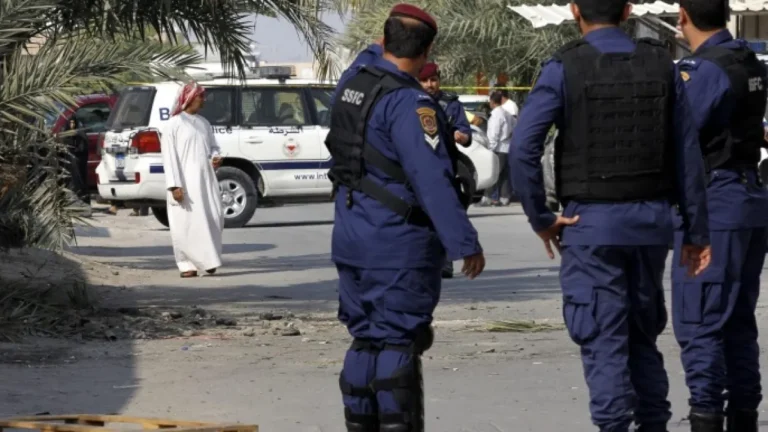
Bahrain's Interior Ministry announced on Saturday the uncovering of a large clandestine organization linked to the Iranian Revolutionary Guard Corps (IRGC) and adhering to the doctrine of “Guardianship of the Islamic Jurist” (Velayat-e Faqih). This significant security achievement was reported by the Bahraini Ministry of Interior, noting a major development in the Kingdom's efforts to safeguard its national interests. As part of a security operation, the Ministry arrested 41 individuals allegedly connected to the IRGC. These arrests were made following extensive intelligence gathering and surveillance activities. This operation is part of a full national campaign to protect national security and to counter attempts to destabilize the Kingdom, officials said. The Ministry also stated that legal measures are being taken against anyone found to be involved in this plot, emphasizing the government's resolve to prosecute those who threaten national stability.
Uncovering the Clandestine Network
Careful investigations and security reports led to the identification of the organization’s members, according to Bahrain's Ministry of Interior. The ministry confirmed that field operations, searches, and investigations related to the network are currently ongoing, indicating the breadth and depth of the security sweep. These ongoing operations aim to uncover the full extent of the network's activities and identify any additional individuals involved. Concurrently, the Ministry of Interior launched a full security and legal review to examine crimes and practices that coincided with recent Iranian attacks against Bahrain. This review includes monitoring instances of espionage and sympathy shown towards the aggression, officials stated, showing the perceived link between the clandestine organization and broader regional hostilities. The Ministry's proactive stance aims to prevent future destabilizing actions and reinforce national security.
The Ministry of Interior also claimed that ideological and religious groups exploited various platforms, including media outlets, pulpits, social and charitable institutions, and even schools and kindergartens, to disseminate what it described as distorted concepts. These organizations allegedly sought to utilize these institutions to deepen the influence of extremist ideology, with its political dimensions, under a religious guise within the fabric of Bahraini society. The Ministry characterized these actions as a "stab in the back of the state," emphasizing the gravity of the alleged subversion. Authorities affirmed that the law will take its course to deter anyone who attempts to harm the social fabric of Bahrain, reinforcing the government's commitment to upholding legal order and protecting its citizens from ideological manipulation. The use of educational and charitable institutions for such purposes was noted as particularly concerning, as it targets vulnerable segments of society. The Ministry’s statement reiterated that committing these acts constitutes a direct threat to the state’s integrity and social cohesion.
Broader Regional Tensions
Two Gaza aid flotilla activists, Thiago Ávila and Saif Abu Keshek, were detained by the Israeli navy on April 30, 2026, while aboard a vessel carrying humanitarian aid to Gaza. Their detention occurred in international waters, raising questions about jurisdiction and international law. The Israeli legal rights group Adalah stated that the activists had been held for over a week in solitary confinement under harsh conditions and had been on a hunger strike, drawing international attention to their plight. They were set to be released from Israeli detention on Saturday, May 9, 2026. Reports indicated that Abu Keshek also stopped drinking water on May 5, 2026, escalating concerns for his health. Attorney Hadeel Abu Saleh argued in court that the pair were detained aboard a ship flying the Italian flag, asserting they were under Italian jurisdiction and calling the detention a violation of international law. Italy had condemned the activists' arrest, according to reports, indicating diplomatic repercussions for the incident. The incident shows the ongoing tensions surrounding humanitarian aid efforts to Gaza and the broader Israeli-Palestinian conflict.
German Chancellor Friedrich Merz stated on Saturday, May 9, 2026, that Europe remains committed to preserving NATO despite growing tensions with the United States. Merz emphasized that European countries and the U.S. Share the goal of preventing Iran from obtaining nuclear weapons, even amid divisions over the U.S.- and Israeli-led war against Iran that began in late February. This war has created significant points of contention between traditional allies. He affirmed, "We are really willing to keep this alliance alive for the future," and spoke of a "unity of purpose" between allies, despite the strains. President Donald Trump responded to Merz's comments by ordering the withdrawal of 5,000 U.S. Troops from Germany and canceling a planned deployment of Tomahawk missiles, signaling a rift in the transatlantic alliance and a reevaluation of U.S. Military presence in Europe. This move by President Trump notes the fragility of international alliances when faced with differing strategic priorities.
CNN reported that six people were declared missing and several others were wounded following a U.S. Strike on Iranian vessels in the Strait of Hormuz, citing Iranian authorities. This incident marks a significant escalation in naval confrontations in the critical waterway. In northern Israel, the IDF located an explosive drone launched by Hezbollah, with no injuries reported, indicating continued cross-border hostilities. On Friday, May 8, 2026, Israeli settlers forced Palestinians to exhumed a body buried near the West Bank settlement of Sa-Nur, an act that sparked outrage and further exacerbated tensions in the occupied territories. The IDF stated it struck more than 85 Hezbollah targets in Lebanon over the past day, demonstrating the intensity of military operations in the region. Additionally, the IDF issued evacuation warnings for nine communities in southern Lebanon, suggesting an anticipation of further military engagements. U.S. Vice President JD Vance and Qatari Prime Minister Mohammed bin Abdulrahman Al Thani met in Washington to discuss Middle East developments and mediation efforts aimed at de-escalating the war in Iran, showing international diplomatic efforts to contain the conflict.
International Sanctions and Leadership Shifts
An investigation is underway into the alignment of some members of parliament with individuals described by the King of Bahrain as “traitors.” This internal political scrutiny runs parallel to broader international pressures. Concurrently, the U.S. Treasury Department imposed sanctions on 10 individuals and companies, accusing them of assisting Iran's weapons program. These sanctions are part of a concerted international effort to curb Iran's military capabilities and its regional influence. Reports indicated that U.S. Intelligence estimates Iran's new Supreme Leader, Mojtaba Khamenei, is playing a central role in shaping the country's war and negotiations strategy, noting his emerging influence in a critical period for the nation.
An Iranian official publicly detailed for the first time that Mojtaba Khamenei suffered injuries to his kneecap and back in a strike that killed his father, former Supreme Leader Ali Khamenei, and his wife. This revelation provides insight into the succession and the physical toll of recent conflicts on Iran's leadership. However, Mazaher Hosseini, a coordinator of top-level government meetings, stated Khamenei is in good health and recovering, with his knee injury expected to heal soon, aiming to project an image of stability and continuity in leadership. The conflicting reports show the opacity surrounding the health and status of high-ranking Iranian officials.
In other regional developments, a Palestinian father and son were reportedly wounded in an Israeli settler attack near Ad-Dhahiriya, south of Hebron, adding to the ongoing violence in the West Bank. Israel approved the resettlement of the Sa-Nur settlement in the West Bank on Wednesday, May 6, 2026, including the construction of 126 permanent homes. This decision comes despite the settlement having been evacuated during Israel's 2005 disengagement and since resettled, signaling a reversal of previous policies and a further expansion of settlements in the territory. The approval for 126 permanent homes in Sa-Nur represents a significant step in solidifying the presence of Israeli settlers in an area that was once evacuated.
Internationally, around 2,000 people protested against Israel's participation in the Venice Biennale ahead of the art festival's opening, reflecting widespread international opposition to Israel's policies. Protesters also demonstrated against what they described as neglect in the state's handling of crime in Arab communities, bringing attention to domestic issues within Israel. In the United Kingdom, British police charged Adam Bedoui, 20, and Abdelkader Amir Bousloub, 21, with religiously aggravated harassment offenses, indicating legal action against hate crimes. The charges against Bedoui and Bousloub highlight the ongoing efforts by law enforcement to address and prosecute incidents of religiously motivated harassment. These events collectively paint a picture of a region and world grappling with complex political, social, and security challenges.