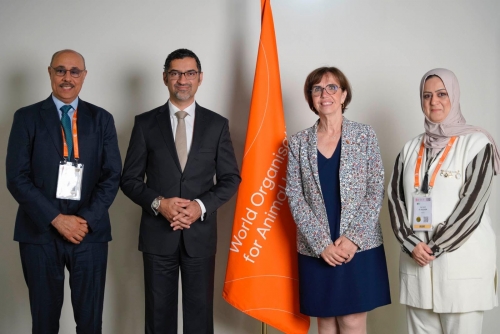
Bahrain's Minister of Municipalities and Agriculture, Wael bin Nasser Al Mubarak, held significant talks in Paris on May 20, 2026. The high-level meeting involved detailed discussions with World Organisation for Animal Health (WOAH) Director General Emmanuelle Soubeyran. Minister Al Mubarak's engagements specifically focused on strengthening Bahrain's international collaboration in the critical areas of animal health and food security, showing the Kingdom's commitment to these global priorities. The discussions emphasized the mutual benefits of enhanced partnerships in ensuring strong veterinary systems and resilient food chains worldwide.
Enhancing Veterinary Systems
Discussions during the meeting included strategies for enhancing the capacities of member states, a key objective for the World Organisation for Animal Health. The talks focused intently on improving veterinary health systems within these nations, recognizing the foundational role of strong national infrastructure in global animal health. The agenda covered expanding technical cooperation in animal health, aiming to foster stronger international collaboration and facilitate the sharing of best practices and resources among WOAH members. The officials also addressed global developments related to various animal diseases, acknowledging the dynamic nature of these challenges. A significant part of the conversation involved zoonotic infections, diseases transmissible from animals to humans, reflecting a shared concern for public health and the stability of global food security. Both Minister Al Mubarak and Director General Soubeyran noted the necessity of proactive measures to mitigate the impact of such diseases.
International Collaboration Context
The minister attended the 93rd General Session of the World Organisation for Animal Health (WOAH), a key event in the global animal health calendar. This prestigious assembly brings together delegates from 183 WOAH Member Countries and Territories, along with representatives from numerous international organizations and partner countries, fostering a truly global dialogue. The session typically addresses the establishment and review of global animal health standards, the development of effective disease prevention strategies, and advancements in veterinary science and animal welfare. Participation in such events allows Bahrain to align its national animal health policies with the latest international guidelines and to contribute actively to global initiatives aimed at safeguarding animal welfare and public health. These sessions also serve as invaluable platforms for exchanging knowledge, sharing experiences, and fostering collaboration among member states on pressing issues such as zoonotic diseases and the overarching goal of enhancing food security.
Bahrain's Delegation
Youssef Ahmed Al Eissa, Chief Executive of the Equestrian Affairs Authority, participated actively in the discussions alongside Minister Al Mubarak. Their combined presence showed Bahrain's full approach to international engagement in animal health and related sectors, demonstrating a broad interest beyond general agricultural concerns. The meeting in Paris served as an important platform for Bahraini officials to strengthen ties with the World Organisation for Animal Health, directly contributing to the Kingdom's broader national goals in veterinary and food security domains. The involvement of the Equestrian Affairs Authority noted the diverse national interests represented in these key international dialogues, extending to specialized areas of animal welfare, management, and the health of specific animal populations.
Future Preparedness Goals
The discussions between Bahraini officials and the World Organisation for Animal Health were deeply focused on strengthening international cooperation in animal health and food security. Both sides stressed the critical importance of improving preparedness and rapid response mechanisms, recognizing these as essential tools in the face of evolving global threats. These mechanisms are key for effectively addressing emerging threats to animal health, which can have significant economic and public health consequences, and for ensuring the stability of global food supplies. The concentrated effort aims to build resilience against potential crises and to safeguard both animal populations and human health on a global scale. This proactive approach is vital for creating a more secure and sustainable future for all.