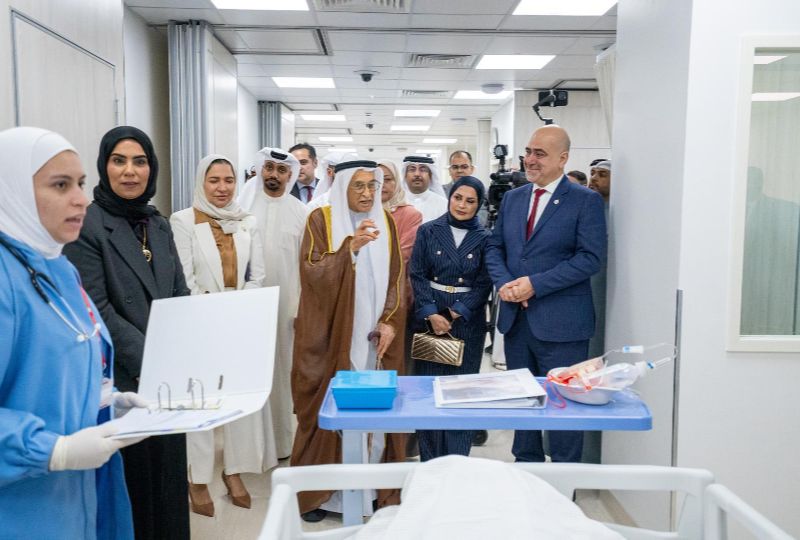
Lieutenant General Dr Shaikh Mohammed bin Abdulla Al Khalifa, chairman of the Supreme Council for Health, officially inaugurated the University of Bahrain’s (UoB) Advanced Clinical Simulation Centre. The opening marks a significant development for medical education within the Kingdom of Bahrain, poised to elevate the standards of healthcare professional training across the nation. The inauguration ceremony was attended by key figures from the healthcare and education sectors, showing the collaborative effort behind this ambitious project.
Enhancing Healthcare Education
The Advanced Clinical Simulation Centre supports initiatives aimed at delivering sustainable, high-quality healthcare services. This advanced facility is designed to play a key role in ensuring that Bahrain’s healthcare system is equipped with highly competent professionals. The University of Bahrain stated that the facility reflects its commitment to experiential learning, which is a key component of its educational strategy. This approach emphasizes hands-on training and practical application of knowledge, moving beyond traditional theoretical instruction. The centre also shows the university’s dedication to the continuous development of its academic programmes. This commitment ensures that the programmes align with international best practices in medical education, preparing students for the complexities of modern healthcare. By adopting global benchmarks, UoB aims to produce graduates who are not only locally relevant but also internationally competitive.
Strategic Investment in Talent
The Advanced Clinical Simulation Centre represents a strategic investment in national talent, aiming to strengthen the quality of healthcare education and training across Bahrain. This initiative is seen as a key step towards fostering a strong and highly skilled medical workforce within the Kingdom. The University of Bahrain noted that the facility is designed to enhance the capabilities of future healthcare professionals by providing an immersive learning environment. This environment allows students to gain invaluable practical experience in a controlled setting, which is vital for developing their clinical acumen. This initiative is expected to contribute significantly to the development of a highly skilled medical workforce, aligning with the country's long-term healthcare objectives. The centre's establishment shows a commitment to fostering practical expertise among students, ensuring they are well-prepared for real-world clinical scenarios and can meet the evolving demands of the healthcare sector. Such strategic investments are fundamental to building a resilient and advanced healthcare infrastructure.
Future of Medical Training
The Advanced Clinical Simulation Centre will offer students advanced simulation technologies, supporting the preparation of highly qualified healthcare professionals. These technologies include high-fidelity mannequins, virtual reality systems, and realistic clinical environments that replicate various medical settings, from emergency rooms to operating theatres. The University of Bahrain stated that these technologies are designed to immerse students in realistic medical scenarios, allowing them to practice complex procedures and critical decision-making in a controlled environment without risk to actual patients. This approach is intended to refine their clinical skills before they encounter real patients, building confidence and competence. The university emphasized that the facility's resources aim to produce graduates who are not only academically proficient but also possess the practical expertise required in modern healthcare settings. This move is expected to elevate the standards of medical education in Bahrain, ensuring that future healthcare providers are exceptionally well-prepared to deliver excellent patient care. The centre is poised to become a cornerstone of medical training, fostering innovation and excellence in healthcare education for generations to come.