U.S. Navy leadership has expressed grave concerns regarding the strategic implications of Iran's missile capabilities in the Persian Gulf, particularly after a simulated attack. Acting Navy Secretary Hung Cao assessed that Iranian missiles "blew the hell out of Bahrain" during an exercise. This simulated event suggested a significant and immediate threat to U.S. Naval operations in the region, forcing a re-evaluation of long-standing deployments. Navy's top admiral, Daryl Caudle, further indicated the severity of the situation, telling sailors evacuated from Naval Support Activity Bahrain (NSA-Bahrain), "We’re not getting back in there anytime soon." These statements highlight a perceived and critical vulnerability of U.S. Assets and personnel stationed in the critical Gulf waterway, signaling a profound shift in the regional power balance. The implications of such an attack, even in simulation, show the growing challenges to U.S. Military dominance in an area vital for global energy markets and international trade.
Iran's Strategic Objectives
Driving the U.S. Military out of the Persian Gulf has long been a core Iranian objective, a strategic ambition that has gained significant traction in the current geopolitical climate. Iran is determined to transform the U.S. Fifth Fleet’s presence from a fixed feature of the region’s geography into a negotiated outcome, thereby asserting its own regional hegemony. This strategy was clearly previewed in a memorandum of understanding last June, which was intended to end the war. That deal committed Iran to restoring safe passage in the Strait of Hormuz, but explicitly only for "commercial vessels." This precise and deliberate wording in the agreement indicated a calculated exclusion of military vessels from future safe passage guarantees, aligning perfectly with Iran's broader goal of diminishing foreign military presence and influence in the Gulf. This move, therefore, was not merely about de-escalation, but a clear articulation of Iran's long-term vision for maritime control and sovereignty in its immediate neighborhood.
Devastation of U.S. Naval Hub
Naval Support Activity Bahrain, which served for decades as the headquarters of the U.S. Fifth Fleet, experienced a significant and abrupt operational shift. The Navy effectively left the Persian Gulf at the war’s start and has not re-established its presence there since, marking a substantial departure from decades of continuous forward deployment. This withdrawal marks a substantial change for U.S. Naval operations in the region, where the Fifth Fleet had maintained a consistent forward presence for an extended period, acting as a lynchpin of regional security. The absence of U.S. Naval assets from the Gulf has prompted intense discussions among military strategists and policymakers, raising questions about the future of American power projection in the Middle East.
An important debate has begun regarding the future of NSA-Bahrain and other U.S. Bases that sustained damage from Iranian missile strikes. This discussion reflects the strategic challenges posed by Iran's demonstrated capabilities and the subsequent impact on U.S. Military infrastructure in the Middle East. The long-term viability and operational requirements for these facilities are under urgent review, considering the evolving security landscape and the proven threat of Iran's advanced missile arsenal. The U.S. Fifth Fleet's historical role in Bahrain, serving for decades as the central command for naval operations, shows the gravity of the current situation and the profound strategic implications for regional stability and global maritime security. The damage to these key facilities represents not just a physical setback, but a symbolic blow to America's long-held position in the Gulf.
Contesting Maritime Access
Iran now possesses the capability to impede access to the Strait of Hormuz, a critical maritime choke point through which a significant portion of the world's oil supply passes. The wartime withdrawal of the U.S. Fifth Fleet from outside the Gulf, coupled with the devastation of Naval Support Activity Bahrain, and Iran’s unprecedented success in contesting Hormuz, have collectively cast serious doubt on America’s maritime primacy in the region. This confluence of events signals a fundamental shift in the strategic calculus for naval operations in the Middle East. The future status of Hormuz has emerged as a critical benchmark by which the U.S. War against Iran will be judged, its accessibility now a direct reflection of the conflict's outcome.
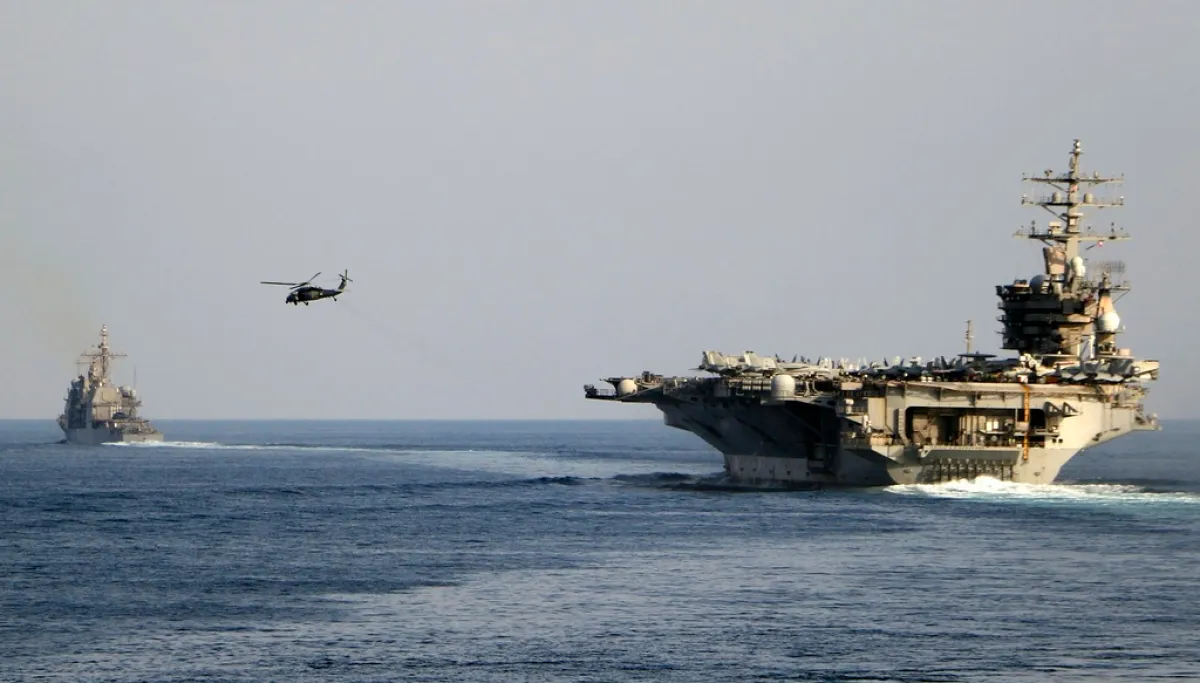
To address Iran’s growing chokehold on Hormuz, the U.S. Military has been forced to rely on aerial and unmanned assets, rather than traditional naval escort missions, indicating a significant evolution in operational tactics. The Navy's capital ships have been enforcing the blockade from hundreds of miles outside Hormuz, demonstrating a strategic shift away from direct confrontation within the strait itself. This adaptation, while necessary, also notes the extent to which Iran's anti-access/area-denial (A2/AD) capabilities have altered the operational environment, compelling the U.S. To operate at a greater distance. The U.S. Military's job to loosen Iran’s chokehold on Hormuz has, therefore, become a complex challenge, demanding innovative solutions beyond conventional naval power. The long-term implications of these tactical adjustments for global shipping and energy security remain a critical concern for international policymakers.