The recent 40-day war between Israel and the United States and Iran profoundly impacted the Gulf states, sending shockwaves across the region and testing the stability of long-standing alliances and internal political structures. Among these nations, Bahrain endured the highest volume of fire relative to its size, according to official reports and assessments from regional security analysts. The conflict, which saw a significant escalation of hostilities, brought unprecedented challenges to the small island nation.
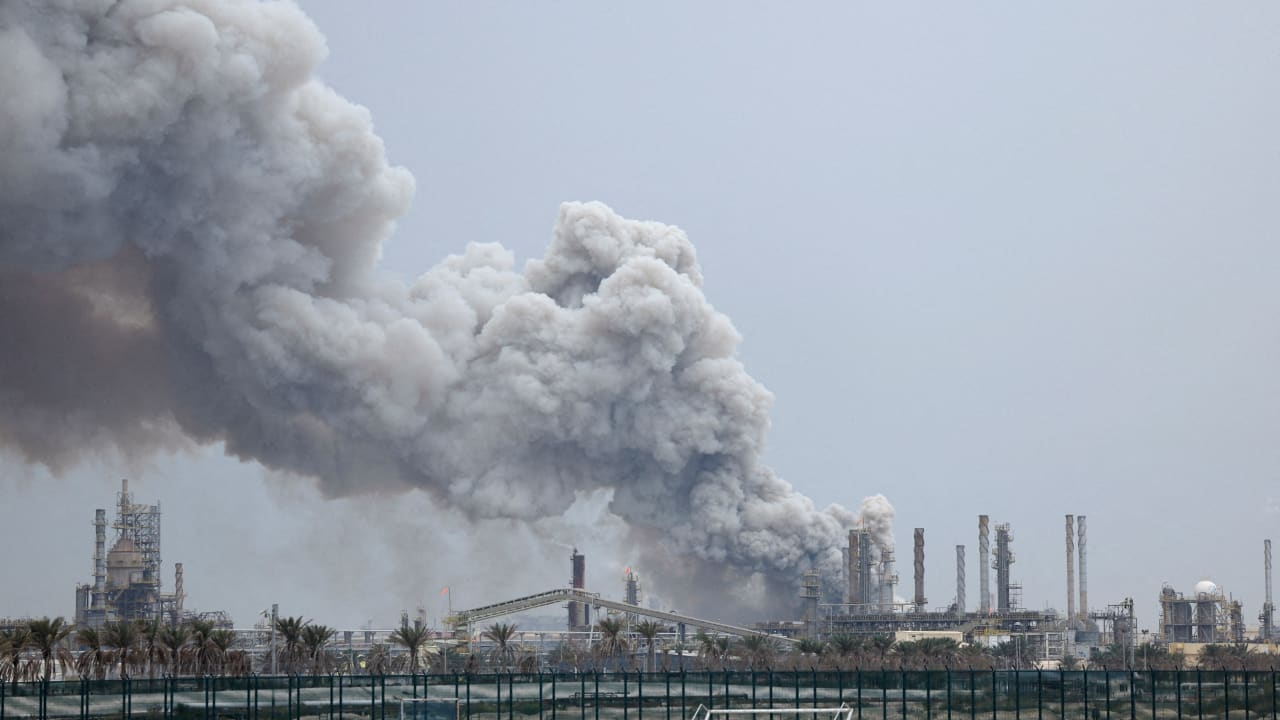
From the very first day of the war, Bahrain found itself on the front lines of the conflict. A drone struck the American military base in Juffair, strategically located next to the capital Manama, signaling the immediate and direct threat posed by the burgeoning hostilities. This incident showed the vulnerability of key infrastructure and military installations within the kingdom. Concurrently, Iranian strikes targeted vital economic centers, hitting Manama’s bustling financial district and an Amazon AI data center, disrupting normal operations and raising concerns about the economic stability of the region. The human cost of the conflict was also significant; a separate drone incident injured 32 people and caused extensive damage in the Shi’ite town of Sitra, noting the indiscriminate nature of the attacks. Approximately four people were killed in Bahrain during the conflict, and thousands were displaced from their homes, reports indicated, facing uncertainty and hardship as a direct result of the escalating regional tensions. The sheer scale of the displacement, affecting a substantial portion of the population, showed the severe disruption to daily life and the humanitarian challenges that arose from the conflict.
Deep-Seated Social Fault Lines
Bahrain experienced local support for the Islamic regime in Iran during the recent conflict, a phenomenon that starkly illuminated the existing social tensions and deep-seated divisions within the kingdom. This internal alignment with an external power reflects a complex socio-political landscape. The Sunni Al Khalifa dynasty governs a population that is predominantly Shi’ite, a demographic reality that has historically fueled significant internal dissent and political friction. This fundamental disparity in governance and demography has contributed to a history of socio-economic protests in Bahrain, which have erupted almost once a decade over the past century, marking a recurring pattern of public grievances and calls for reform.
These protests are often rooted in perceptions of marginalization and inequality. Protesters frequently view the monarchy as a "foreign occupier," an assertion that challenges the legitimacy of the ruling family and suggests an alien imposition on the indigenous population. Many critics and protesters characterize the monarchy as a proxy for Saudi Arabia, implying that its policies and actions are dictated by Riyadh rather than serving the interests of the Bahraini people. Conversely, the Bahraini regime characterizes its Shi’ite opponents as Iran’s fifth column, a dangerous internal threat loyal to a foreign adversary, thereby framing dissent as a matter of national security and external interference. This narrative allows the government to justify suppressive measures and consolidate power. Amidst these long-standing internal dynamics, Bahrain's parliament was restored in 2018, an event that was presented as a step towards greater political inclusion, though its effectiveness in addressing core grievances remains a subject of debate. The country has a relatively small population, with fewer than one million citizens, making the internal divisions and external pressures acutely felt across the social fabric. The dynamics of a minority ruling a majority, coupled with historical grievances and regional geopolitical rivalries, create a volatile environment where internal dissent can easily be amplified by external events, as demonstrated during the recent conflict.
Economic and Political Fallout
The 40-day war had immediate and severe economic repercussions for Bahrain, forcing the kingdom to suspend critical industrial operations. Bahrain was compelled to suspend operations in its vital oil and aluminum industries following the recent conflict, directly impacting its primary economic sectors and revenue streams. This suspension was a direct consequence of the security threats and operational disruptions caused by the ongoing hostilities, leading to significant financial strain. Further compounding these economic pressures, the development work on the Khalij al-Bahrain shale oil and gas field, a project key for the kingdom’s long-term energy independence and economic diversification, also faced suspension. The halt in this major energy initiative showed the extensive economic paralysis brought on by the regional instability.
Amidst these escalating economic pressures and the immediate need to stabilize its financial position, the United Arab Emirates stepped in to provide key support. The UAE signed a substantial $5.4 billion currency-swap agreement with Bahrain, a move explicitly aimed at stabilizing the latter's finances and mitigating the severe economic fallout from the conflict. This financial lifeline noted the interconnectedness of Gulf economies and the regional solidarity in times of crisis, while also showing Bahrain's vulnerability.
Internally, the period following the conflict saw a significant increase in security measures and arrests. Arrests in Bahrain are reportedly linked to earlier investigations into espionage, suggesting a pre-existing network of alleged foreign agents within the country. These arrests also pertain directly to expressions of support for Iranian attacks during the war launched against Iran in late February by Israel and the United States, indicating a government crackdown on perceived internal sympathizers of the opposing side. The authorities viewed such expressions of support as a direct challenge to national unity and security, particularly in light of the direct threats Bahrain faced during the conflict. The government's response reflects a determination to quash any internal dissent or perceived collaboration with hostile foreign entities, further tightening its grip on internal security.
Regional Repercussions and Alliances
Bahrain's internal stability has long been intertwined with broader regional dynamics, a fact powerfully demonstrated when Saudi forces previously suppressed protests in Bahrain during the 2011 Arab Spring. This intervention noted the deep involvement of regional powers in Bahrain's internal affairs and the collective interest in maintaining the status quo. The American military base in Juffair, situated next to the capital Manama, further shows the United States' long-standing security presence in the country, positioning Bahrain as a critical strategic ally in the Gulf. This presence is a cornerstone of regional security architecture, providing a deterrent against external aggression and a platform for US operations.
In recent years, Bahrain has also forged new alliances, particularly with Israel. Bahrain formalized its relationship with Israel through normalization in 2020, a landmark agreement that reshaped regional diplomacy. This was followed by an even more significant step: a defense pact signed in 2021, which cemented security cooperation between the two nations. These alliances, however, have been severely tested as Iran fired thousands of missiles and drones at its Gulf neighbors, including Bahrain, during the recent conflict. The sheer volume and intensity of these attacks challenged the efficacy of existing defense agreements and raised questions about the security guarantees provided by these partnerships. The normalization and defense pacts, intended to bolster Bahrain's security, found themselves under immense pressure as the conflict unfolded, forcing a re-evaluation of regional defense strategies.
Regional security concerns extend far beyond direct military attacks, encompassing the threat of internal subversion and foreign influence. On April 20, the UAE’s State Security Service announced it had uncovered an Iran-linked group within the country, revealing the widespread nature of Iran's alleged regional activities. The Service stated that it arrested dozens of members for "pledging allegiance to foreign entities and harming national unity and social peace," signaling a serious internal security threat. This incident in a neighboring Gulf state served as a stark reminder to Bahrain of the potential for similar clandestine operations within its own borders, further fueling its crackdown on perceived Iranian sympathizers. Meanwhile, a US-Iran ceasefire, agreed upon on April 8, remains in effect, aiming to de-escalate tensions in the broader region, though the underlying geopolitical rivalries and internal vulnerabilities persist. The ceasefire, while providing a temporary reprieve from direct hostilities, does not resolve the deep-seated issues that fuel regional instability and internal divisions.
Government Response and Future Stability
In response to the perceived internal threats and external pressures, Bahraini authorities have taken decisive and controversial actions, including revoking citizenship from those accused of supporting Iran. This measure is a severe form of punishment, effectively stripping individuals of their national identity and rights. In late April, Bahrain stripped the citizenship of 69 people after accusing them of sympathizing with Iran and “colluding with foreign entities,” a move that drew international scrutiny and condemnation from human rights organizations. This action followed earlier rounds of arrests in March, which targeted individuals authorities said spied for the Islamic Revolutionary Guard Corps (IRGC), a powerful branch of Iran's military. These operations led to the apprehension of 41 people, indicating a systematic effort to dismantle alleged espionage networks and suppress pro-Iranian sentiment within the kingdom.
The deep-seated divisions within Bahrain were further exposed by public demonstrations and clashes. Reports indicated that mourning processions for Ali Khamenei, Iran's Supreme Leader, turned into violent clashes with security forces in Shi’ite strongholds. These incidents show the profound ideological and political polarization within Bahrain, where religious and political allegiances can quickly escalate into confrontation. The government's stringent response, including citizenship revocation and widespread arrests, reflects its determination to maintain control and prevent any internal uprising that could be exploited by external adversaries. However, these measures also risk alienating a significant portion of the population and potentially exacerbating the very social tensions they aim to suppress. The future stability of Bahrain hinges on its ability to navigate these complex internal dynamics while simultaneously managing the persistent external threats from a volatile regional environment. The balance between national security and civil liberties remains a critical challenge for the Al Khalifa dynasty as it seeks to secure its rule amidst ongoing geopolitical turbulence.