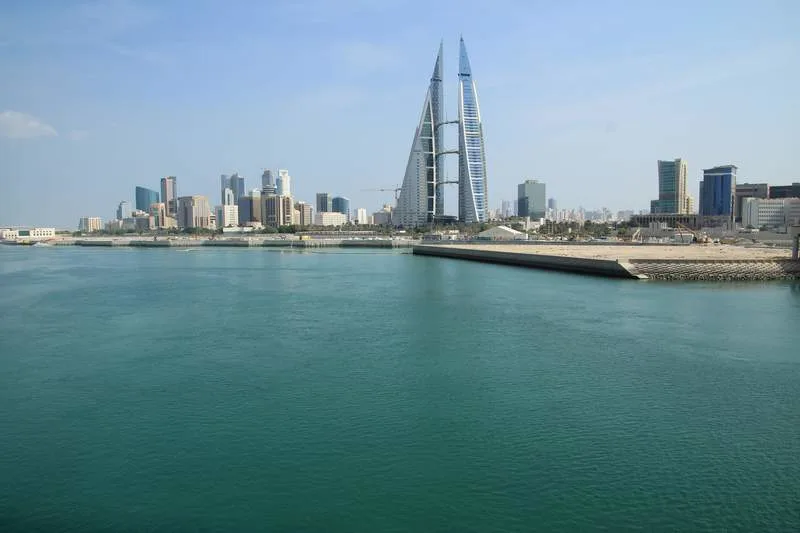
Iran's Revolutionary Guards launched drone strikes against the US Fifth Fleet base in Bahrain after American forces targeted Iranian air defense and radar sites near the Strait of Hormuz. The US-Iran conflict has again expanded geographically, with Iranian drones striking the Fifth Fleet in Bahrain. Explosions were also reported in Kuwait, with details still emerging regarding those incidents. Bahrain's air defenses reportedly repelled the attack on its territory, and the public was advised to seek shelter. Following the overnight escalation, oil prices rose approximately 1% in early Asian trade. This rise in oil prices, specifically around 1%, occurred in early Asian trade following the overnight escalation, reflecting immediate market reactions to the expanded conflict. Iran's Revolutionary Guards attacked the US Fifth Fleet base in Bahrain with drones following American strikes on Iranian air defense and radar sites near the Strait of Hormuz.
US Strikes Iranian Defenses
The United States launched three waves of precision strikes targeting Iranian air defense systems, ground control stations, and surveillance radar sites near the Strait of Hormuz on June 9. These strikes were ordered by President Trump following Iran's downing of a US Army AH-64 Apache helicopter over the strait the previous day. The US strikes were specifically ordered by President Trump in response to Iran's downing of a US Army AH-64 Apache helicopter over the Strait of Hormuz the previous day. The two crew members from the downed helicopter were rescued by a US Navy surface drone and are reported to be in stable condition. This incident involving the downing of the helicopter served as the immediate precursor to the US retaliatory actions.
The US strikes unfolded across three waves, beginning at 5 p.m. ET on June 9, and concluded just before 9 p.m. ET. The three waves of precision strikes were carefully coordinated, commencing in the late afternoon and extending into the evening hours. Targets for the overnight operations included locations such as Qeshm Island, Sirik, Jask, and Bandar Abbas, which serves as the Islamic Revolutionary Guard Corps (IRGC) Navy's primary command hub for operations in the Strait of Hormuz. These sites were chosen for their strategic importance to Iran's air defense capabilities and naval operations in the critical waterway. The precision of these strikes aimed to degrade Iran's ability to monitor and potentially interdict commercial and military traffic in the region. President Trump described the strikes as "very strong and very powerful," showing the perceived effectiveness and resolve behind the US military action. The selection of targets like Bandar Abbas, a key IRGC Navy command hub, indicates a clear intent to impact Iran's operational capacity within the Strait of Hormuz.
In a separate development, Bahrain's air defenses are reported to have repelled an attack on its territory. This defensive action by Bahrain notes the immediate and localized impact of the broader regional tensions.
Iranian Retaliation and Regional Impact
Iranian drone strikes on the US Fifth Fleet in Bahrain signify a fundamental escalation, moving the conflict beyond Iranian territory and into the core of the Gulf's US military infrastructure. This action represents a significant shift in the geographical scope of the conflict. The Iranian drone strikes on the US Fifth Fleet in Bahrain represent a fundamental escalation, taking the conflict out of Iranian territory and directly into the heart of the Gulf's US military infrastructure. Iranian state media cited the Khatam al-Anbiya joint military command, which asserted that several US bases in the region had been targeted in response to recent strikes. The Khatam al-Anbiya joint military command specifically confirmed that these regional US bases were among the targets, indicating a coordinated and widespread retaliatory effort. The Islamic Revolutionary Guard Corps (IRGC) claimed responsibility for the drone attack in Bahrain and issued a threat of more severe responses should hostilities persist. This claim of responsibility by the IRGC, coupled with their explicit warning, shows the potential for further intensification of the conflict. Iran's Revolutionary Guards subsequently launched drone strikes against the US Fifth Fleet base in Bahrain, directly linking their actions to the preceding American strikes. Bahrain's air defenses were reported to have repelled the attack and the public was urged to seek shelter, demonstrating the immediate threat posed to civilian populations and the defensive measures taken by regional allies.
In a related development, Iran’s state media reported that the IRGC launched a missile strike against a U.S. Base located in Azraq, Jordan. This reported strike further broadens the geographical scope of the current tensions, suggesting a wider regional confrontation. Adding to regional concerns, reports emerged of explosions in Kuwait. These incidents collectively compound worries about the escalating situation in the Gulf. Reports of explosions in Kuwait further compound that concern, indicating that the instability is not confined to a single area. Details regarding the incidents in Kuwait are still emerging, but their occurrence alongside the confirmed attacks in Bahrain and Jordan points to a rapidly deteriorating security environment across the region. Explosions have been reported in Kuwait, with details still emerging, which contributes to the overall picture of heightened regional instability.
Oil prices saw an initial rise of approximately 1% in early Asian trade following the overnight events. This initial gain is considered by analysts to be a floor, rather than a ceiling, for oil prices if the reports from Bahrain and Kuwait are confirmed and the heightened tensions are sustained. The approximately 1% increase in oil prices occurred during early Asian trading hours, reflecting immediate market reactions to the expanded conflict. The market's immediate reaction, characterized by oil's initial 1% gain in Asian trade, is likely a floor, not a ceiling, if the Bahrain and Kuwait reports are confirmed and sustained. This assessment by analysts notes the potential for significant and prolonged disruption to global energy markets should the conflict continue to escalate. The initial rise in oil prices serves as a barometer of the market's perception of risk in the region.
Context and Diplomatic Stance
President Trump described the US strikes as "very strong and very powerful." US Central Command (CENTCOM) characterized the operation as a proportional response to attacks on American forces and on international commercial vessels transiting regional waters. CENTCOM stated the operation was a proportional response to attacks on US forces and international commercial shipping. This characterization by CENTCOM emphasizes the US position that its actions were defensive and targeted, aimed at deterring further aggression rather than initiating a broader conflict. A US official separately characterized the strikes as a warning shot, intended not to derail ongoing peace negotiations. This perspective suggests a strategic aim to demonstrate resolve without completely closing the door on diplomatic solutions.
Iran's Foreign Minister Araqchi had earlier posted publicly that his country would leave no attack or threat unanswered, framing the US strikes as aggression rather than a proportional act. Foreign Minister Araqchi pledged publicly that "Tehran would leave no attack or threat unanswered," showing Iran's firm stance against perceived foreign aggression. This public declaration by Foreign Minister Araqchi sets a clear expectation for Iranian retaliation to any military action against its interests or territory. This public statement by a high-ranking Iranian official indicates a strong national resolve to defend its sovereignty and interests. Trump has said repeatedly that the two sides are close to a deal, despite the current escalation. This statement from President Trump, made amidst escalating military actions, notes a complex diplomatic landscape where negotiations are ostensibly still on the table despite overt hostilities. The juxtaposition of military strikes and claims of proximity to a deal shows the intricate nature of US-Iran relations.
The US Fifth Fleet serves as the operational backbone of the American naval presence in the Gulf. Any degradation of its capabilities would have direct consequences for commercial shipping security and for transit prospects through the Strait of Hormuz. The Fifth Fleet is the operational backbone of the US naval presence in the Gulf; any degradation of its capabilities would have direct consequences for commercial shipping security and Hormuz transit prospects. This makes the drone strikes on its base in Bahrain particularly significant, as they target a critical component of regional stability and global trade. The security of the Strait of Hormuz, a vital chokepoint for a substantial portion of the world's oil supply, is directly linked to the operational integrity of the Fifth Fleet. Therefore, any attack on this command, control, and logistical hub carries profound implications for international maritime commerce and energy security. The actions against the Fifth Fleet base represent a direct challenge to the US's ability to project power and maintain stability in one of the world's most strategically important waterways.