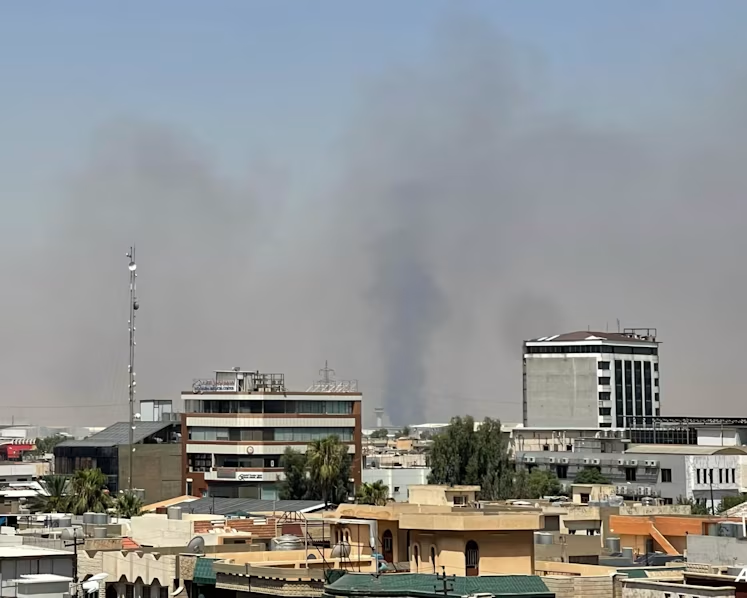
Iran launched a strike against an Amazon Web Services facility located in Bahrain on Wednesday. The action occurred in West Asia, with Iranian officials stating the facility was targeted due to its classification as a military installation. This incident marks a direct engagement involving a major technology provider's infrastructure in the region, escalating concerns about the targeting of commercial digital infrastructure in ongoing conflicts. The strike specifically targeted an Amazon Web Services facility, noting a new dimension in military engagements where civilian-operated technological assets are drawn into the conflict.
Previous Attacks Detailed
Earlier in the current conflict, Iran directed strikes at two Amazon Web Services (AWS) data centres situated in the UAE. During the same period, another commercial facility in Bahrain was also targeted by Iranian forces. These incidents preceded the most recent strike against the AWS facility in Bahrain, establishing a pattern of targeting commercial technology infrastructure in the region. The repeated targeting of these facilities shows a deliberate strategy by Iranian forces, as these previous strikes set a precedent for the recent actions.
Iran officially designated 18 US technology companies as legitimate military targets on March 31. This declaration encompassed major corporations such as Amazon, Microsoft, Nvidia, Google, Apple, Meta, HP, Tesla, Oracle, Boeing, Cisco, and IBM, among others. The Iranian government's statement marked a significant expansion of its declared military objectives against US-based enterprises, broadening the scope of what it considers permissible targets in its strategic considerations. This full list signals a deliberate shift in Iran's military doctrine, explicitly including global technology giants within its operational framework.
Bahrain Responds to Incident
Bahrain's interior ministry confirmed that Civil Defence forces responded to a fire at the Amazon Web Services facility following the Iranian strikes. The ministry's statement indicated that emergency services were deployed to address the incident, which occurred after the alleged targeting of the commercial infrastructure. The response involved managing the blaze at the site, with emergency personnel working to contain the damage. The swift deployment of Civil Defence forces shows the immediate impact of the strike on local infrastructure and the efforts to mitigate its effects.
Iran's Justification for Strikes
Iran’s Islamic Revolutionary Guard Corps (IRGC) stated the strikes against the Amazon Web Services facility in Bahrain were justified. According to the IRGC, the targeted data centres supported what it termed "the enemy’s" military and intelligence operations. This designation provided the official rationale for the Iranian military action. The IRGC has consistently maintained that infrastructure perceived as aiding adversary forces is a legitimate target, framing the strikes as a response to perceived threats. The statement shows Iran's position that commercial technology infrastructure, when deemed to serve military or intelligence functions for its adversaries, falls within its operational scope. This justification extends to the broader policy outlined on March 31, where 18 US technology companies were explicitly labeled as legitimate military targets, including Amazon.
Broader Implications and Context
The strike against the Amazon Web Services facility in Bahrain resulted in a temporary disruption to services. This disruption notes the vulnerability of critical digital infrastructure to military actions and the potential for wider impacts on global connectivity and data access. The Iranian government's broader list of US technology companies designated as legitimate military targets includes Amazon, Microsoft, Nvidia, Google, Apple, Meta, HP, Tesla, Oracle, Boeing, Cisco, and IBM. This declaration by Iran signifies an expanded scope of potential targets in its strategic considerations, indicating a readiness to engage with the digital assets of major corporations. The inclusion of such a diverse array of companies, from cloud computing providers to consumer electronics manufacturers and aerospace giants, suggests a broad redefinition of military objectives by Iran. This strategic shift could have significant repercussions for international businesses operating in the region and for the global digital economy.