A high-level international dialogue on counter-terrorism capacity building in high-risk environments recently took place during UN Counter-Terrorism Week, a significant global event dedicated to addressing pressing issues in the fight against terrorism. The key session was held at the United Nations Headquarters in New York, serving as a key forum for international stakeholders to converge and strategize on critical counter-terrorism initiatives. This gathering showed the continuous international commitment to bolstering defenses against evolving terrorist threats worldwide.
Key Partners and Objectives
The dialogue, a critical initiative for global security, was meticulously organized by The Islamic Military Counter Terrorism Coalition (IMCTC) in close partnership with the Kingdom of Saudi Arabia and the Kingdom of Bahrain. The IMCTC, a coalition dedicated to combating terrorism across various domains, focused its efforts on fostering strong international cooperation. This cooperation is deemed essential for effectively enhancing counter-terrorism capabilities, particularly in regions that are currently facing significant and persistent security threats. The collaborative nature of the event noted a shared understanding of the need for unified action against global terrorism.
The session was held in cooperation with the United Nations Office of Counter-Terrorism (UNOCT) and the Terrorist Financing Targeting Center (TFTC), further solidifying its international backing and full approach. This strategic collaboration aimed to bring together diverse expertise and critical resources from multiple organizations to address the complex and multifaceted challenges inherent in counter-terrorism capacity building effectively. The involvement of these key international bodies ensured a broad perspective and a wealth of experience were brought to the discussions.
Dialogue Focus and Challenges
The dialogue specifically addressed the pressing theme of "Capacity Building in Low-Capacity and High-Risk Environments." This pointed focus aimed to thoroughly explore and develop strategies for strengthening counter-terrorism capabilities in regions where state institutions may be inherently weak or where resources are severely limited. Despite these constraints, the threat of terrorism in such environments often remains elevated, making effective capacity building all the more critical. Discussions during the session centered on identifying practical methods and fostering collaborative approaches to support these vulnerable environments effectively. Participants delved into the intricacies of implementing sustainable solutions that could adapt to the unique challenges presented by these complex settings.
Discussions during the session further focused on the operational, institutional, and regulatory challenges pertinent to combating terrorism financing within low-capacity and high-risk environments. This critical aspect of counter-terrorism received particular attention, as cutting off financial lifelines is a key strategy in disrupting terrorist networks. The dialogue provided a platform for experts to share insights on overcoming obstacles related to legal frameworks, enforcement mechanisms, and cross-border cooperation in tracking and freezing illicit funds.
Leadership and Cooperation
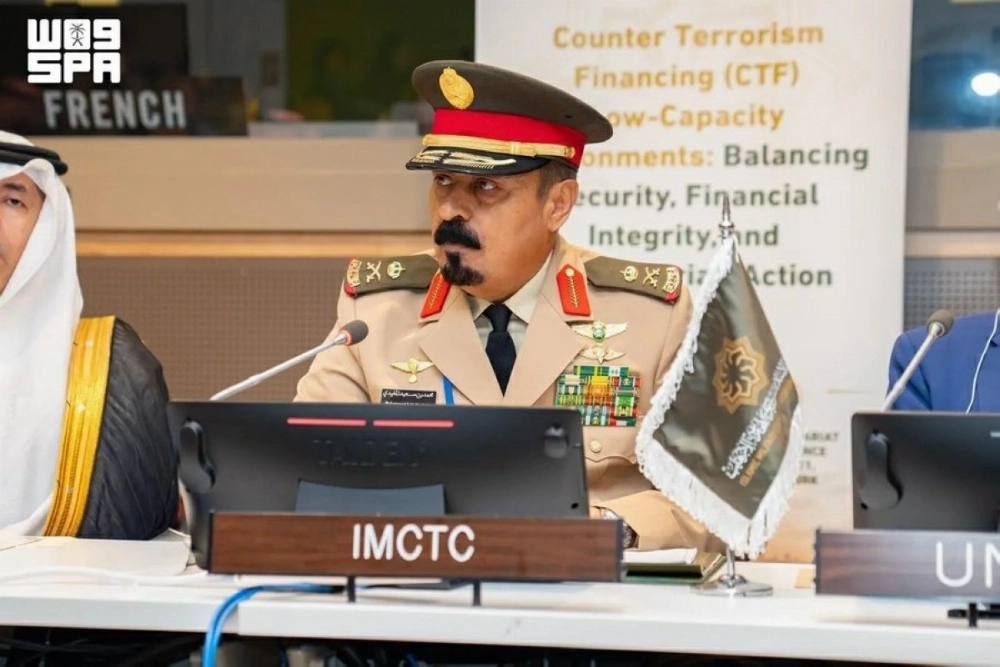
The session was chaired by Major General Mohammed Al-Moghedi, the esteemed IMCTC Secretary-General, whose leadership guided the in-depth discussions. His experience provided valuable perspective on the strategic imperatives of the coalition's efforts. The dialogue was expertly moderated by Mauro Miedico, Director of the United Nations Counter-Terrorism Center, ensuring a structured and productive exchange of ideas among the distinguished participants. Their combined leadership facilitated a full exploration of the critical issues at hand, fostering an environment conducive to meaningful progress.
Call for Enhanced Coordination
The session forms an integral part of the Islamic Military Counter Terrorism Coalition's (IMCTC) sustained and ongoing efforts to strengthen international cooperation, develop strategic partnerships, and support vital capacity-building programs across the globe. This unwavering commitment aims to continuously enhance global capabilities in combating terrorism, particularly in vulnerable regions that are facing significant and persistent threats. The IMCTC recognizes that a coordinated and multi-faceted approach is essential to effectively counter the evolving nature of terrorist organizations and ensure long-term stability and security for all nations. This initiative reiterates the importance of collective action in safeguarding international peace and security.