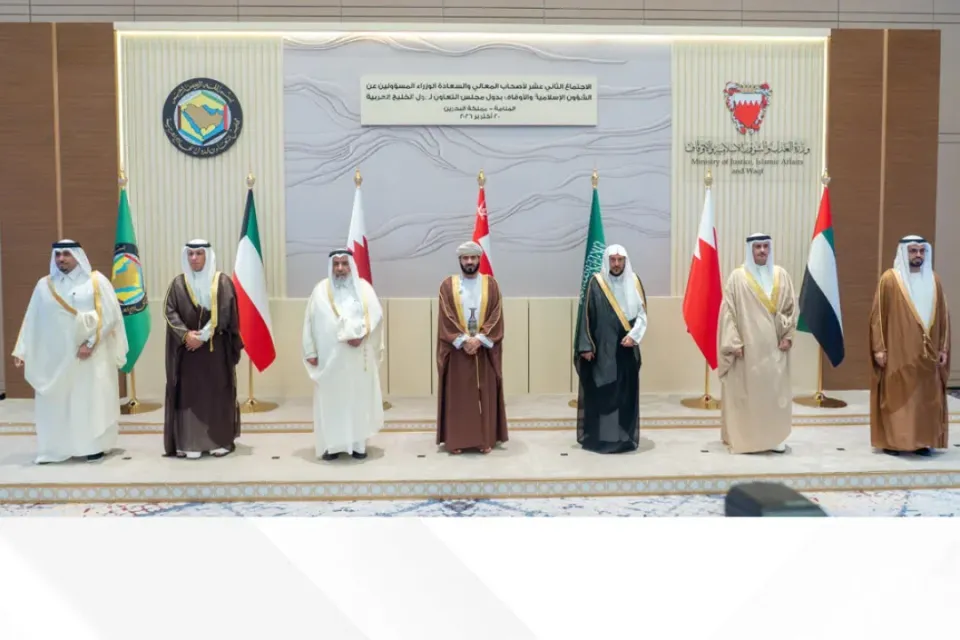
Bahrain hosted the 12th meeting of Gulf ministers responsible for Islamic affairs and endowments on 20 October 2026. Justice, Islamic Affairs and Waqf Minister Nawaf bin Mohammed Al Maawda led the discussions during the session. These talks occurred as Bahrain currently holds the presidency of the 46th GCC session. The gathering brought together regional officials to advance cooperation regarding Islamic affairs and endowments within the Gulf.
Strengthening Regional Islamic Cooperation
Shaikh Sultan bin Mohammed Al Thani attended the meeting in his capacity as the GCC Assistant Secretary-General for Legislative and Legal Affairs. His presence supported the broader discussions regarding regional collaboration on Islamic affairs and endowments. By participating in the 12th ministerial session, he contributed to the legal and administrative framework surrounding the cooperation initiatives discussed by the delegates. The involvement of the GCC Assistant Secretary-General ensured that the session aligned with established legislative standards across the Gulf. His attendance served to integrate legal oversight into the efforts led by Bahrain during its current presidency of the 46th GCC session.
Measuring Social Impact of Endowments
Ministers evaluated a proposal to establish a national index designed to measure the social impact of endowments across the region. This mechanism intends to quantify how charitable assets contribute to societal development and community welfare. By implementing such an index, participating states seek to standardize the assessment of endowment effectiveness and track the long-term outcomes of philanthropic investments.
Participants also addressed the Mufaz competition, a project integrated into the meeting agenda to promote public awareness regarding endowments, charitable work, and volunteering. The initiative focuses on engaging Gulf citizens in the preservation and development of endowment assets. Officials reviewed the structure of the competition as part of broader efforts to cultivate a culture of social responsibility and sustainable giving within the region.
Architectural standards for religious infrastructure also remained a focus of the ministerial discussions. Ministers reviewed a proposal regarding a unified architectural identity for mosque minarets that aims to blend regional heritage with modern design elements. The proposed guidelines seek to ensure that new mosque construction projects reflect traditional artistic values while incorporating contemporary engineering and aesthetic practices. By defining these standards, the ministers aim to preserve the visual character of Islamic landmarks while supporting the evolution of modern mosque design across the Gulf.