Doha hosted the ninth World Investment Forum 2026. This gathering brought together international officials to discuss global trade and economic development strategies. The ninth World Investment Forum 2026 was held in Doha, serving as a central hub for delegates focused on the future of cross-border investment and industrial policy.
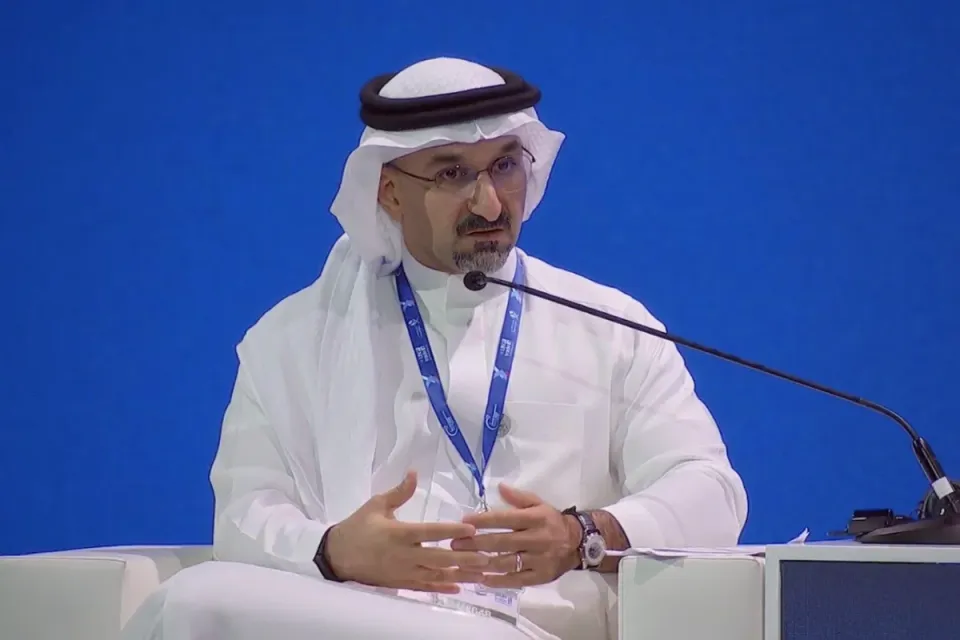
Industry and Commerce Minister Abdulla bin Adel Fakhro participated in a ministerial roundtable held during the event. The United Nations Conference on Trade and Development (UNCTAD) organized the session to examine investment policies and industrial cooperation. During this high-level assembly, participants engaged in detailed deliberations regarding the structural challenges currently facing the global economy and how regional blocks might better position themselves for long-term stability.
Strengthening Regional Supply Chains
Minister Abdulla bin Adel Fakhro advocated for the 'Made in the GCC' initiative during the discussions in Doha. He presented the proposal as a mechanism to strengthen supply chain resilience across the member states. Minister Fakhro advocated for the 'Made in the GCC' initiative to strengthen supply chain resilience, emphasizing that a unified approach to industrial output is essential for the economic advancement of the region. The minister stated that integrating industrial production processes within the region will reduce dependency on external markets. By fostering a more self-reliant industrial base, member states can better withstand global market fluctuations and ensure the steady flow of essential goods and services.
Small and medium-sized enterprises (SMEs) must increase their participation in major regional projects to support this transition. Minister Abdulla bin Adel Fakhro identified the involvement of these businesses as a requirement for expanding domestic industrial capacity. He requested that policymakers create frameworks to integrate these smaller firms into the supply chains of large-scale infrastructure and manufacturing developments. Minister Fakhro called for greater participation by small and medium-sized enterprises (SMEs) in major regional projects, noting that these entities represent a key component of the broader economic ecosystem.
The integration of these smaller firms serves as a strategic priority for regional development. By streamlining the procurement processes and providing clearer pathways for SME engagement, the GCC nations aim to foster a more strong and diverse industrial sector. Increased activity from these enterprises aims to distribute economic growth more broadly across the GCC. As these businesses gain access to larger infrastructure contracts and manufacturing opportunities, they contribute to the creation of specialized jobs and the enhancement of technical expertise within the local workforce. The collaborative efforts discussed during the forum show a commitment to long-term industrial synergy. Through the implementation of the 'Made in the GCC' initiative and the active inclusion of small and medium-sized enterprises (SMEs) in significant regional endeavors, the member states seek to fortify their industrial foundations. The ministerial roundtable concluded with a shared recognition that coordinated policy frameworks are necessary to facilitate this shift, ensuring that the benefits of industrial integration are realized across all sectors of the regional economy.