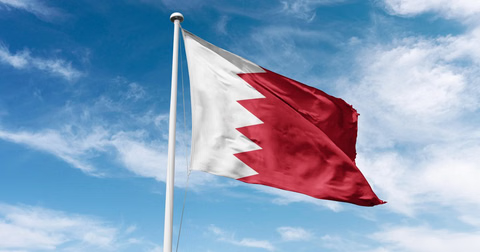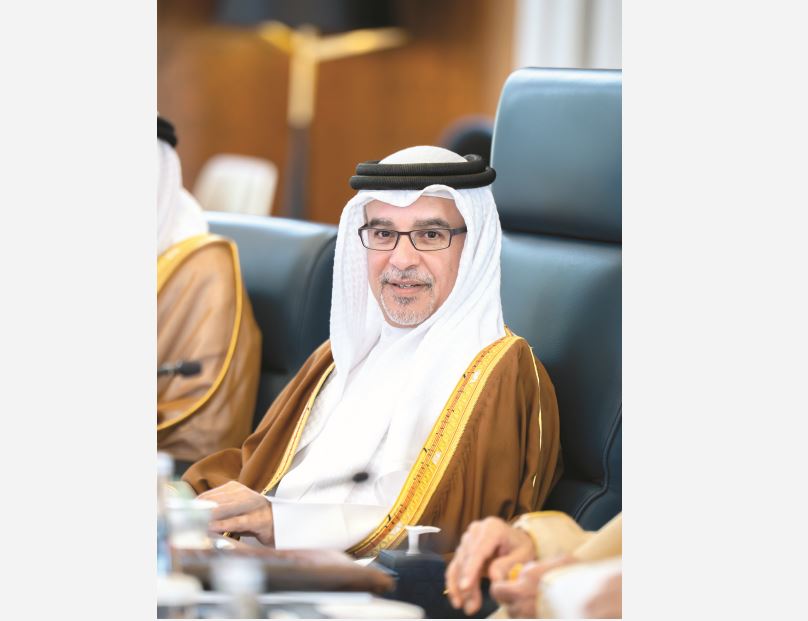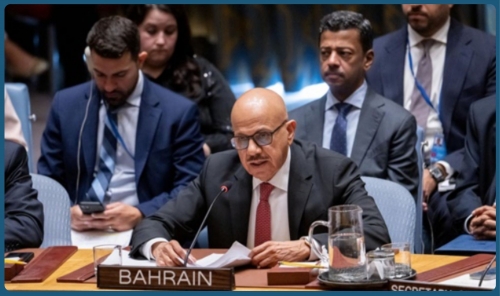
The Kingdom of Bahrain participated in a high-level open debate of the United Nations Security Council in New York, focusing on upholding the purposes and principles of the UN Charter and maintaining international peace and security. The specific title of this significant session was “Upholding the Purposes and Principles of the Charter of the United Nations and Maintaining International Peace and Security.” This key debate brought together global leaders to discuss the foundational tenets of international relations and collective security. The session was chaired by Wang Yi, Minister of Foreign Affairs of the People’s Republic of China, showing the high-level nature of the discussions. Bahrain’s delegation was led by Dr. Abdullatif bin Rashid Al Zayani, Minister of Foreign Affairs, who urged the UN Security Council to fulfill its responsibilities in line with the UN Charter, emphasizing the critical role the body plays in global governance.
During his address, Dr. Al Zayani reaffirmed Bahrain’s unwavering commitment to the UN’s founding principles, which have guided international cooperation for decades. These principles include respect for state sovereignty, a cornerstone of international law, and non-interference in the internal affairs of member states, which promotes stability and mutual trust. He also noted the rejection of threats or the use of force as a means of resolving disputes, advocating instead for the peaceful settlement of disagreements through dialogue and negotiation. Dr. Al Zayani articulated Bahrain’s stance, stating, "Dr. Al Zayani reaffirmed Bahrain’s commitment to the principles on which the United Nations was founded 80 years ago, including respect for state sovereignty, non-interference in internal affairs, rejection of threats or the use of force, and the peaceful settlement of disputes. He urged the UN Security Council to fulfil its responsibilities in line with the UN Charter in a way that strengthens confidence in the multilateral system." This statement showed the Kingdom’s belief that adherence to these principles is vital for maintaining a credible and effective multilateral framework. The foreign minister noted that the debate occurred while the world faces unprecedented challenges, illustrating the urgency of the discussions. These challenges encompass a wide array of global issues, such as humanitarian crises, armed conflicts, and terrorism, all of which demand coordinated international responses. He further emphasized that the multilateral system is currently undergoing a critical test, asserting that the Security Council holds the primary responsibility for reinforcing collective efforts to maintain international peace and security, achieve sustainable development, and uphold human rights across the globe.
Global Challenges and Bahrain's Stance
The United Nations was founded 80 years ago with the ambitious goal of preventing future conflicts and fostering global cooperation. Today, the world indeed faces unprecedented challenges that test the very fabric of this international system. These complex issues include not only humanitarian crises, armed conflicts, and terrorism, but also the escalating threats of extremism, the widespread impacts of climate change, unforeseen health emergencies, and the rapidly evolving dangers posed by cyber risks. Bahrain is deeply committed to strengthening multilateral cooperation as the most effective response to these multifaceted global issues. The Kingdom actively works to strengthen international cooperation, particularly with China, in addressing technological and digital challenges, recognizing that these areas require collaborative solutions to ensure global security and progress.
In his full address, Dr. Al Zayani noted the significant economic and geopolitical impact of Iran’s potential closure of the Strait of Hormuz. He noted that global economic losses from its disruption are estimated in the trillions of dollars, a figure that shows the critical importance of this maritime chokepoint for international trade and energy supplies. Given these potential ramifications, Bahrain calls for Iran to comply with international law and the principles of good neighbourliness, which are fundamental to regional stability. The Kingdom also urged Iran to adhere to UN Security Council Resolution 2817, a resolution that reflects broad international consensus, having been supported by 136 countries. This widespread support notes the international community's concern and its expectation for compliance. Additionally, Bahrain calls for Iran to comply with Human Rights Council Resolution 61/1, further emphasizing the Kingdom's commitment to human rights standards.
Bahrain’s armed forces, alongside those of the Gulf Cooperation Council (GCC) and other Arab countries, have historically confronted Iranian attacks, noting a direct and persistent security concern in the region. Despite these challenges, the Kingdom supports continued diplomatic efforts aimed at addressing Iran’s nuclear programme, its missile capabilities, and its support for armed militias. This approach reflects a belief that while security measures are necessary, diplomatic engagement remains key for long-term resolution and de-escalation of tensions.
Advocacy for Middle East Peace
Bahrain’s Minister of Foreign Affairs, Dr. Abdullatif bin Rashid Al Zayani, also noted the broader global humanitarian challenges that extend beyond regional conflicts. He noted that food insecurity now affects more than 266 million people worldwide, a staggering figure that points to a widespread crisis requiring urgent international attention. He stated that the number of displaced persons has exceeded 123 million, showing the immense human suffering caused by conflicts, persecution, and natural disasters. Amidst these global crises, the suffering of the Palestinian people must remain at the forefront of international efforts, according to Bahrain’s delegation, emphasizing the need for sustained focus on this protracted conflict. The Kingdom firmly affirmed its support for the right of Palestinians to establish an independent and sovereign state under the two-state solution, a widely recognized framework for lasting peace in the region. Bahrain also supports accelerating full United Nations membership for the State of Palestine, viewing this as a key step towards affirming Palestinian self-determination and statehood on the international stage.
Bahrain supports the outcomes of the first meeting of the Board of Peace, which was chaired by President Donald Trump. This initiative is seen as a constructive step towards addressing the immediate and long-term challenges in the Middle East. The Board of Peace aims to end the war in Gaza, which has caused immense humanitarian suffering and instability, launch reconstruction efforts to rebuild devastated areas, and initiate a full political process for peace in the Middle East. This peace process, as advocated by Bahrain, is in line with UN Security Council Resolution 2803, ensuring that proposed solutions align with established international mandates. The Kingdom emphasized that regional peace is intrinsically linked to achieving stability in several key areas, specifically Gaza, Yemen, Sudan, Libya, and Lebanon. This full view acknowledges the interconnectedness of conflicts across the region and notes the need for holistic solutions to achieve genuine and lasting peace.
Bahrain's Role and Future Commitments
Bahrain is poised to take on a more prominent role on the international stage, having secured a seat as a non-permanent member of the United Nations Security Council for the 2026–2027 term. This upcoming membership positions the Kingdom to directly contribute to discussions and decisions on global peace and security, offering its perspective and diplomatic weight to critical international issues. Currently, Bahrain also holds the presidency of the Gulf Cooperation Council (GCC), reflecting its regional leadership and coordination efforts among member states. This dual role allows Bahrain to bridge regional concerns with global policy discussions. The Kingdom's diplomatic engagement extends beyond formal governmental structures to fostering global understanding and cooperation through specific initiatives that embody its commitment to peace and coexistence.
Among these initiatives is the King Hamad Global Centre for Peaceful Coexistence, an institution dedicated to promoting dialogue, mutual respect, and religious freedom on a global scale. This centre serves as a vital platform for interfaith and intercultural exchange, aligning smoothly with Bahrain's deep-seated commitment to tolerance and understanding. Complementing this effort, the Kingdom also sponsors the King Hamad Award for Peaceful Coexistence. This prestigious award recognizes individuals and organizations worldwide that have made significant and measurable contributions to advancing peace and harmony among diverse communities, thereby incentivizing and celebrating acts of goodwill and cooperation.
These initiatives collectively show Bahrain's unwavering dedication to the principles of coexistence and multilateralism. In parallel with its active participation in international forums and its own peace-building efforts, Bahrain advocates for full reform of the United Nations and its various institutions. This includes a call for restructuring the Security Council itself, aiming to enhance its effectiveness, representativeness, and ability to address contemporary global challenges with greater agility and legitimacy. The Kingdom’s diplomatic engagements consistently reflect its commitment to strengthening the multilateral system and upholding the foundational principles of the UN Charter, seeing these as essential for a stable and just global order.
Context and Broader Vision
Safeguarding the United Nations Charter is essential for fostering a more just and equitable international order, according to Bahrain. The Kingdom views the Charter's principles as fundamental to global stability and collective security, providing a universally accepted framework for international conduct. Bahrain's participation at the UN Security Council debate reinforced its deep commitment to these foundational principles, which include the critical respect for sovereignty and the peaceful resolution of disputes as cornerstones of international relations. The nation's diplomatic efforts consistently advocate for a strong multilateral system that can effectively address the myriad global challenges facing humanity today, from climate change to public health crises, and promote universal human rights without prejudice. This principled stance aligns with Bahrain's broader vision for international cooperation, aiming to strengthen confidence in UN mechanisms and ensure a balanced global framework that can respond effectively to emerging threats and opportunities. For Bahrain, safeguarding the UN Charter means safeguarding hope for a more just and equitable international order, a vision that drives its ongoing engagement on the world stage.