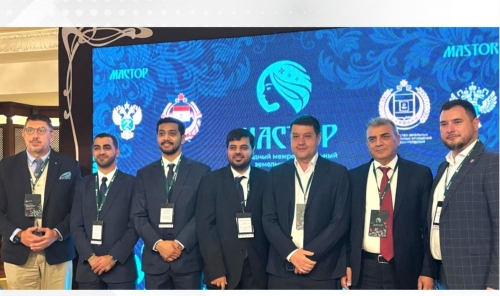
Bahrain's Survey and Land Registration Bureau recently participated in the Global Land Forum (MASTOR), held in Moscow, Russia. The bureau's involvement aimed to highlight Bahrain's advancements in land data management. This engagement shows the Kingdom's efforts to utilize its land information systems for economic development and international collaboration in the field of cadastral and geospatial data. The forum provided a significant platform for exchanging knowledge and best practices with international counterparts, reinforcing Bahrain's position as a forward-thinking nation in land administration.
Driving Development Through Data
Bahrain utilizes reliable property and spatial data, coupled with strong legal rights protection and integrated digital systems, to support its economic planning initiatives. This full approach aims to foster a transparent environment conducive to attracting investment. The strategic use of data ensures that economic development is underpinned by clear, accessible, and trustworthy information. Advanced geospatial systems also assist Bahrain in managing competing demands for development while ensuring the long-term sustainability of its resources. These systems are key for maintaining an optimal balance between rapid urban and economic growth and responsible environmental stewardship. The country's strategy focuses on balancing rapid growth with responsible environmental stewardship, ensuring that development is both progressive and sustainable. This commitment reflects a proactive stance in leveraging technology for national progress.
Global Land Forum Participation
The Survey and Land Registration Bureau's participation in the Global Land Forum in Moscow followed an invitation extended by the Government of the Republic of Mordovia. This invitation noted the international recognition of Bahrain's progress in land administration. The forum included various sessions, one of which was titled "Territory of Growth: Integrating Construction, Investment and International Practices." This session provided a key platform for discussions on how land management and data integration can support economic development and attract investment, aligning perfectly with Bahrain's strategic goals for utilizing its land information systems. The discussions at the forum covered a wide array of topics pertinent to modern land management, from technological innovations to policy frameworks, allowing Bahraini representatives to contribute their insights and learn from global experiences. Such international dialogues are vital for fostering innovation and adopting globally recognized standards.
Presentation Notes Growth
Abdulrahman Ali Showaiter, Director of the Cadastral Survey Directorate, delivered a presentation at the forum titled "Land Administration as a Driver of Growth." Showaiter's address focused on how effective land administration serves as a fundamental catalyst for economic advancement. His presentation detailed Bahrain's strategies for leveraging full land data to support investment, urban planning, and sustainable development initiatives. The director emphasized the integration of advanced technologies and strong legal frameworks to ensure transparency and efficiency in land management. Showaiter noted Bahrain's commitment to continuous improvement in its land information systems, aligning with international best practices to foster a conducive environment for growth and attract foreign direct investment. He elaborated on how these integrated systems provide investors with the confidence and clarity needed to make informed decisions, thereby stimulating economic activity across various sectors. The presentation showed the intricate connection between well-managed land resources and national prosperity.
Future of Land Administration
Sound planning and investment decisions, critical for sustainable development, depend on accurate, transparent, and trustworthy property information. Bahrain's approach to land administration emphasizes the continuous improvement of its land information systems, aligning with international best practices. This strategy aims to foster an environment conducive to growth and attract foreign direct investment. The Kingdom focuses on integrating advanced technologies and strong legal frameworks to ensure transparency and efficiency in land management. This commitment shows Bahrain's belief that effective land administration serves as a fundamental catalyst for economic advancement. The nation's efforts highlight the importance of full land data in supporting urban planning and sustainable development initiatives, ensuring long-term prosperity and environmental responsibility. By continuously refining its systems, Bahrain aims to set a benchmark for land administration in the region, promoting economic diversification and sustainable urban expansion.