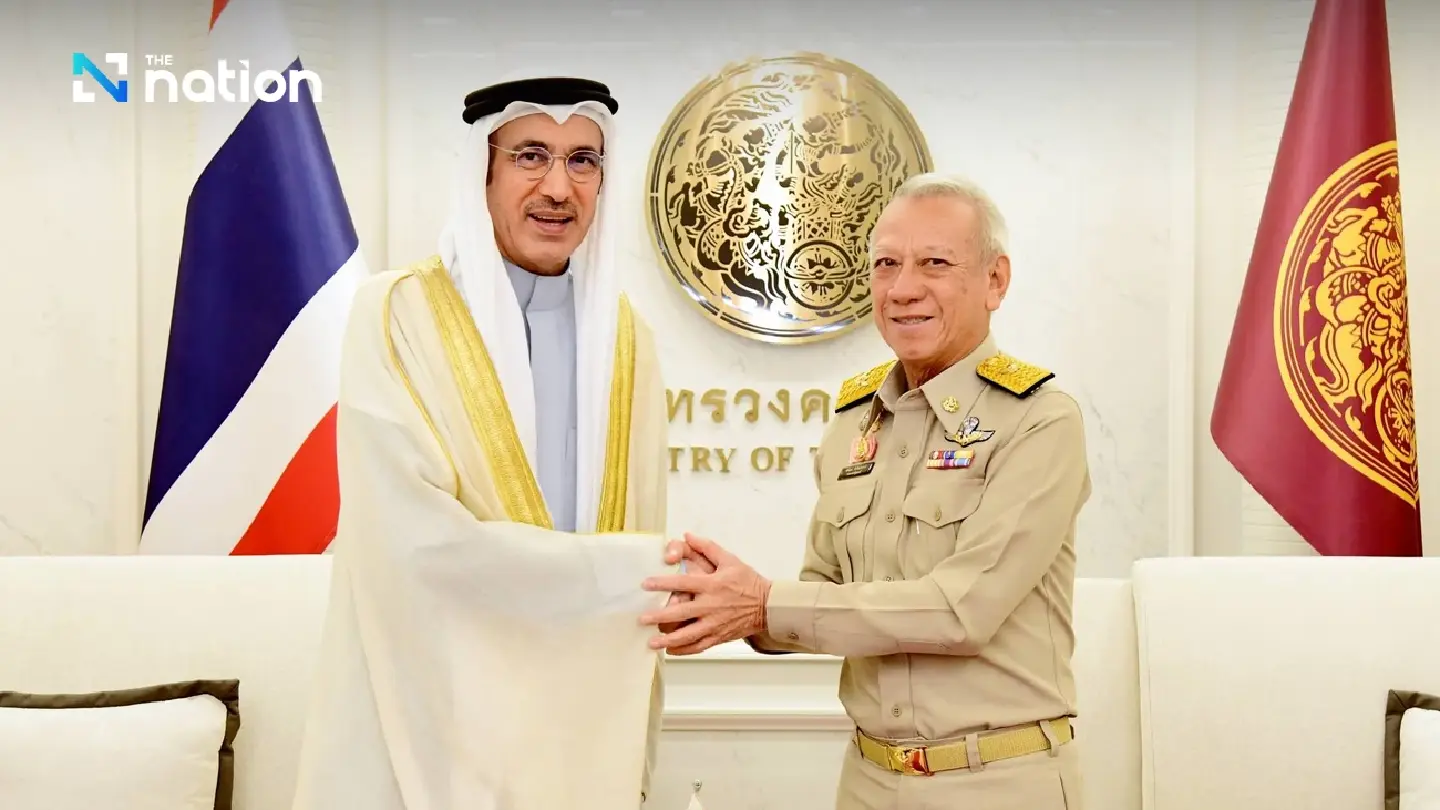
Thailand is partnering with Bahrain to establish a gateway into the Middle East consumer base, according to reporting from Krungthep Turakij. This collaboration involves high-level discussions between officials from both nations, focusing on economic and trade development. These strategic dialogues aim to strengthen bilateral ties and open new avenues for commerce and investment. Deputy Prime Minister and Minister of Transport Phiphat Ratchakitprakarn hosted H.E. Khalil Yaqoob Al Khayat, the Ambassador of Bahrain to Thailand, to discuss these initiatives. The Thai Ministry of Transport has accepted a framework for further development stemming from these talks, indicating a clear path forward for the proposed collaborations. Additionally, Deputy Prime Minister and Minister of Interior Anutin Charnvirakul met with the Bahraini Ambassador, showing the broad governmental support for this partnership. The Chana Industrial Estate Development Project in Songkhla Province is central to these plans, intended to become a major regional halal manufacturing hub. This development is expected to significantly strengthen Thailand's position in the global halal market, leveraging its geographical advantages and growing industrial capabilities.
Bahrain Partnership Details
Bahrain has presented its "Sea to Air Logistics Hub" blueprint as part of the deepening economic cooperation with Thailand. This proposal outlines a strategic framework for enhancing logistical connections, which could significantly facilitate trade flows between the two nations and the broader Middle East. The initiative aims to leverage Bahrain's geographical position as a key transit point to create efficient and rapid transport corridors for goods. Such a hub would reduce transit times and costs, making Thai products more competitive in Gulf markets.
Further collaborations include a pledge from the Bahraini ambassador for technical consultations. These discussions will focus on advancements in crop cultivation techniques and optimised livestock breeding practices, indicating a strong interest in agricultural knowledge exchange. These consultations are expected to provide invaluable insights and best practices, supporting Thailand's efforts to become a major halal food producer. Enhancing agricultural efficiency and output through such technical cooperation is a key component of the broader economic partnership. The focus on these specific areas reflects a mutual understanding of the importance of food security and quality within the halal economy.
Separately, Thailand continues to be a significant destination for Bahraini citizens seeking advanced medical care. Over 30,000 Bahraini arrivals have been recorded, showing the strong existing ties in the healthcare sector and the immense potential for further development in medical tourism. This established flow of patients notes Thailand's reputation for high-quality medical services and facilities. Bahraini officials also noted their island nation's strategic location. Bahrain is positioned adjacent to Saudi Arabia and other major Gulf Cooperation Council (GCC) markets, offering a key gateway for Thai products into the wider regional economy. This geographical advantage means that access to Bahrain provides a direct route to a substantial consumer base, making the partnership particularly attractive for Thai exporters looking to expand their reach.
Global Halal Market Growth
The global halal economy is currently experiencing an unprecedented boom, driven by increasing demand from Muslim consumers worldwide and a growing appreciation for ethical and quality-assured products. Research from the Islamic economic institute Salaam Gateway estimated the global halal market at an impressive $2.35 trillion. This substantial market size reflects the diverse range of sectors encompassed by the halal economy, extending far beyond traditional food products.
Food and beverage products constitute the largest segment of this burgeoning market, accounting for a dominant 58.7 per cent, valued at an enormous $1.38 trillion. This figure shows the critical role of halal food production and distribution in the global economy. Other significant sectors within the global halal market also demonstrate strong activity and growth. Fashion holds a substantial 13.2 per cent share, reflecting the increasing demand for modest and ethically produced apparel. Media and recreation represent 11.5 per cent, indicating a growing market for halal-compliant entertainment and digital content. Tourism, a vital sector for many economies, accounts for 8.9 per cent, driven by the demand for Muslim-friendly travel experiences. Pharmaceuticals make up 4.5 per cent of the market, noting the importance of halal-certified medicines and healthcare products, while cosmetics account for 3.2 per cent, catering to the demand for beauty products free from haram ingredients.
Projections indicate that the total halal sector will reach a remarkable $3.10 trillion by 2027, driven by sustained growth across all these industries. This forecast signifies a continued upward trajectory for the halal economy, offering significant opportunities for nations like Thailand to expand their participation. The demand for halal food, in particular, is surging at an impressive 11 per cent annual rate, showing the rapid expansion of this economic segment and the critical need for efficient and reliable supply chains. This continuous growth notes the strategic importance of Thailand's initiatives to become a major player in this dynamic global market.
Thai Halal Infrastructure Development
Plans are underway to install dedicated, gender-segregated prayer cabins on long-distance southern line trains. This initiative aims to serve the Muslim community and support the overall development of halal-friendly infrastructure within Thailand. The cabins will provide appropriate and private facilities for prayer during travel, reflecting deliberate efforts to cater to the specific needs of Muslim passengers and facilitate their adherence to religious practices even while in transit. This development forms part of a broader strategy to enhance Thailand's appeal as a destination and trade partner for the global halal economy, particularly in its southern regions where a significant Muslim population resides. By investing in such infrastructure, Thailand aims to create a more inclusive and welcoming environment for Muslim travelers and business partners, reinforcing its commitment to becoming a prominent hub in the global halal ecosystem. These efforts are key for building confidence and fostering stronger economic and cultural ties with Muslim-majority nations.