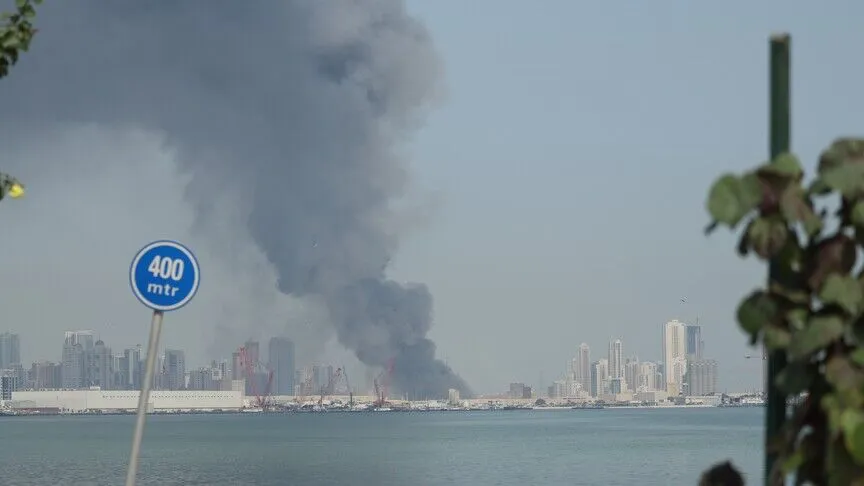
On Wednesday, Bahrain's air defenses intercepted a new wave of Iranian aerial attacks, according to a statement from the Bahrain Defense Force. This interception marks a significant development in the ongoing regional tensions. The command condemned what it called Iran’s "deliberate use" of missiles and drones, which it stated were intended to target civilians and private property within Bahraini territory. The Bahrain Defense Force further asserted that this represented "a clear violation of international humanitarian law," showing the severity of the alleged actions. The statement noted the persistent threat posed by these aerial incursions to the safety and security of the civilian population and critical infrastructure. The successful interception by Bahraini air defenses prevented potential casualties and damage, reinforcing the nation's commitment to protecting its borders and citizens.
Regional Exchange of Fire
The United States has been conducting a series of strikes across Iran since last week, escalating an already volatile situation. This action has been met with responses from Tehran, which has launched its own strikes targeting facilities and bases it claims are utilized by the U.S. Military in several countries across the region. The continued exchange of fire between Iran and the US across the Middle East region signals a persistent cycle of hostilities. These exchanges are part of a broader conflict that initially began in February, marking a prolonged period of instability. The ongoing strikes by both the U.S. And Iran highlight the escalating tensions in the Middle East, with each side accusing the other of aggression and threatening further retaliation. The regional exchanges show the volatile security situation and the potential for wider conflict involving multiple actors, drawing concerns from international observers about the broader implications for global stability.
Bahrain's Response and Condemnation
The General Command of the Bahrain Defense Force stated that Iran continued its “hostile approach” of targeting civilians in Bahrain. The statement from Bahrain’s General Command strongly condemned the ongoing actions, characterizing them as a persistent threat to the country's security and its population. This condemnation specifically addressed the deliberate use of missiles and drones, emphasizing the indiscriminate nature of such attacks when aimed at civilian areas. Bahrain has repeatedly called for an end to such aerial incursions, which it views as a direct challenge to its sovereignty and a breach of international norms. The General Command emphasized that these acts undermine regional stability and violate international norms concerning state conduct, particularly the protection of non-combatants. Bahrain's consistent stance has been to denounce any aggression that endangers civilian lives and infrastructure within its borders. The nation remains vigilant against what it describes as Iran’s sustained efforts to destabilize the region through repeated military actions.
Broader Conflict Context
Iran and the United States have continued to exchange fire across the Middle East region, marking an ongoing cycle of hostilities that has defied diplomatic efforts. This exchange has persisted despite a framework agreement signed by both countries in June, which was brokered by Pakistan. The agreement aimed to end the conflict that initially began in February, seeking a de-escalation of military activities and a path toward a more stable regional environment. However, the continued military actions by both sides indicate that the framework agreement has not yet led to a cessation of hostilities between the US and Iran. The failure of the Pakistani-brokered deal to fully take hold shows the deep-seated mistrust and complex geopolitical dynamics at play. The ongoing conflict, spanning several months since its inception in February, continues to pose significant challenges to regional peace and security, with incidents like the recent aerial attacks on Bahrain serving as stark reminders of the volatile environment.